That Isn’t Me…

That isn’t me. I’m not that guy. I don’t do that… These are things I’ve been telling myself for the last few years.

Since joining the fraternity, I have grown in many ways and by large measure. I didn’t necessarily go into the fraternity with the mindset that I wanted to change my personality. It seems to have just happened on its own, with little concious direction from myself.

I’ve always admired the kind of person that has the ability – and gumption – to make people (strangers, family, and friends) comfortable and at ease. Someone who presents as an intellectual. Someone that dispels tensions and doesn’t have a threatening aura. The kind of person that can bring people together by their energy and actions. The kind of person that brings joy and kindness to a room and uplifts spirits. Someone who can get in front of a crowd and reveal who they are – their true nature – and sell themselves. Not in a pretentious or shallow way, but in a way that allows for connection and love.

I’ve never considered any of what I listed above as “me.”
I didn’t do that kind of stuff, I’m not that guy, that was never me. To strangers and acquaintances I would usually be awkward, silent, and cold to the point of being threatening. I could never be “myself.” Not that I wasn’t myself, it’s more like I just didn’t reveal certain parts of who I am with people. The non-threatening happy, caring, kind, and joyful aspects of me.

I’m not exactly sure why, but I imagine it was combination of things. I have always been tried to be taken advantage of, I’ve been bullied and picked on a bit, and grew up in an abusive household. I was condition to dim who I was to others to protect myself / for safety. Because of that, I feel I’ve always put on a front of sorts. This “I’m dangerous, don’t approach me” front to keep people at a distance. That mode is what feels right to me – a safe and comfortable mode of being. It feels like that’s who I am because I’ve been that way for so long and don’t really know any other way.

From what I have gleaned, I think people in the fraternity see me as someone kind, intelligent, caring, warm, and welcoming. Someone with a full heart that fills other people’s cup. A beacon that shines in all that I do.

The man Freemasonry knows now is not somebody that I have ever known. It’s strange getting to know yourself again in your adult life. In part, this is how I know I have been born again and the process of initiation worked for me.

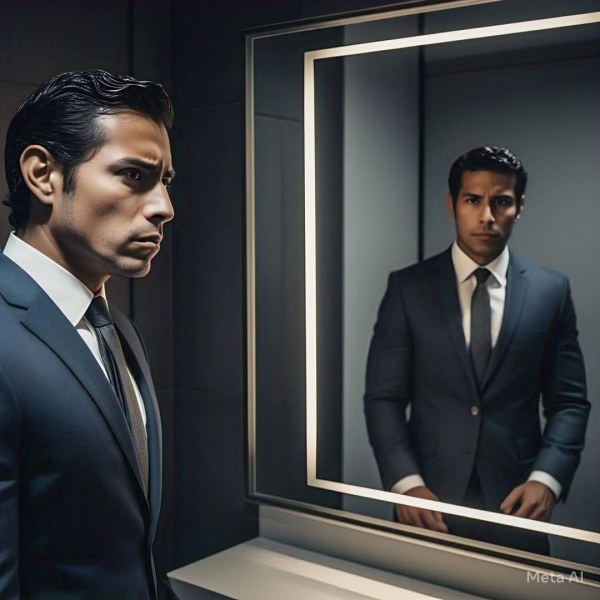
I believe all this happened for me because Freemasonry is a place where I was fully accepted and encouraged from day one. It’s a place where men extend out the very best of themselves to others. Which invited the best parts of me to step forward. Freemasonry held a mirror up to me and reflected back those parts, showing me that I am good, that I am a man to admire. Someone to be respected, listened to, looked after, cared for, and valued. All things that were foreign to me before I joined the fraternity. It’s both sad and amazing just how much someone can flourish with a little encouragement.

I have gotten to a place where I can no longer live in denial – a place where I can’t say “that isn’t me” anymore. A place that is becoming safe and familiar to me. I’m not saying that I am all these nice things above and that I don’t have anymore growing to do – there’s still much room for improvement and growth. But I’m finally getting to know the man that Freemasonry knows so well.

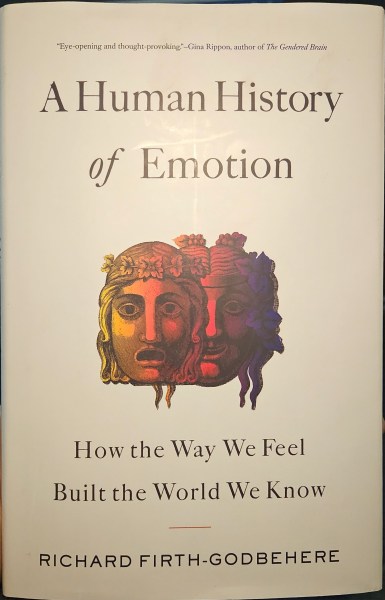
A Human History of Emotion

Humans don’t feel emotions, either. Emotions are just a bunch of feelings that English-speaking Westerners put in a box around 200 years ago. Emotions are a modern idea – a cultural construction. The notion that feelings are something that happens in the brain was invented in the early 19th century.

…it’s difficult to pin down the types of feelings that do and don’t constitute emotions. There are almost as many definition of emotions as there are people studying them. Emotion is just a newer box. A box with poorly defined edges, I might add.

We might all feel similar things, but the way we understand and express those feelings changes from time to time and from culture to culture. Those important differences are where the history of emotion, and this book, live.

A Son Growing Up With a Mother Who Has Borderline Personality Disorder

This will be my attempt to describe what my childhood looked like being raised by a mother with Borderline Personality Disorder (BPD). Part of why I’m doing this is because I want to open people up to different types of childhood experience. And, well, this was therapeutic for me to write out. This also gives people a little insight into why I am the way I am and why I expound the philosophy I do. I’m not looking for pity here.

For me, growing up with a mother who suffers from BPD, I have suffered through extreme neglect – physical, mental, emotional. A very strange form of neglect where you are actually very “close” with the parent.

I grew up in enmeshment with my mother, not with intimacy and connection. Enmeshment is a concept in psychology that describes a (typically) familial relationship where there are no boundaries, or, they’re very limited. Enmeshment is an extreme form of closeness between individuals. In children, this leads to a loss of autonomous development. The purpose of enmeshment is to create emotional power and control over the child. This tactic is so powerful that as a 33 year old who hasn’t had any contact with my perpetrator in over 2 years, I still suffer from emotional disregulation because of it. I’m toxically enmeshed with my mother in a way that she still exerts some level of control over me. At times, this makes me feel weak, sad, and hopeless.

She will provoke me to find my boundaries and then constantly push against them. Eventually just blowing over them, then coming back to a place where I was much further from before.  It’s completely draining to be in her presence. Every word she speaks, every move she makes, is an attempt at manipulating me for her own selfish needs. Looking back, I can honestly say that she has never engaged with me from a place of love – a place not selfishly motivated.

As far back as I can remember (3-4 yrs./old), my mother made it clear to me that she was burdened by being a mother. As a small child, I was shamed, punished, and criticized for being too needy or childlike. Punished in every way imaginable,  including cruel physical methods. Throwing whatever object she had close by at me, making me lay face down with my nose buried on a hard floor for extended periods, whipping me, and physically attacking my siblings while I helplessly watched. Also, regularly sleep depriving me by blasting music in the middle of the night, coming into my room waking me from my sleep, just to ransack the room and have me clean it all up while she berated me. Etc. Etc. Etc.
But to anyone who has ever suffered from physical abuse, we all know it’s typically nothing compared to the psychological abuse. Both of which are inextricably linked. The worst part was that her anger/rage and physical violence came with a smile. So I never really knew what to expect from her.

She simply used me for her narcissistic supply. I have always suffered from her “splitting” – cycles of idealization and devaluation. I would be the best son in the world at one moment, then the worst son in the next. Nothing I could ever do would please her, believe me, I’ve tried, I have given her so much. And I can honestly say with nothing in return. She has only ever taken from me, in the worst, most abhorrent ways.

My mother always wanted me for herself. Me having a girlfriend was always a problem for her. She would do anything she could to break us up. Including trying to turn my girlfriends against me (with some success). There were issues of seduction on her end – emotional incest that would occur – codependency, envy, and control. Emotional incest in this regard refers not to sexual incest (although there was also some of that), but it means that she emotionally treated me as a surrogate, husband like partner.
I was constantly judged, shamed, and controlled to feel like I was nothing… nothing without her. Yet, I still love her and, up until the last few years, would defend her.

In fact, she is still running a campaign against me, attempting to turn my entire family on me. Since I cut her off, I’m obviously the bad guy now. Even when I was her golden boy, very involved in her life, helping her with all her demands, she’d still badmouth me to my siblings and girlfriend.

She takes absolutely 0 responsibility for anything she has ever done. And that’s not an exaggeration. She has never admitted that she has done anything wrong at all to anyone in the family. Even though her abuses were so bad that my dad got full custody of 4 children and kicked her out of the house to the streets. Not only does she not take any responsibility, but she puts the blame on everyone else.

To maintain any form of relationship with her is to minimize and ignore any atrocity she has ever committed. And to allow her to constantly lie to your face. You have to live in her reality or you can not be in a relationship with her. Not without a lot of violence and conflict, then pretending like nothing happened. I will no longer pretend like nothing has happened. She rules with chaos. She will always win if you decide to engage with her.

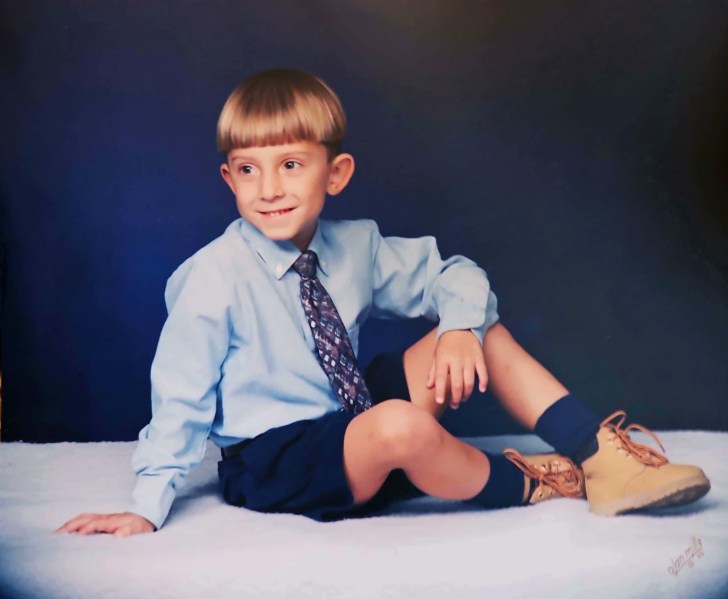
I grew up very lost and confused. My emotional needs were completely neglected by my mother. I had to be the parent/caretaker for her. With only her chaos and complete unpredictability to mirror as I developed. I had low self-esteem, no sense of self, attention issues, anger problems, an inability to regulate emotions, trust issues, not feeling safe and comfortable in my skin, etc. I was never benevolently recognized for any of the good in me. Any good in me was only recognized by some form of punishment. I had to dim much of who I was, hide it from her, which meant hiding it from myself. Meaning showing no emotion to her – no fear, anger, happiness, no nothing. It would all only be used against me later. This is devastating to a developing child. Imagine all of this happening to a 4 year old, continuing into adulthood. Within the last few years as an adult, one of the hardest things for me to do in therapy was to look at pictures of myself at that age during the abuse… it still shakes me to my core.

The confusion I grew up with was the worst part of all of this. And not like a typical high schooler feeling lost and confused. Much deeper than that. It’s very hard to explain. I would have episodes of extreme anxiety that would verge on psychosis. Just totally losing myself and reality. Having nothing to ground me. Going to a really dark and numb place. Strobing white and black, but not the absence of light kind of black. A black void that sucks your soul out of your body, leaving you feeling less than human. Demons and possession are very real. This was all typically prompted by my mother’s brain washing – denying my reality, flipping it on me, and shoving it back into my face. I wouldn’t know which way is up or down. The most fundamental aspects of Being were just totally obliterated. Her manipulation worked…
And I do not use the term ‘brainwashing’ as a figure of speech. The techniques for brainwashing are simple: “isolate the victim, expose them to consistent messages, mix with sleep deprevation, add some form of abuse, get the person to doubt what they know and feel, keep them on their toes, wear them down, and stir well.”

Again, just imagine all of this happening to a 4-9 year old, a sweet little boy. I was shy, timid, non-social, did poorly in school, couldn’t focus on any task, and didn’t know how to connect with others. Not because that’s my proclivity, but because all of that, all of just being a little boy, was beaten out of me at every moment of my life. I didn’t know what feeling safe was. I was in a constant state of fight or flight during my development. To say that all had an effect on my development and becoming an adult is to almost say nothing.

She made me feel like everything bad about me is all my fault. That all the lies and hurtful things she has ever said about me (to me) are real and true. I was made to believe that at my core, I really am a bad child and that my mother is a good mom. I don’t think I need to get into all the details of how little self-worth you have when your mother hates you and acts that out. All the strength and resilience in me came from knowing I survived all of this. All my self-worth has been hard earned, nothing was given to me.

By now, I’ve worked through much of this. I see things more objectively. I know that I’m not crazy. I know that my feelings are valid. I know what the reality is.

These days, the confusion I suffered from is minimal. I know who I am, and I know that I’m not the person my mother made me out to be. Having people like my girlfriend and the fraternity reflecting this back to me has been vital to my growth. I no longer suffer like I used to. I’m no longer living in a constant state of fight or flight. But this has only been since I cut my mother off – as if she is dead – for the last couple of years.

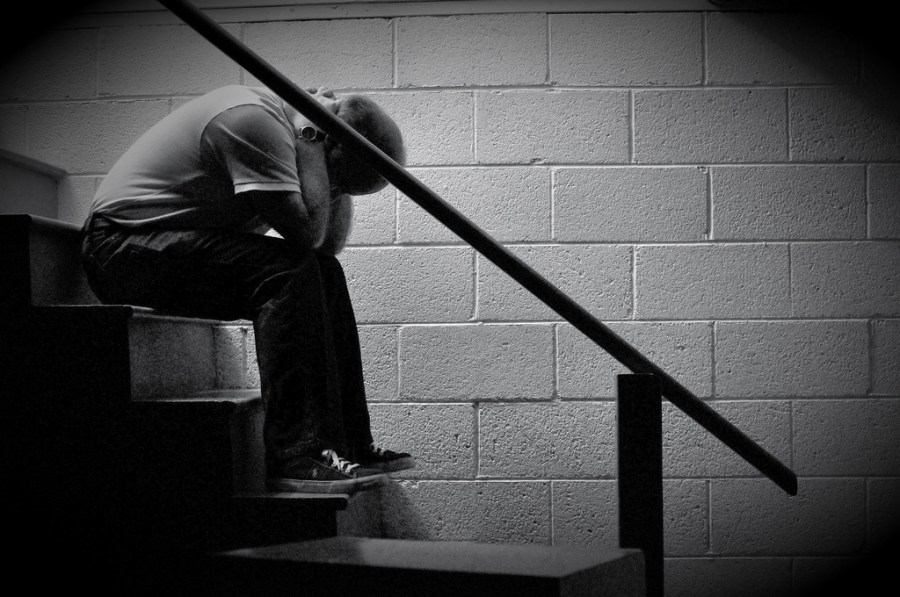
All my anger and rage has turned more into guilt and grief. I still feel waves of guilt for having to completely cut my mother out of my life. I grieve and feel sadness for my mother because at the end of the day, she is deeply sick and hurting. I feel intense grief for the loss of a childhood I never had, I grieve for the hurt little boy in me, and I grieve for a mother that I’ve never had. I mourn her like I would as if she was dead, although she is not. I’ll never be completely “healed.” I’ll never be “over it.” But I am healing and will continue to. And I will continue to get through it and continue to live a rich, deep, and meaningful life.

Mike Tyson has said it best: “it’s never in the past.” Trauma is a lense that will forever color my world, relationships, and perceptions. But I find peace in knowing that I survived. And I will continue to be empowered by the choices I have made to pull myself out of the depths. I’ve stared into the abyss, met the devil at the crossroads, and carved out a new path to the light that was always buried within.
The New World Order!?

New world order!?!?

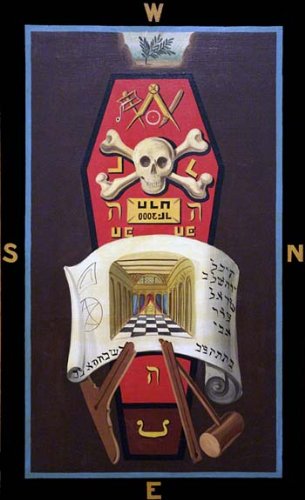
The society Freemasonry has created is very different from the rest of society. Freemasonry is a beautiful system of morals, veiled in allegory and illustrated by symbols. 

In my experience – in regards to how we engage with and treat each other – what is “normal”/expected, and/or commonplace in Freemasonry, completely differs from the rest of society. Out in the world, even among the people closest to us, we typically do not get much feedback from the people around us. Most people aren’t very good at communicating “where they stand” with you on a regular basis. In Freemasonry, this feedback is constant. 

You always know where people stand with you – either directly or indirectly. Indirectly, by how they engage with you, and/or how they show up for you (both figuratively and literally). Directly, by giving you explicit feedback. Just coming right out and telling you. This constant feedback is completely different than anything I’ve ever engaged with in the world. With my childhood trauma, it is very healing for me in ways I can’t explain. 


Below, I’m going to list what is “normal” / common / expected /  encouraged in Freemasonry:

  • Recognition – explicitly recognizing people for what they have done, for showing up, for their work, their deeds, for how they treat people – recognizing people for who they are.
  • Validation – this partly ties in with recognition. Freemasons validate your emotional needs by recognizing who you are, the best parts of you, your true self. Freemasons listen intently, they hear you, see you, validating your thoughts and feelings (no matter whether you’re “right” or “wrong”).
  • Compliment – it’s common and encouraged (by example) to compliment others. For their looks, their dress, their work, their behavior, for who they are, etc. Freemasons also compliment you by working alongside you. 
  • Encouragement – tying in with recognition, validation, and compliments Freemasons encourage you to be your best self. They encourage you to show up, find your interests, cultivate your skills, and pursue your aspirations. 
  • Reward – freemasons reward you for everything I’ve been going over above. It is the most rewarding environment I’ve ever been in or witnessed. They reward you indirectly by continually giving you all this feedback – by recognition, validation, compliment, and encouragement. They also reward you directly with awards – shout outs, trophies, certificates, honors, preferment, etc. 
  • Protection/security – we guard the fraternity against people who would seek to disrupt the peace and harmony that prevails among us. We watch over each other both physically and emotionally. We secure our relationships. Bind them with the mortar of brotherly love, each and every one of us. We call ourselves brothers and are treated as such.
  • Help – we help each other when called upon, and we aren’t afraid to ask for help.
  • Acceptance – we accept people as they come. We don’t try to change them or get them to conform. We just aim to cultivate their inner light, no matter what that may look like. 

Freemasons are kind, loving, gentle, considerate, warm, inviting, thoughtful, giving, strong, honorable, and respectful. 

We try. We give a shit. We live with intent and purpose. We know how short and fragile life is. We conduct ourselves accordingly. We separate ourselves from what is toxic (to me, you, or society). We attract what is most important in life, bring it in, hold it close, fight for it. 

All this, mind you, in a male fraternity. Men from 18 to 90+ years old. Yes, even the grouchy “boomer” type men. Whether they are right wing, left wing, or anything in between. 

This is how real men treat each other. We are the example. “We make good men, better”… this is what better looks like.

We’ve been around longer than the United States. Our principles, ideals, and morality is the thread of life that has strung through and advanced society since the beginning of time. Our goal is to reduce unnecessary suffering in the world and advance society by empowering and providing the individual with the necessary tools and space to bring their light out into the world.

This is the new world order.

Never Look Away From Pain

Don’t look away. Don’t look down.
Don’t pretend not to see hurt.
Look people in the eye.
Even when their pain is overwhelming.
And when you’re hurting and in pain, find the people who can look you in the eye.

We need to know we’re not alone – especially when we’re hurting.

Brene Brown

Laboratory of Ideas

When gathered together, we feel safe to be ourselves, to be vulnerable. Meeting on the level, we work on ourselves, opening our minds, learning to view mankind as a family composed of brothers and sisters. Freemasonry may be seen as a laboratory, as lodges are ideal places to test new ideas. But they also act as an incubator, allowing new concepts to flourish. Out in the world we can observe our ideas to see what happens when they reach maturity.

Moreover, perhaps more than most religions, Freemasonry offers a bridge between the past and future (just like the US constitution). Through willing to embrace new ideas, Freemasonry’s intentionally deliberate nature prevents it from being swept up by mob rule

Russ Charvonia

Magic Monopoly

Part of the reason why people have been abandoning religion, is that as the Church grew in power, they jealously guarded and monopolized the “magic” in the Mysteries, then punished with virulent persecution and death if practiced outside her strictist pale.

And now we are mislead by ministers in today’s worldliness, to think that politics and the press are legitimate spheres of religious expression.

The true mystics and sages have always known that there is only one legitimate sphere of religious expression. And that there is only one church with true power, and that is the church of the soul. Who’s magic is accessible by any human being, no matter the institution. So now the false light shines, and the miraculous element in Christ’s worship is adopted and dangerously exploited by unauthorized persons. With people seeing this danger, leading to more and more agnostism.

This is partly why Freemasons are taught to guard the West Gate and maintain secrecy.

Consistent Logic

I want to share a recent realization I had in therapy that I think will help people.

This is more for people that suffer from some sort of psychological trauma, that have problems regulating their behavior / actions. For people that are very reactive and allow their emotions to dictate their behavior and moods. I often wrestle with not knowing if the way I’m conducting myself or the way I’m approaching a situation is the “right” way – and/or wondering how much I’m allowing my emotions to get the better of me.

My therapist asked a simple question that helped me find a way that one can gauge that. An example is: if I wanted to bite someones head of in Freemasonry how would I approach that and conduct myself? The answer for me is that i wouldn’t and would approach it in a very controlled/calm yet assertive manner. Now, when asked the same question about a situation that is very emotionally triggering, like if I wanted to bite someone’s head off that is close to me, I used to do just that – just irrationally fly off the handle.

I was worried if I was handling a situation correctly that was very emotionally triggering. My therapist knows that I’m very much in my element in Freemasonry, that I’m kind of the best man I can be when functioning in my capacity as a Freemason. So, when I was concerned about how I was approaching my family, her asking that simple question of “how would you conduct yourself in Freemasonry?”, I realized my approach and behavior to conflict is consistent across multiple dimensions in my life. I am conducting myself the same in Freemasonry as I do at work, as I do at home, as I do with my family, etc.

Now, this still doesn’t mean I’m “right”, but it does show that I’m no longer being ruled by my emotions. It shows the level of control I have over myself, in even the most emotionally triggering situations. This realization is HUGE and empowering for me. It’s a big shift in my psyche that I haven’t noticed.

So, if you want to know if you’re approaching emotionally triggering situations from place more rooted in logic and reason, ask yourself: what would I do in a different environment (work, home, school, sports, etc.)?
If your rational approach is the same across multiple dimensions in your life you know you’re being consitent, which would indicate that you’re not being as reactive and ruled by your emotions. If you’re approaching sort of the “same” problem, in different areas of your life, in different ways, you’re likely being controlled by your emotions instead of logic and reason.

Logic and reason is not the default way our brains function. Our brains have adapted very powerful, automatic survival teqhniques to the contrary. You should try and make sure you’re keeping a consistent logic in all aspects of your life.

Universal Law

The law of polarity is a constant in the universe. Something the sages have been dispensing to us for 1000s of years. A scientific reality we have discovered fairly recent. Nothing can exist without its opposite. You can’t have light without dark, good without bad, pain without pleasure, force without resistance, etc.

What I (and many wise thinkers of the past) feel our ‘spiritual’ purpose is on this earth is to experience this polarity. Whether or not you believe this, it’s a reality that we live in and can’t avoid.
We’re sort of taught, and/or conditioned, that the dark stuff is not as worthy as the good. That the dark should be hidden or shamed away. But that is literally half of our spiritual purpose in this realm, to experience all of this – to experience the entire spectrum of human emotion.

Many have a problem with experiencing a richness in life – experiencing true love, true gratitude, true happiness. When we don’t allow ourselves to feel the depths without judgement, to go to the darkest places, to run from our hurt, pain and sadness, it prevents us from being able to fully feel the positive aspects of life.

In my life, I have only experienced the overwhelming positive by embracing, fully, the darkest most painful parts of me. So, if you’re having an issue of fullfillment, of not feeling the richness of the overwhelming positive in life, increase your capacity to feel by allowing yourself to fully feel the dark/heavier parts you’ve been avoiding/tucking away.

Grief is a good example that forces a lot of people to recognize this. Many feel gratitude, love, and a richness in life they’ve never felt before only after a loved one has passed – grief is intrusive like that. But you don’t have to wait for a loved one to pass for this to happen. In fact, you should do this now so that you (and everyone around you) can all benefit from this overwhelming/outpouring of positive you will experience by opening your capacity to fully feel the depths. Fulfilling your spiritual purpose in this regard is a positive feed back loop that creates more fullfillment, I promise.

Mystery School’s – What Are They?

“Mystery School’s, the ancient Mysteries, Mystery traditions” – what does “Mystery” mean, and why is it sometimes capitalized?

I had the question myself the first time I heard the term. I use the term often when speaking about Freemasonry and it’s a term you’ll see often when studying esoteric/occult teachings. It’s definition is quite vast and can’t really be articulated, but I’ll attempt to be as succinct as possible here, with a few quotes to aid in understanding.

Taken from Wiki:
“Mystery religions, mystery cults, sacred mysteries or simply mysteries, were religious schools of the Greco-Roman world for which participation was reserved to initiates (mystai). The main characterization of this religion is the secrecy associated with the particulars of the initiation and the ritual practice, which may not be revealed to outsiders.”

“A ‘mystery’, as it was originally defined in ancient Greece and used in the Orphic and Eleusinian mystery schools, is a type of divine revelation that can only be conveyed by experience and is incomprehensible to reason. The revelation initiates or begins a cognitive change in the recipient – also known as the initiate – that alters the way he or she sees and interacts with the world. It is not based on information or even feelings and therefore, it cannot be put into words.” – Kirk C. White

Simply put, what all Mystery schools have in common, is that they just offer a circumstance dedicated to giving the necessary space one needs to start to understand who they really are, for one to discover their real Self. So it’s the study of the Self, as an individual endeavor, and cannot be learnt/learned from anything/anyone outside of yourself.

Some of the documented, original, most ancient Mystery School’s that some may know are the Greco-Roman Mysteries (ie. Eleusinian, Samothracian, Mithriac, Dionysian, etc.)

Historically, “Their primary mission was to protect and preserve the ancient systems of enlightenment, healing, manifestation, transmutation and transformation so that they can be continually used by humanity for its collective progression. Mystery School teachings are imparted by an oral tradition. Rooted in shamanic and mystic ways of wisdom, these teachings are handed down unbroken from teacher to student in an unbroken lineage that has withstood the test of time. … To understand GOD, we must first understand ourselves who were made in their image. Mystery schools exist to empower us to ‘Know Thyself’.

As you can see, the term Mystery, when used to speak about the ancient tradition of the Mystery School’s, is not defined as most people use the word ‘mystery’ today.
Hopefully this helps one to understand what the ancient Mysteries are and what the Mystery School’s impart. But like I stated above, the “Mysteries” can only be known and felt by the individual. No one can explain to you what it is. You have to have direct contact with diety to truly understand.