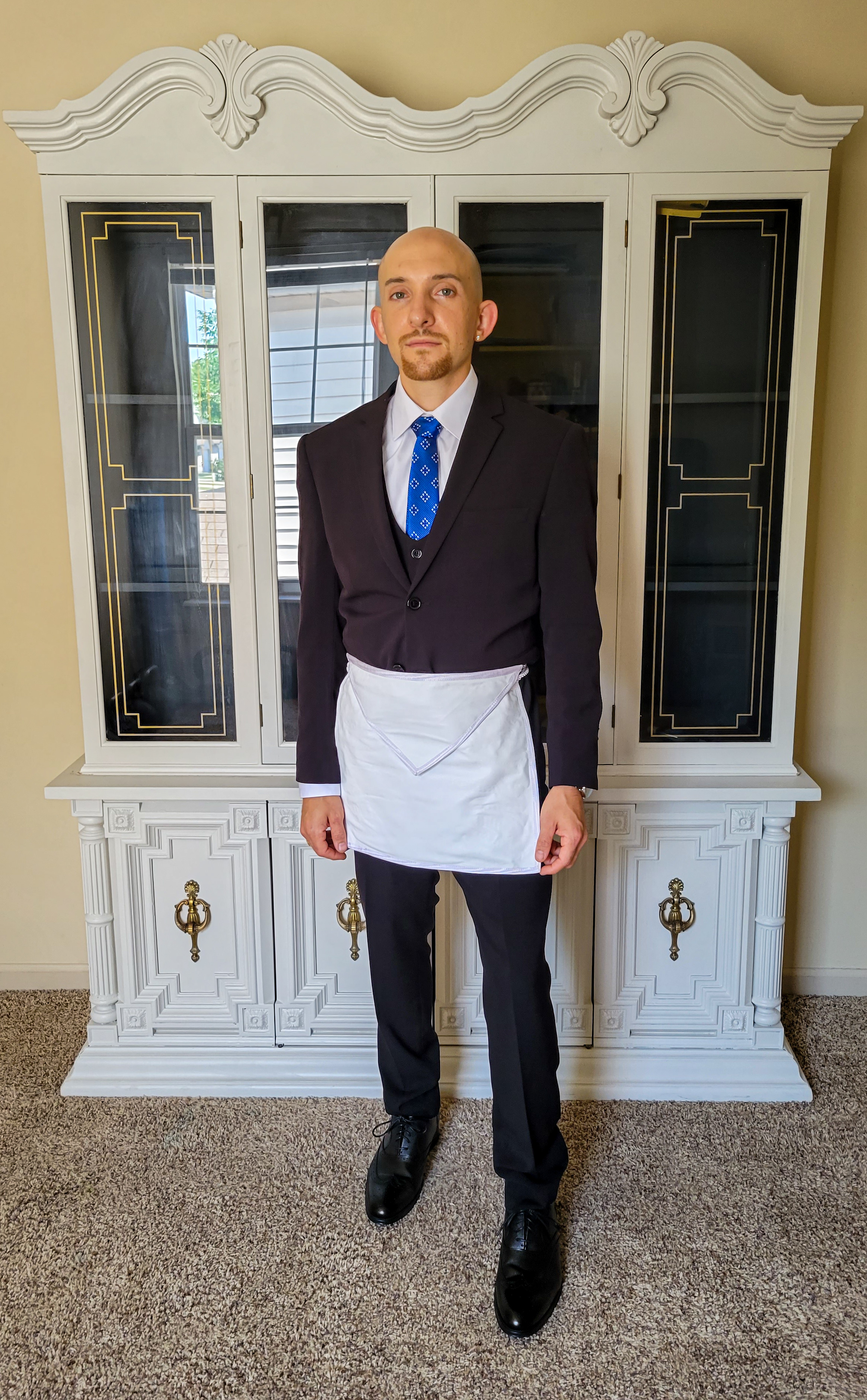
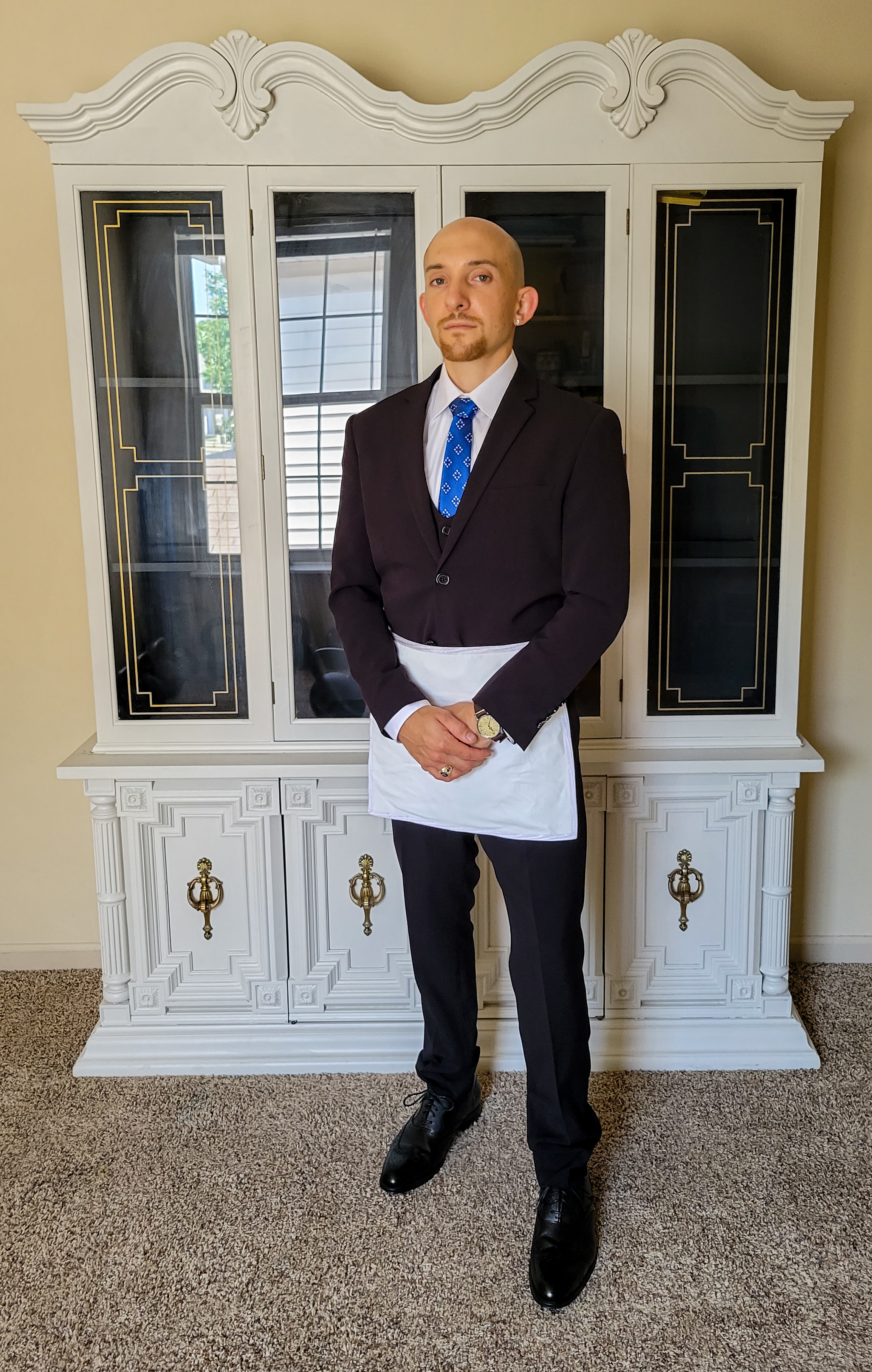
Ritual and the Freemasonic Tradition

Freemasonry is different things for different men. We all join the fraternity for different reasons, nonetheless, we are all bound by one core tenet, and that is: to make good men better. We’re all here to improve ourselves individually and to help lift each other up as a group. 


I became a Freemason, and maintain my position in the lodge, for a few reasons. One of the main reasons, the one that has had the most profound effect on me, is the ritual. 


There really are no secrets in Freemasonry. All of their teachings are self evident, universal truths, known to all of humankind. The only thing that is “secret” (i’d say a better term is hidden, or rather, occult knowledge) about Freemasonry is how that information is taught/delivered. They do this through ritual. Most people start thinking Satan worship when they hear of occult rituals, this couldn’t be further from the truth in Freemasonry. Their rituals are basically just plays we act out and that’s how the knowledge is delivered. 


As humans, we all have a part of ourselves that extends itself out to the world, in an attempt to understand the things that we don’t know. We do this in our behavior, in image, myth, story, drama, ritual, symbolism, etc..There is something very profound about ritual as a phenomenon. Evolutionarily, this is one of the most vital and essential ways we have passed down our knowledge, for 100s of 1000s (if not millions) of years. The most ancient stories we have as a species allude to this. Using the Bible for example, the biblical stories were created in part from observing each other and our behavior for millennia. They are patterns of human behavior that we observed, acted out (ritual/play/drama), then articulated in the biblical narrative. (Partly why Bible verse is used in our ritual)


Ritual is at the very core of how we evolved as a species, it cannot be stressed enough how crucial this has been for our evolution. Understanding and knowledge begin with ritual. We first act things out as human beings, behaviorally, it’s essentially just a drama/play. Understanding isn’t just knowledge, understanding means you embody the information and act it out. It’s like children playing (“rough housing”), they don’t KNOW what they’re doing conciously, they’re just acting it out, observing each others behavior (learning), then distilling that information. That’s why we are able to dance with each other, it’s just knowledge and understanding that we embody and act out.


So this process of acting things out in our environment behaviorally, observing it, then distilling that information, is a process that has taken place for millions of years (arguably since beings with nervous systems have existed). This eventually led us to a place where we could actually articulate that knowledge, like the biblical narratives. This is powerful beyond comprehension. This how we have been able to pass down information, largely un changed, for millennia. Just like you can only get certain information/knowledge from a book that you can’t get from a movie, or movie to a book, or video game to movie or book etc., ritual is unique in the information it contains and how it distills that information. Ritual being a core process for our evolutionary success, it can teach you in ways nothing else can. It is absolutely fundamental to understanding. Ritual is powerful in inarticulate ways, something you just have to experience yourself to understand. These rituals are far from being just archaic and silly superstition (as many believe).

Many people may claim to understand and know Masonic teachings, and while they are universal truths, you will never quite understand what Freemasonry is about without experiencing their rituals. One thing is for sure though, I can attest to the profundity in the Freemasonic tradition. There is also a very powerful feeling knowing that you are part of, and have gone through, the same experience as many other very influential men from the past (14 presidents included). With vague ties as far back as the ancient Egyptian temple initiations, all the way through the ancient Mystery School traditions, culminating in the Age of Enlightenment when the fraternity was founded. 


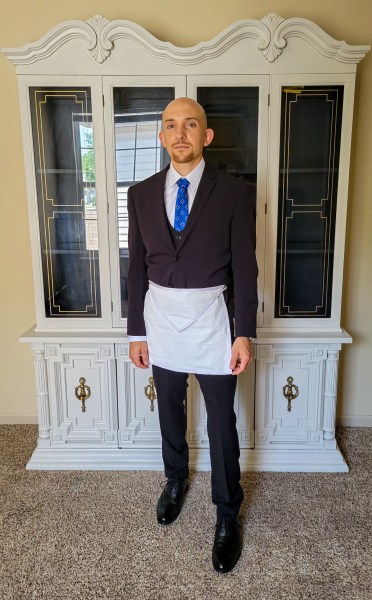
I am an initiate of the flame, a seeker of Truth, bringer of light, warden of wisdom, and a candidate that has been raised to the sublime degree of Master Mason. I have been forever changed for the better, this no doubt has been another rebirth for me, and a start to a very new and exciting chapter of my life. 
The Divine Power

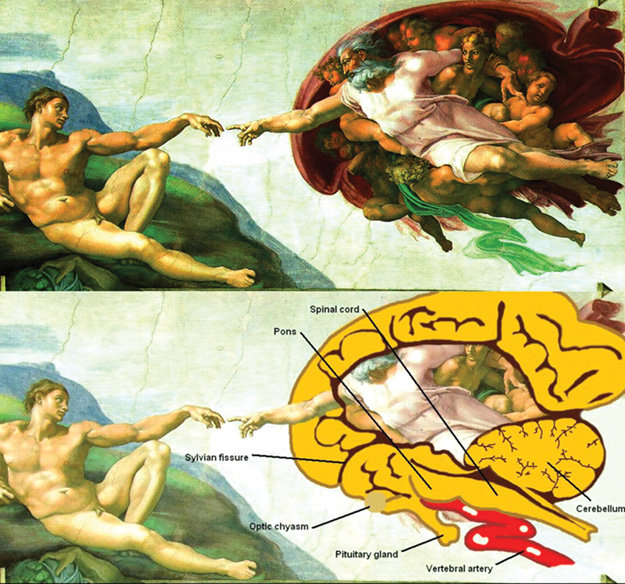
Nearly all the sacred books of the world can be traced in anatomical analogy. This is most evident in their creation myths.

Proceeding from this assumption of the first theologians that man is actually fashioned in the image of God, the initiated minds of past ages erected the stupendous structure of theology on the foundation of the human body. The religious world of today is almost totally ignorant of the fact that the science of biology is the fountainhead of its doctrines and tenants. Many of the codes and laws believed by modern divines to have been direct revelations from Divinity are in reality the fruitage of ages of patient delving into the intricacies of the human constitution and the infinite wonder is revealed by such a study.

Christianity itself may be cited as an example.

The entire New Testament is in fact an ingenuously concealed exposition of the secret processes of human regeneration. The characters so long considered as historical men and women are really the personification of certain processes which take place in the human body when man begins the task of consciously liberating himself from the bondage of ignorance and death.

Manly P. Hall

Freemasonry’s Priceless Heritage

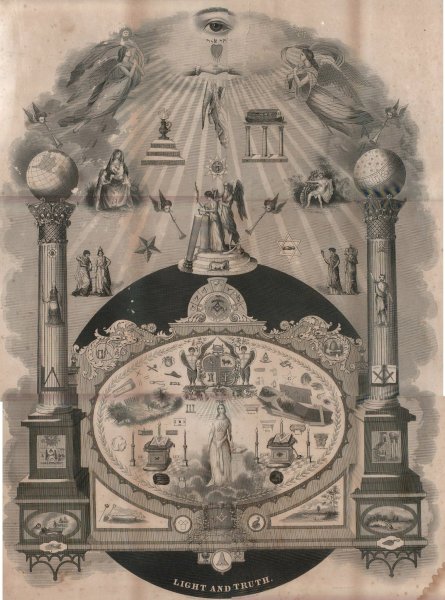
The sanctum sanctorum of Freemasonry is ornamented with the gnostic jewels of a thousand ages; its rituals ring with the divinely inspired words of seers and sages. A hundred religions have brought their gifts of wisdom to its altar; arts and sciences unnumbered have contributed to its symbolism. Freemasonry is a world-wide university, teaching the liberal arts and sciences of of the soul to all who will hearken to its words. It’s chairs are seats of learning and its pillars uphold an arch of universal education.

The philosophic power of Freemasonry lies in its symbols – it’s priceless heritage from the Mystery schools of antiquity. In a letter to Robert Freke Gould, Albert Pike writes:

“In it’s symbolism, which and it’s spirit of brotherhood are its essence, Freemasonry is more ancient than any of the world’s living religions. …”

Though Zoroaster, Hermes, Pythagoras, Plato. and Aristotle are now but dim memories in a world once rocked by the transcendency of their intellectual genius, still in the mystic temple of Freemasonry these god-men live again in their words and symbols; and the candidate, passing through the initiations, feels himself face-to-face with these illumined heirphants of days long past.

Manly P. Hall

How To Approach The Bible


This is summary of a comment Jordan Peterson made in regards to “atheistic type people”, in so far as they have a type. He thinks that they don’t approach the Bible with enough respect. (And I’d argue most don’t even approach the Bible at all).

My approach to the Bible is the same as his, and he stated that he approaches it with the presupposition that “there’s probably more to this than I know”, and tries to understand the Bible from that perspective. Rather than to think that this is just a collection of superstitions we’ve outgrown – which isn’t a deep enough analysis.

That thinking has some truth but it doesn’t take into account the fact that the propositions in the Bible still stand at the foundation of our culture. It doesn’t take into account Nietzsche’s central concern, that if you blow out the notion of God, the entire structure crumbles. The “atheist types” haven’t wrestled with the real issues.

Metaphorical Truth – Killing God?

Since Neitzche, many people have agreed with the notion that God, in recent generations, is dead. Meaning we aren’t religious anymore (ie. praying, living up to a higher power, engaging in ritual, etc.) and don’t believe in “God”.

While I agree that God is dead or dying in that sense, I believe, even in this current age, that God isn’t dead, God cannot die. To the ancients God(s) existed in the sky, in the forest, rivers, oceans, in our institutions, in our hearts and in our concious minds. God is majoraly a projection of our imagination into the objective realm to help make sense of the world. This doesn’t make God any less real than if he were to actually exist as a literal being – how human behavior manifest, the cause and effects of physical reality and the end results are the same, no matter how you think of God. This is one of those metaphorical truths. Just like it will increase the well-being of an individual acting as if a gun is cocked and loaded, acting as if God was real will increase the well-being of humanity.

This quote is what provoked this post and is relevant here:
“Debord also draws an equivalence between the role of mass media marketing in the present and the role of religions in the past.The spread of commodity-images by the mass media, produces “waves of enthusiasm for a given product” resulting in “moments of fervent exaltation similar to the ecstasies of the convulsions and miracles of the old religious fetishism”.”

God hasn’t died we are just worshipping new idols – God is now the new iPhone, drugs, vanity, or any unhealthy obsession/addiction. God exists in a very real – biologically concrete – way in our minds (it’s how our minds and imagination works), we cannot destroy Him so it would be wise to learn to worship Him in a healthy and constructive way, and to work towards cultivating our highest human faculties. So God isn’t dead/dying, we are only killing ourselves.

Heaven of the Wise, A Divine Science

Materialism is a comparatively modern invention of the human mind. Materialism not only ignores but actually denies the metaphysical factor in thought and action.

Man has exiled himself from the empire of Space and is satisfied to live without wisdom and die without hope. One of the primary functions of metaphysics is to incline the human reason towards an intelligent consideration of man’s place in divine plan. Metaphysics seeks to establish a closer harmony between divine will and human action.

Metaphysics does not infer blind faith, or the unquestioned worship of unknown gods, but rather seeks to establish a rational sympathy between heaven and earth, a conscious and intelligent cooperation between man and the laws that govern him.

A philosophical definition of heaven, as distinct from the modern theology’s concept, may result in a better understanding of spiritual factors. Theologies, blinded by their jot and title creeds, have come to regard heaven as a place, distant and formal, populated by a spiritual genus, and ruled over by a capricious anthropomorphic deity. This celestial despotism exists nowhere except in the imagination of the unenlightened.

The heaven of the wise is Space itself – an immeasurable empire extending throughout the uttermost extremities of Being. It is the empire of universal life, established upon the immovable foundations of existence. It is populated by a myriad of principals – luminous energies, as the ancient called them; gods, as it were known to the pagans.

Heaven is the empire of truth and fact. He who abides and truth and according to fact, abides in the celestial world. He who lives in his opinions and conceits, is exiled to the outer darkness.

Hermes said the law of analogy was the priceless key to divine mysteries. With the aid of this law the ancient philosophers explored the heavenly world, creating a divine science which they preserved in their temples, imparting its elements only to those whom they regarded as worthy of so noble a learning.

Manly P. Hall

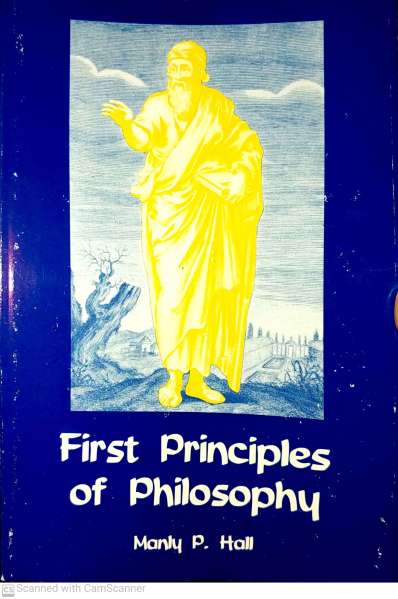
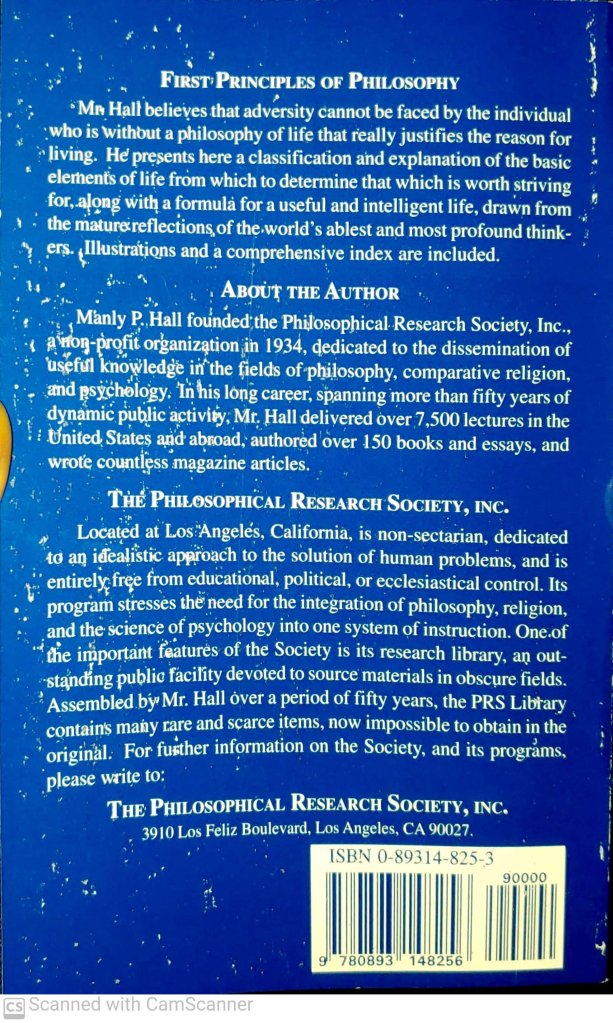
First Principles of Philosophy

I want you to look upon philosophy not as an abstract and difficult word, suggesting arduous labor, but as a simple and friendly term standing for all that is good and all that is real in knowledge.

I want you to make philosophy the great work of your life.

I want you to think of it as the greatest building power in society.

The mastery of philosophy is the supreme accomplishment of which man is capable and the living of philosophy is the most noble of all arts.

In the process of perfecting its disciples, philosophy make use of every known form of knowledge and he who perfects himself in its principles becomes truly divine.

As religion, philosophy leads to the knowledge of God.

As philosophy it leads to the knowledge of self.

And as science it leads to the knowledge and mastery of nature.

In this present age theology leads to confusion. Science, to a hopeless unbelief. Only Philosophy can bring us to “the Golden Time we look for.” Only from philosophy can we derive that enlightened courage with which to face the day. Those who have light within themselves will pass triumphantly through the difficult years which lie ahead.

Manly P. Hall

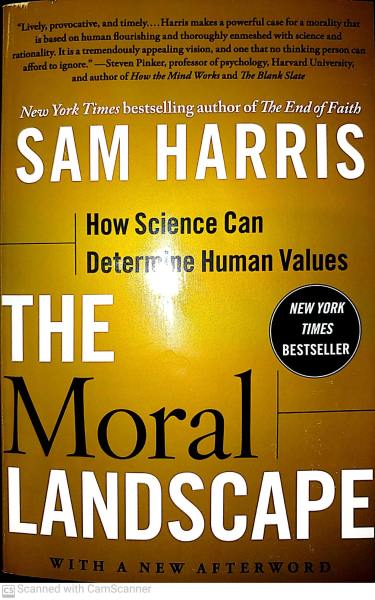
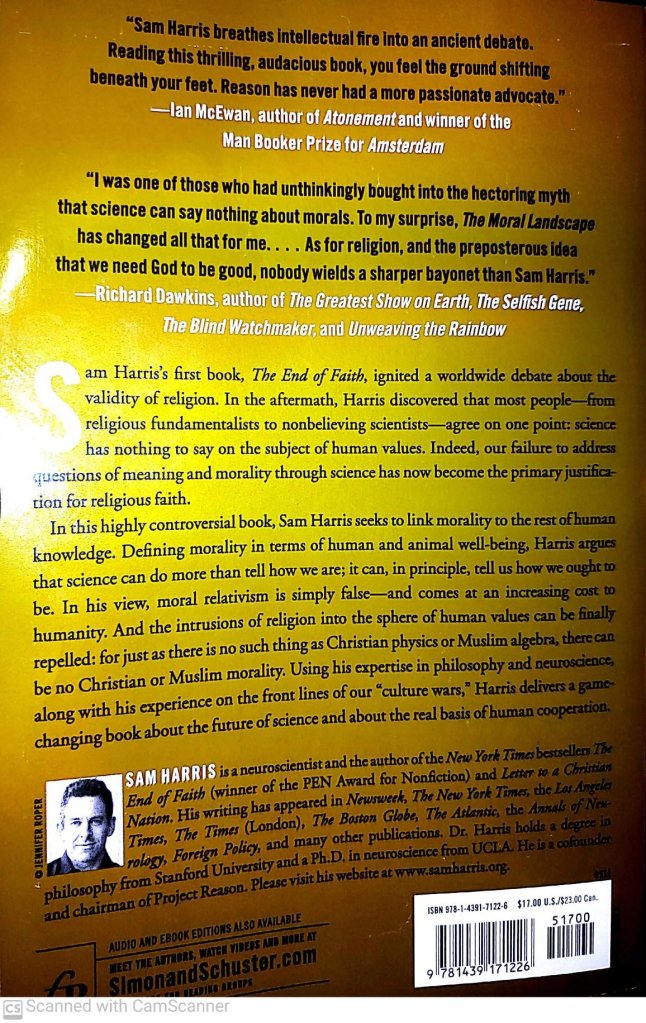
The Moral Landscape

My new book by Sam Harris

There are facts to be understood about how thoughts and intentions arise in the human brain; there are facts to be learned about how these mental states translate into behavior; there are further facts to be known about how these behaviors influence the world and the experience of other conscious beings. We will see that facts of this sort exhaust what we can reasonably mean by terms like “good” and “evil.” They will also increasingly fall within the purview of science and run far deeper than a person’s religious affiliation. Just as there is no such thing as Christian physics or Muslim algebra, we will see that there is no such thing as Christian or Muslim morality. Indeed, I will argue that morality should be considered an undeveloped branch of science.

Sam Harris

Sterilized Christianity – Alchemist Redemption

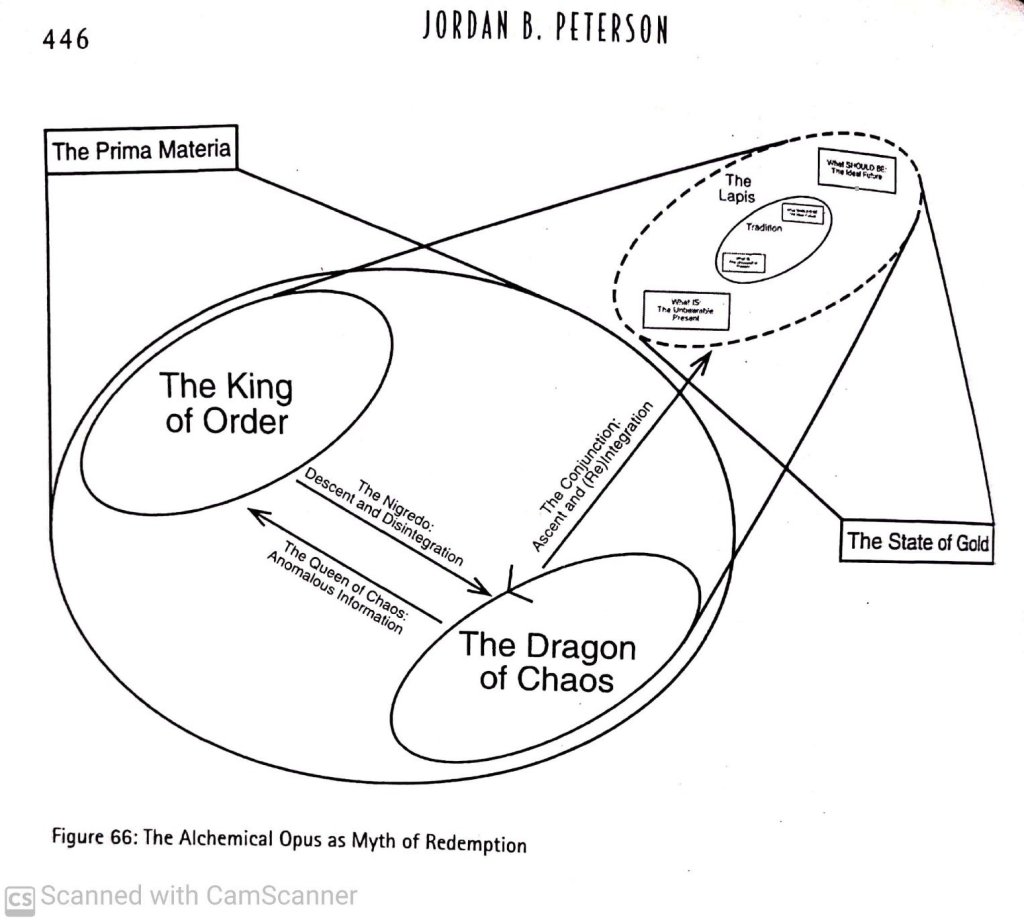
This final value, the goal of the pursuit of the alchemist, is discovery and embodiment of the meaning of life itself: integrated subjective being actively expressing its nature through manipulation of the possibilities inherent in the material / unknown world. This final goal is the production of an integrated intrapsychic condition – identical to that of the mythological hero – “acted out” in a world regarded as equivalent to self. Production of this condition – the lapis philosophorum – constitutes the antidote for the “corruption of the world,” attendant upon the Fall [attendant upon the emergence of “partial” self-consciousness.] The lapis is “agent of transformation,” equivalent to the mythological redemptive hero – able to turn “base metals into gold.” It is, as such, something more valuable than gold – just as the hero is more valuable than any of his concrete productions. The “complete” alchemical opus – with production of the lapis as goal – is presented schematically in figure 66.

Alchemy was a living myth: the myth of the individual man as redeemer. Organized Christianity had “sterilized itself,” so to speak, by insisting on the worship of some external truth as the means to salvation. The Alchemist (re)discovered the error of this presumption, and came to realize that identification with the redeemer was in fact necessary, not his worship; that myths of redemption had true power when they were incorporated, and acted out, rather than believed, in some abstract sense. This meant: to say that Christ was “the greatest man in history” – a combination of the divine and mortal – was not sufficient expression of faith. Sufficient expression meant the attempt to live out the myth of the hero, within the confines of individual personality – to voluntarily shoulder the cross of existence, to “unite the opposites” within a single breast, and to serve as active conscious mediator between the eternal generative forces of known and unknown.

Jordan Peterson

The Holy Pilgrimage

The unknown is contaminated with the psychoanalytic “unconscious,” so to speak, because everything we do not know about ourselves, and everything we have experienced and assimilated but not accommodated to, has the same affective status as everything that exists nearly as potential. All thoughts and impulses we avoid or supress, because they threaten our self conception or notion of the world – and all fantasies we experience, but do not admit to – exist in the same domain as chaos, the mother of all things, and serve to undermine our faith in our most vital presumptions. The encounter with the “unknown,” therefore, is simultaneously encounter with those aspects of ourselves heretofor defined as other (despite their indisputable “existence”). This integration means making behavioral potentialities previously disregarded available for conscious use; means (re)construction of the self model that accurately represents such potential.

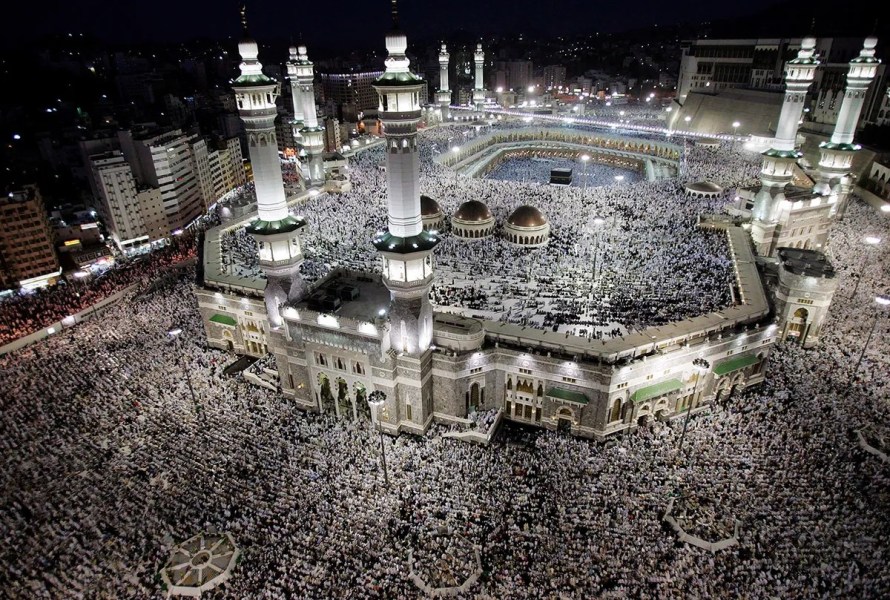
The ritual of pilgrimage – the “journey to the holy city” – constitutes half ritual, half dramatic enactment of this idea. The pilgrim voluntarily places him or herself outside the protective walls of original culture and, through the difficult and demanding (actual) journey to the “unknown but holy lands,” catalyzes as psychological process of broadening, integration and maturation. It is in this manner that a true “quest” inevitably fullfills itself, even though its “final, impossible goal” (the Holy Grail, for example) may remain concretely unattained.

The necessity for experience as a precondition for wisdom may appear self-evident, once due consideration has been applied to the problem (since wisdom is obviously “derived” from experience) but the crux of the matter is that those elements of experience that foster denial or avoidance (and therefore remain unencountered or unprocessed) always border on the maddening. This is particularly true from the psychological, rather than ritual, perspective. The holy pilgrimage in its abstract or spiritual version is the journey through “elements” of experience and personal character that constitute the subjective world of experience (rather than the shared social and natural world). The inner world is divided into familiar and unknown territory, as much as the outer. Psychological purpose of the rite of passage adventure (and the reason for the popularity of such journeys, in actuality and in drama) is the development of character, in consequence of confrontation with the unknown. A “journey to the place that is most feared,” however, can be undertaken spiritually much as concretely. What “spiritually” means, however, in such a context, is a “peregrination” through the rejected, hated and violently suppressed aspects of personal experience. This is most literally a voyage to the land of the enemy – to the heart of darkness.

Jordan Peterson