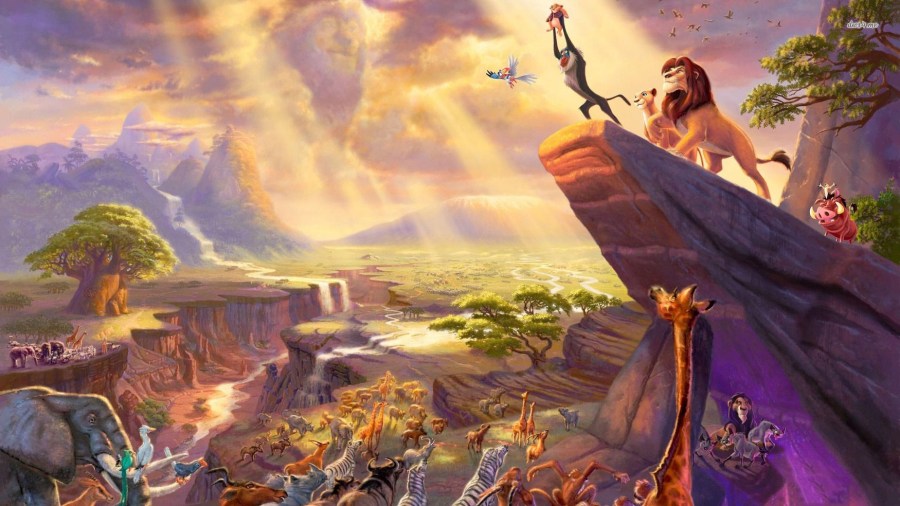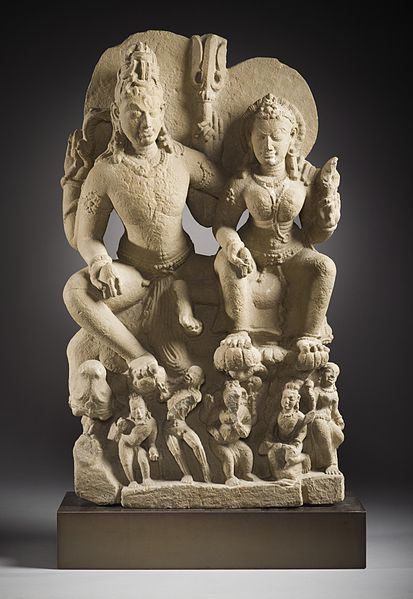
The Redemptive Hero

Watching Son(s) of Sam on Netflix got me thinking about the human desire of wanting to be a part of a group, something bigger than yourself. This seems to be neurophysiological condition hard wired into us.

The problem being, not knowing if a group, organization, religion, cult, policy or the like, is dangerous or worthy of your time/sacrifice. There is one concrete and guaranteed principle you can use as a rule to determine if any said group is dangerous and should be avoided. That is: the group should never require you to sacrifice your individuality for the group.

Any group, society, organization, etc. that requires you to sacrifice your individuality for the “greater good” of the group is doomed to fail. This is a tenet that has been potrayed in the oldest myths – from the ancient Summerian’s to the Egyptian’s all the way through the East to the West including Christianity.

The “group/society” will stagnate and die without renewal from the heroic individual. That’s what these myths are essentially saying, that we need to embody and act out being the redemptive hero to revivify the stagnated state.

The most glaring examples of groups doomed to failure, from sacrificing the individual for the group being Communism and Fascism. This is how our laws are set up in every successful civilization – that there is something redemptive and divine in every individual, as a human being. This includes murderers, rapists, or any criminal – we acknowledge that there is something divine, worthy and capable of redemption in each individual. Whether you know this and/or believe this explicitly or not, this is what we all act out.

This is how I know Freemasonry, as a fraternal organization, is founded on safe and solid principles. They explicitly state that your first priority as a Brother Mason is your “vocation”, not just meaning your work, but meaning working on yourself, as an individual, is priority #1 – then comes your brothers and the lodge (the group).

So this applies to any group (ie. LGBTQ, cars, environmental, etc.), government, organization religion, etc., etc.. While this isn’t the only criteria, it is the first and foremost, one that CANNOT be infringed upon. If they want you to sacrifice yourself for the group (whether explicitly stated or not – typically it’s not and cleverly veiled) GET OUT! It will be doomed to fail and could be dangerous.
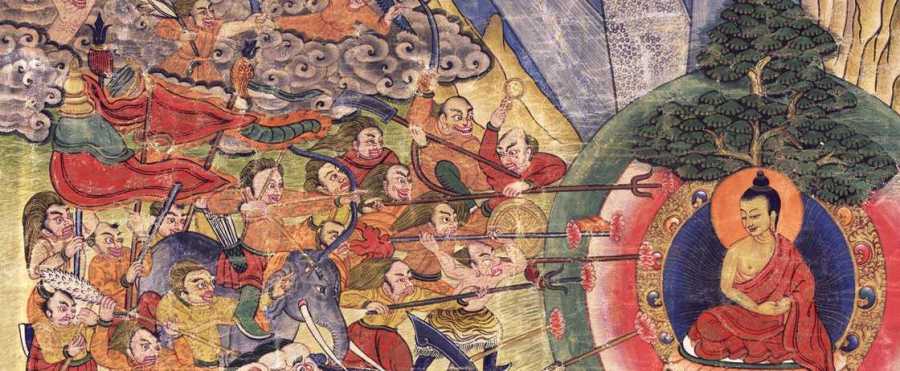
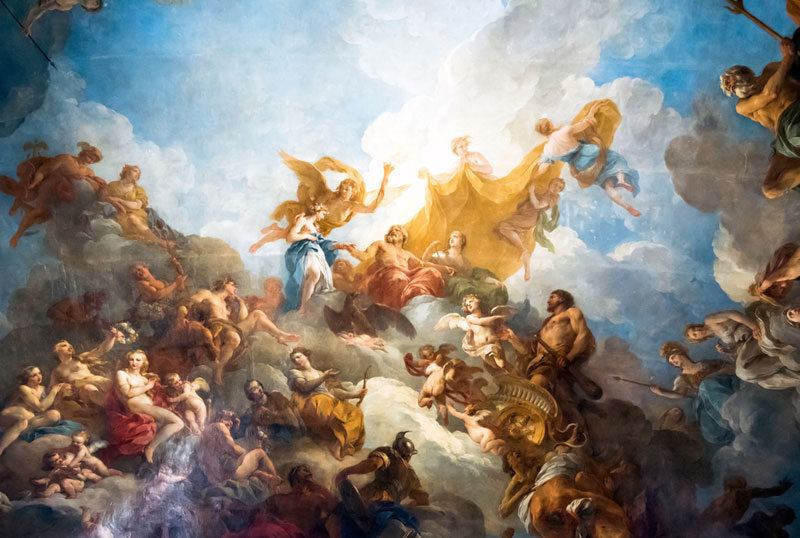
Metaphorical Truth – Killing God?

Since Neitzche, many people have agreed with the notion that God, in recent generations, is dead. Meaning we aren’t religious anymore (ie. praying, living up to a higher power, engaging in ritual, etc.) and don’t believe in “God”.

While I agree that God is dead or dying in that sense, I believe, even in this current age, that God isn’t dead, God cannot die. To the ancients God(s) existed in the sky, in the forest, rivers, oceans, in our institutions, in our hearts and in our concious minds. God is majoraly a projection of our imagination into the objective realm to help make sense of the world. This doesn’t make God any less real than if he were to actually exist as a literal being – how human behavior manifest, the cause and effects of physical reality and the end results are the same, no matter how you think of God. This is one of those metaphorical truths. Just like it will increase the well-being of an individual acting as if a gun is cocked and loaded, acting as if God was real will increase the well-being of humanity.

This quote is what provoked this post and is relevant here:
“Debord also draws an equivalence between the role of mass media marketing in the present and the role of religions in the past.The spread of commodity-images by the mass media, produces “waves of enthusiasm for a given product” resulting in “moments of fervent exaltation similar to the ecstasies of the convulsions and miracles of the old religious fetishism”.”

God hasn’t died we are just worshipping new idols – God is now the new iPhone, drugs, vanity, or any unhealthy obsession/addiction. God exists in a very real – biologically concrete – way in our minds (it’s how our minds and imagination works), we cannot destroy Him so it would be wise to learn to worship Him in a healthy and constructive way, and to work towards cultivating our highest human faculties. So God isn’t dead/dying, we are only killing ourselves.

Heaven of the Wise, A Divine Science

Materialism is a comparatively modern invention of the human mind. Materialism not only ignores but actually denies the metaphysical factor in thought and action.

Man has exiled himself from the empire of Space and is satisfied to live without wisdom and die without hope. One of the primary functions of metaphysics is to incline the human reason towards an intelligent consideration of man’s place in divine plan. Metaphysics seeks to establish a closer harmony between divine will and human action.

Metaphysics does not infer blind faith, or the unquestioned worship of unknown gods, but rather seeks to establish a rational sympathy between heaven and earth, a conscious and intelligent cooperation between man and the laws that govern him.

A philosophical definition of heaven, as distinct from the modern theology’s concept, may result in a better understanding of spiritual factors. Theologies, blinded by their jot and title creeds, have come to regard heaven as a place, distant and formal, populated by a spiritual genus, and ruled over by a capricious anthropomorphic deity. This celestial despotism exists nowhere except in the imagination of the unenlightened.

The heaven of the wise is Space itself – an immeasurable empire extending throughout the uttermost extremities of Being. It is the empire of universal life, established upon the immovable foundations of existence. It is populated by a myriad of principals – luminous energies, as the ancient called them; gods, as it were known to the pagans.

Heaven is the empire of truth and fact. He who abides and truth and according to fact, abides in the celestial world. He who lives in his opinions and conceits, is exiled to the outer darkness.

Hermes said the law of analogy was the priceless key to divine mysteries. With the aid of this law the ancient philosophers explored the heavenly world, creating a divine science which they preserved in their temples, imparting its elements only to those whom they regarded as worthy of so noble a learning.

Manly P. Hall

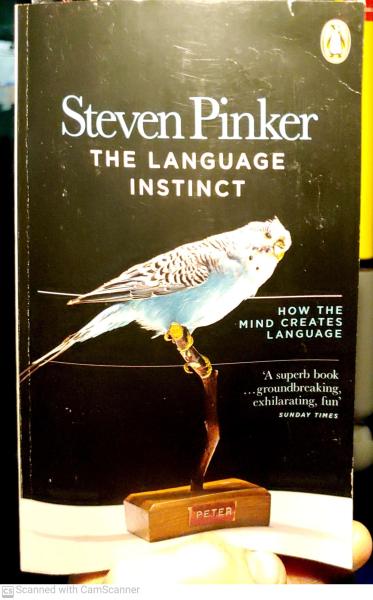
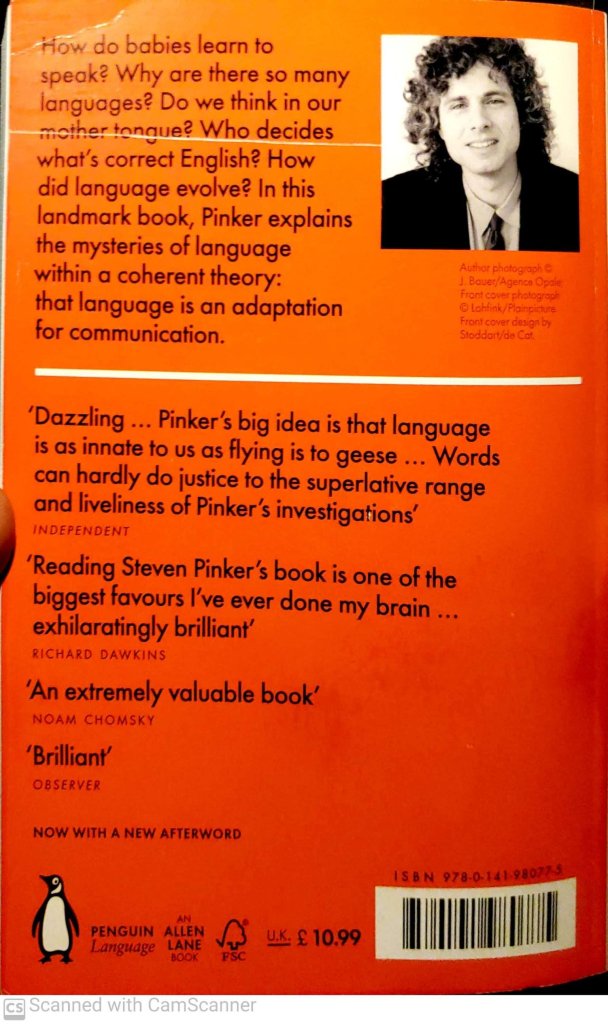
The Language Instinct

I’m reading this because I feel that a better understanding of language will help me connect dots in my research. What exactly? As of yet I do not know.

One insight so far is knowing that language/words and thought/thinking is not the same. The foundational framework of human thought is not rooted in words. Humans have a universal mentalese utilizing representations and symbols – in essence we do not think in English, Chinese, Apache, etc.

This distinction really brings in to focus why the great ancient civilizations put such an emphasis on the universal language of symbolism. Saying that “symbolism is the universal language” is not just some esoteric occult nonsense, this is rooted in a deep transcendent reality modern science is just beginning to understand.

I think it’s fruitful to consider language as an evolutionary adaption, like the eye, it’s major parts designed to carry out important functions. And Chomsky’s arguments about the nature of the language faculty are based on technical analysis of word and sentence structure, often couched in abstruse formalisms. His discussions of flesh and blood speakers are perfunctory and highly idealized. Though I do happen to agree with many of his arguments, I think that a conclusion about the mind is convincing only if many kinds of evidence can converge on it. So the story in this book is highly eclectic, ranging from how DNA builds brains to the pontifications of newspaper language columnists. The best place to begin is to ask why anyone should believe that human language is part of human biology – an instinct – at all.

Steven Pinker

Sterilized Christianity – Alchemist Redemption

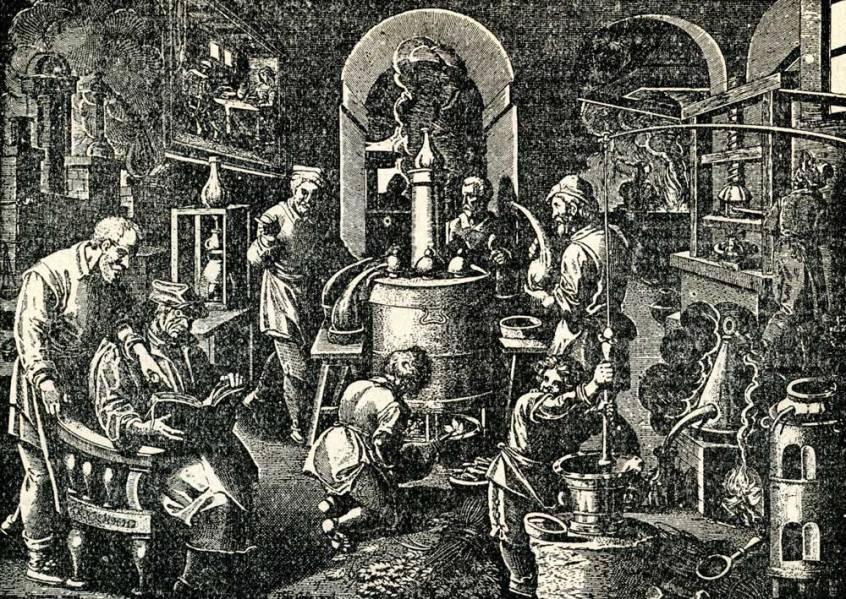
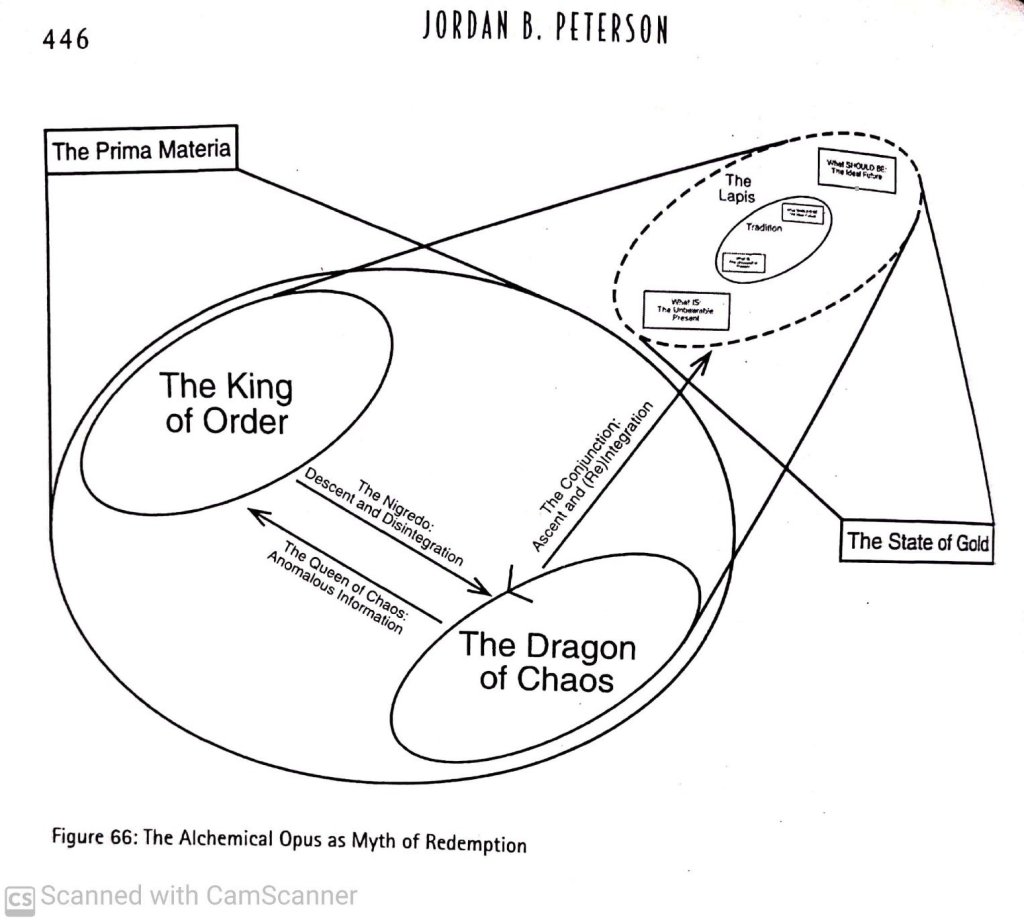
This final value, the goal of the pursuit of the alchemist, is discovery and embodiment of the meaning of life itself: integrated subjective being actively expressing its nature through manipulation of the possibilities inherent in the material / unknown world. This final goal is the production of an integrated intrapsychic condition – identical to that of the mythological hero – “acted out” in a world regarded as equivalent to self. Production of this condition – the lapis philosophorum – constitutes the antidote for the “corruption of the world,” attendant upon the Fall [attendant upon the emergence of “partial” self-consciousness.] The lapis is “agent of transformation,” equivalent to the mythological redemptive hero – able to turn “base metals into gold.” It is, as such, something more valuable than gold – just as the hero is more valuable than any of his concrete productions. The “complete” alchemical opus – with production of the lapis as goal – is presented schematically in figure 66.

Alchemy was a living myth: the myth of the individual man as redeemer. Organized Christianity had “sterilized itself,” so to speak, by insisting on the worship of some external truth as the means to salvation. The Alchemist (re)discovered the error of this presumption, and came to realize that identification with the redeemer was in fact necessary, not his worship; that myths of redemption had true power when they were incorporated, and acted out, rather than believed, in some abstract sense. This meant: to say that Christ was “the greatest man in history” – a combination of the divine and mortal – was not sufficient expression of faith. Sufficient expression meant the attempt to live out the myth of the hero, within the confines of individual personality – to voluntarily shoulder the cross of existence, to “unite the opposites” within a single breast, and to serve as active conscious mediator between the eternal generative forces of known and unknown.

Jordan Peterson

Meaning of Myth

The myths of a culture are its central stories. These stories provide a dramatic record of the historically predicated transformation of human intent, and appear to exist as the episodic/semantic embodiment of history’s cumulative effect on action.

The mythical narratives that accompany retention of historically determined behavior constitute non-empirical episodic representation of that behavior and its method of establishment. Myth is purpose, coded in episodic memory. Mythic truth is information, derived from past experience – derived from past observation of behavior – relevant from the perspective of fundamental motivation and effect.

Myth simultaneously provides a record of historical essential, in terms of behavior, and programs those historical essentials. Narrative provides semantic description of action in image, back translatable into imaginary episodic events, capable of eliciting imitative behavior.

Mythic narrative offers dramatic presentation of morality, which is the study of what should be. Such narrative concerns itself with the meaning of the past, with the implications of past existence for current and future activity. This meeting constitutes the ground for the organization of behavior.

Myth has come to encapsulate and express the essential nature of the exploratory, creative, communicative psyche, as manifested in behavior, as a consequence of observation and representation of that behavior, in the temporally summed, historically determined manner beginning with imitation and ending with verbal abstraction.

Jordan Peterson

Cyclic Creation of Morals (How Morals are Created)

Moral presumptions of society emerge first in procedural form, as a consequence of individual exploratory activity, which is the process that generates novel behavioral patterns. These behavioral patterns are then hierarchically structured as a consequence of quasi-Darwinian competition, in accordance with the constraints noted previously (appeal to the imagination, self-sustenance, etc.)

The episodic memory systems map procedure, and outcome there of, and thereby come to contain similar paradigmatic structure – imagistically, and then more purely semantically. Over time, the unknown, nature, thereby comes to be represented mythically as the effectively bivalent Great Mother, simultaneously creative and destructive. The known, culture, becomes the Great Father, tyrant and wise king, authoritarian and protective personality, adapted to the unknown. The knower, man, becomes the hostile mythic brothers, sons of convention, hero and anti-hero, Christ and Satan – eternal generator and destroyer of history and tradition.

Semantic cognition, feeding on narrative – the bridge between the episode and the pure verbal extraction – derives “rules” from behavior. Application of the rules alters the environment, including procedural and episodic representation thereof. Thus the cycle continues.

Jordan Peterson

Foreign Viewpoint

This means essentially that to give serious consideration to another’s viewpoint means to risk exposure to indeterminate uncertainty – to risk a rise in existential anxiety, pain and depression; to experience temporally indeterminate effective, imagistic and cognitive chaos. It is much more likely, in consequence, that a foreign viewpoint will appear evil or will come to be defined as such (especially during times rendered unstable – unbearably novel – for additional alternative reasons).

Once such definition occurs, application of aggression, designed to obliterate the source of threat, appears morally justified, even required by duty. The alternative or foreign viewpoint is in fact reasonably considered evil (although this consideration is dangerously one-sided), when viewed in terms of its potential destructive capacity, from within the strict confines of the historically determined social-psychological adaptive structure. It is only within the domain of meta-morality (which is the morality designed to update moral rules) that the strange may be tolerated or even welcomed.

Jordan Peterson

Understanding Morality

It is still the case, however, that description of the domain of morality tend to exceed the capability of declarative thought, and that the nature of much of what we think of as moral behavior is still, therefore, embedded in unconscious procedure. As a consequence, it is easy for us to become confused about the nature of morality, and to draw inappropriate, untimely and dangerous “fixed” conclusions.

Moral behaviors and schemas of valuation arise as a consequence of behavioral interaction undertaken in the social world: every individual, motivated to regulate his emotions through action, modifies the behavior of others, operating in the same environment. The consequence of this mutual modification, operating over time, is the emergence of a stable pattern of behavior, “designed” to match individual and social needs, simultaneously. Eventually, this behavioral pattern comes to be coded in image, heralded and narrative, and explicitly represented in words.

Myths of the “knowledge of good and evil” and the “fall from paradise” represent emergence of this representational capacity, in the guise of a historical event. The consequence of this “event” – that is, the development of “self-consciousness” – is capacity to represent death and understand that the possibility of death is part of the unknown.

These complex systems of action and belief are religious. They are the traditional means of dealing with the shadow cast on life by the knowledge of mortality. Our inability to understand the religious traditions and our consequent conscious denigration of their perspectives dramatically decrease the utility of what they have to offer.

We are conscious enough to destabilize our beliefs and our traditional patterns of action, but not conscious enough to understand them. If the reasons for the existence of our traditions were rendered more explicit, however, perhaps we could develop greater intrapsychic and social integrity. The capacity to develop such understanding might help us use our capacity for reason to support, rather than destroy, the moral systems that discipline and protect us.

Jordan Peterson

Archetypal Reality

I feel this is a very accurate description of what’s going on with our world culture currently. More specifically with politics and social justice.

The world can be validly construed as a forum for action, as well as a place of things. We describe the world as a place of things, using the formal methods of science. The techniques of narrative, however – myth, literature and drama – portray the world as a forum for action.

The world as forum for action is composed, essentially, of three constituent elements, which tends to manifest themselves in typical patterns of metaphoric representation. First is unexplored territory – the Great Mother, nature, creative and destructive, source and final resting place of all determinant things. Second is explored territory – the Great Father, culture, protective and tyrannical, cumulative ancestral wisdom. Third is the process that mediates between unexplored and explored territory – the Divine Son, the archetypal individual, creative exploratory Word and vengeful adversary. We are adapted to this world of divine characters, much as to the objective world. The fact of this adaptation implies that the environment is in reality a forum for action, as well as a place of things.

Unprotected exposure to unexplored territory produces fear. The individual is protected from such fear as a consequence of ritual imitation of the Great Father- as a consequence of the adoption of group identity, which restricts the meaning of things, and confers predictability on social interactions. When identification with the group is made absolute, however – when everything has to be controlled, when the unknown is no longer allowed to exist – the creative exploratory process that updates the group can no longer manifest itself. The Restriction of adaptive capacity dramatically increases the probability of social aggression.

Jordan Peterson

As Jung has stated, group identity eliminates individuality to the detriment of the individual.