It is true that Freemasonry is the parent of all religion, the original worldwide cosmic gnosis, diffused in ancient times to the uttermost ends of the earth. Freemasonry is the Pompeii of prehistoric science. All the Masonic ritual, it’s Egyptian signs, it’s Chaldean grips, it’s Sanskirt passwords, is ancient Hebrew symbols, it’s cabalistic allusions and its historical records are supremely scientific and a survival through long ages, by various underground channels, of the knowledge of the universe which was gained by Sabian astronomers from the temple tops of Chaldea, India and China and recorded by the equally learned geometers and mathematicians of the ancient Orient.
Partially what has inspired me, and led me to the path that I’m on, is watching and learning from the great Symbolists. People that can readily and pragmatically, extract meaning from, and interpret, esoteric/occult/religious symbolism, art and the like. People that approach dreams, the imagination and spirituality, with a more academic approach. I want to be able to see the world as they do, because they see the world in a completely different way than the lay person.
So one of the main focuses in my study is the development of my intuition, with the intention of being able to understand and interpret the universal language of symbolism. As you can imagine, or know from experience, this is very difficult to do. Partially because symbolism is intentionally vague, yet has to be interpreted through a certain framework. You have to train your intuition and study the roots of the symbology academically.
Starting out years ago, I wasn’t able to extract hardly any sort of meaning, from any kind of symbolism and/or art. I’d look at say a tarot card, and get nothing out of it without looking up what everything means, and relying on other people’s interpretation, which defeats the purpose of esoteric/occult symbolism.
I see a lot of people (and this was myself in the past) ask: “What does this image mean?”. No one can tell you what the image means. Esoteric and occult symbolism is intentionally vague to allow the individual to impart their own personal level of interpretation (again, still limited within a certain framework). The subtle aspects of our nature is what makes us more than who we are, more than just an animal, or just material elements in a meat sack. The things that you can’t quite explain, feelings and meanings you can’t articulate, phenomenon that can’t be explained by material science – it’s these aspects of our being that esoteric/occult symbolism is supposed to communicate with. It’s supposed to invite these divine, subtle aspects of our nature to step forward. The meaning has to come from within.
For years I have had the same problem I described above, about not being able to extract meaning from the symbolism. Finally, after many years of research, study and training, I have gotten to a point where I’m starting to intuit meaning from the art. It sort of just hit me out of no where. I guess a piece of the divine spark has touched me. So I’d like to share one of my recent interpretations. Partly because I’m very proud of myself, but majoraly because I want to let people in on how profound this ability is.
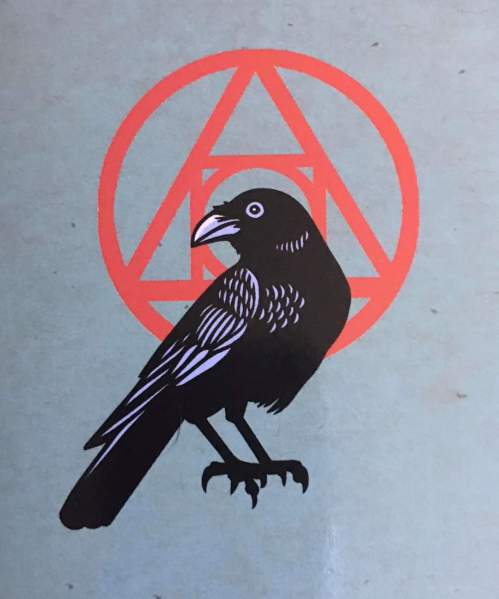
Below will be my interpretation of this image. For people not read on hermetic or qabbalistic philosophy, you’ll likely see most of this as gibberish. A quick Google search on the hermetic principle of the “All”, and a search on the alchemical “magnum opus”, will definitely help and for the most part, get you up to speed.
For me the raven represents sort of the most evolved intelligence in the bird kingdom – specifically noting how social and intuitive they are. Plus all the other traditional meanings birds imply. So in other words the most advanced state of consciousness in the bird kingdom.
Seeing the circle, encapsulated (or perhaps “nested”) in the square, the square in the triangle, and triangle in the circle, represents a totality of the structure of our material and divine constitution within the “All” (the hermetic and qabbalistic concept of the All).
I see the first circle as me (us – humans), it’s the “dot” or “point” (perhaps one individual seed of conciousness), radiating out, unfolded in its highest, most divine form, yet still encapsulated in this material realm.
The square, or us in the four fold material realm, is us realized to it’s most divine capacity, partaking or touching the higher, divine, trinitarian, ethereal realm of spirit. So that threefold aspect of divine cosmic spirit is nested within the “limitless and boundless” All (again I’m speaking in hermetic and qabbalistic terms).
So I see this image sort of as a reminder of what is possible with our “baser” self(s). The raven also intimates towards the alchemical philosophers stone or the magnum opus. A reminder that with just base elements you can create something evolved to its highest potential (ie. the raven), something that takes part in, or something that becomes divine. That with mastery over the material and spiritual realms, we can bring ourselves back to unity with the All.
But the deeper meaning this image has for me, I can’t articulate. This is why I love esoteric and occult symbolism. Partly because with just some simple symbols you can convey truths and realities that cannot be articulated. As I stated above, just as the subtle parts of the raven is what makes it divine, and the subtle parts of our nature is what makes us divine, occult symbolism speaks to that higher more ethereal parts of our nature. It stimulates and invites out our divine nature to step forward. The universal language of symbolism is a direct path to diety and brings you closer to divinity with every step. This is a Symbolist’s vision.
Many people have a time or period in their life where they feel their life lacks purpose, meaning, direction, and take on a nihilistic world view. Some people live like that and never escape. When I started my career after school is when this period came for me – which is a very common time for most people.
I felt lost so to speak and became very nihilistic without any purpose, meaning, and direction. In life there is this philisophic principle or idea about “quality”. This idea of “quality” basically says that there are qualitative distinctions between things and that as humans, we have an instinct to make qualitative distinctions. A qualitative distinction is just saying that “this” is better than “that” or vice-versa. So a qualitative distinction is a judgment.
There is this modern idea that we are to accept ourselves and that we are OK just as we are. Many people (especially the younger generations) are conflating what this means and take it literally. They accept themselves and don’t work towards bettering who they are. Jordan Peterson thinks this is an insane idea and couldn’t be more nihilistic. This is because you are NOT ok, and the reason you’re not ok is because you could be WAY more than what you are. So do you want to be ok as you are? Or do you want to strive towards what’s better?
I’ve come a very long way from my nihilism. I have filled my life with copious amounts of purpose and meaning, and have gained plenty of direction in doing so. The turning point for me was because I knew I wasn’t happy with my current mode of Being. I didn’t consider the manner in which I conducted myself to be sufficient. To do this you have to understand the notion that you CAN make “qualitative distinctions” and that there really is a difference between “good” things and “bad” things, or “great” things and “evil” things etc.. This gives you direction and the possibility of moving upward. You have to maintain the idea that we as humans are insufficient as we are and need the movement upward. So you have to conceptualize something like the “highest good” and then strive towards that.
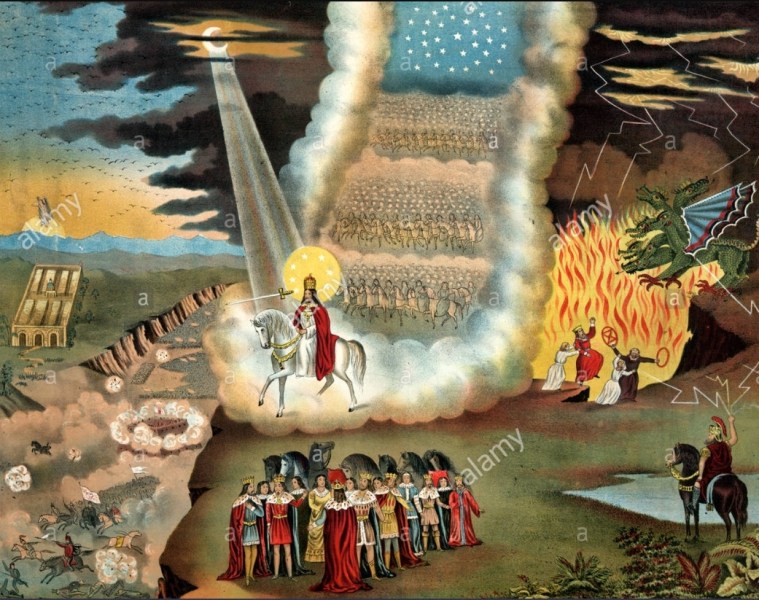
This is what Christ is in the Bible (the highest good) and why the biblical story gives people so much direction and meaning – something to strive towards. There is an idea in Revelations that the “redeemer” and “judge” are the same thing. Christ comes back with a flaming sword in his mouth to judge the people of earth. Most people were damned and some were saved.
There is no difference between conceptualizing the good and being judged. Because to conceptualize the good and move towards it, means that you have to separate from yourselves all the things that aren’t good and leave them behind. This is why “redeemer” and the “judge” are the same thing.
That’s the problem in the modern world with how we are rejecting qualitative distinctions, to not offend anyone/hurt anyone’s feelings, because we are just fine as we are and don’t want to say one thing is better than the other. Sure, it’s not any fun to be casted off with the damned, but if people are insufficient in their present condition (which seems to be the case, try finding someone who is not) and you deny the possibility of qualitative distinctions, because you want to promote a radical egalitarianism, then you remove the possibility of redemption – because there is no movement towards the good. Sacrificing the “good” for the “equal” is catastrophic, because if we were all equal, we’d all be equally un redeemed and miserable.
So to live a life full of meaning, direction, and purpose, you to understand that you are insufficient as you are. You have to conceptualize the highest good and strive for it – the continuation of our species depends on it.
He is of the opinion that the proper strategy for implementing social change is to stay within your domain of competence – which requires humility, a virtue that is never promoted in our modern culture, a virtue we can hardly even talk about. He defines humility as “you’re probably not as smart as you think you are and you should be careful”.
So the question may be: “ok I should be careful, but I still want to do good and make positive social change.”
So how do you be careful and do good? You try not to step outside the boundaries of your competence and start small. You start with things that you CAN adjust, that you actually DO understand, with things that you can actually fix.
So what Dr. Peterson promotes is that you should restrict your attempts to fix things to what’s at hand. So things about yourself that you can fix, things about yourself that you know aren’t right, not things about you by anyone else’s opinion. Then maybe there’s things you can adjust in your family and that gets really hard. You really have to have yourself together before you start to tackle your family.
It’s hard to put yourself together, it’s really hard to put your family together, so why would you think you can put the world together? The world is obviously far more complicated than you and your family. So if you’re stymied in your attempts to put your house in order, then that should make you very leary about announcing your broad scale plans for revolution.
And this is a very peculiar thing, because people are much more likely to announce their plans for large scale social revolution, than they are to set themselves or their family straight.
Dr. Peterson thinks this is the case because as soon as you try to adjust yourself or family, the system immediately kicks back at you. Where if you announce your plans for large scale social revolution, the lag between the announcement and the kick back is so long that you don’t realize there is any error there. So you can get away with being wrong if nothing falls on you for a while.
It’s not easy to fix things, especially if you’re not committed to it. And you know if you’re committed to it if you’re trying to change yourself first.
“It’s more difficult to rule yourself than to rule the city.” And that’s not a metaphor.
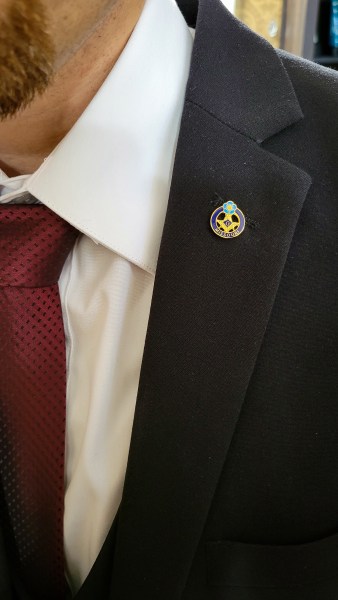
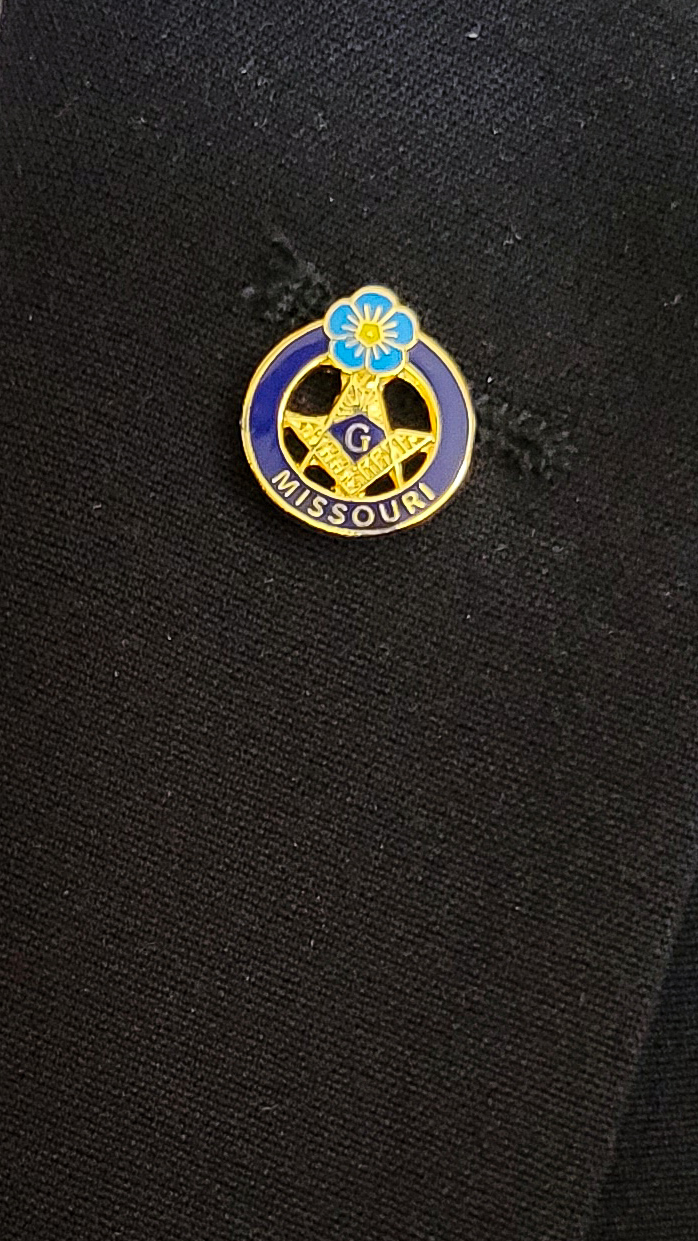
I want to share, what I feel, is a cool piece of Freemasonic history.
The “forget-me-not” flower (Myosotic arvensis – from the Greek, meaning “Mouse’s Ear,” after the shape of its five petals) has a pretty rich history in ancient folklore. The Germans have a few different mythological stories surrounding the origin of flower and how it got its name.
The flower – in general – symbolizes true love, enduring memory, steadfastness, and faithfulness. In 1926, after the first world war in Germany – during their economic crisis – at the German Grand Lodge annual communication, they gave its members a forget-me-not pin, to remind the brethren of their charitable obligations.
During WW2 when Hitler took power, Freemasonry was forbidden and disbanded. The Nazis even had exhibitions showing all the Masonic regalia they had seized. An estimated 80k – 200k Freemasons were executed throughout the Nazi empire.
Masonic lore tells us that during this time of Nazi control, the Grand Lodge of Germany adopted the forget-me-not, not as an emblem of charity, but as a substitute for the square and compass. It was used as a sign of recognition for the brethren, reducing their risk of exposure to the Nazis.
“During the ensuing decade of Nazi power a little blue Forget Me Not flower worn in a Brother’s lapel served as one method whereby brethren could identify each other in public and in cities and concentration camps throughout Europe. The Forget Me Not distinguished the lapels of countless brethren who staunchly refused to allow the symbolic Light of Masonry to be completely extinguished, even under penalty of death.
It was a symbol that masonry, like the flower itself, was not dead, but had merely gone dormant to weather the decade long winter. It was a symbol to its members not to forget each other, or their masonic vows, until spring had come again and the blue of masonry could flourish once more.”
“Legends like these are not told to teach us historical fact; they are meant to teach us enduring truth, or even truths, plural. And the truths of the forget-me-not are these; we must never forget our duty to the poor and distressed. We must never forget to persevere through troubled times, as light and life will always spring anew. We must never forget those who have come before us; the sacrifices they made, and the love that they shared with us. We must never forget our duty to honor their memory, and continue their legacy of brotherly love, relief, and truth. Amor fraternus, levatio, veritas. Forget. Me. Not.”
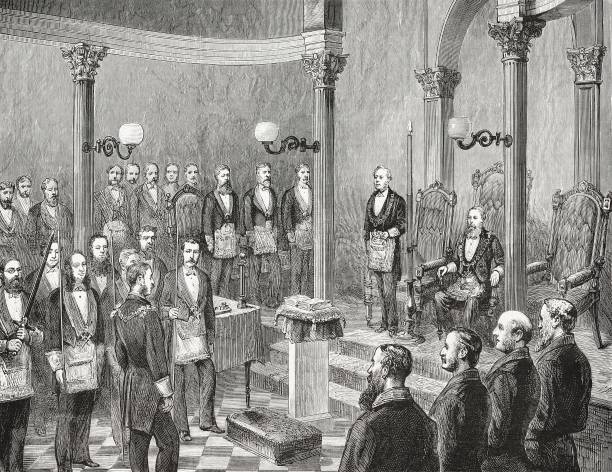
In the course of one lodge meeting, Freemasonry is a spiritual organization when the chaplain leads the brethren in prayer and asks for the blessing of Diety. It is a guild when the Master of the lodge teaches the new Mason the symbolic uses of stonemason’s tools. It becomes a school of instruction when the new brother learns about the importance of the 7 liberal arts and sciences. At other moments, it is an amateur theater company when the ritual is performed. The lodge becomes a men’s social club when meeting for dinner and fellowship. It becomes a charitable group when relief is provided to distressed brothers, their families or the local community perlocal community. It is also a business association when members with similar interests share ideas. The lodge resembles a family when fathers and sons, strangers and friends bond as ‘brothers’, and it is a community league when volunteers are needed for a project.
Traditionally, the primary purpose of the ritual is to educate the candidate. The rituals are closer to a play/drama/performance than anything else.
The ceremonial lore revolves around the period during which the First Temple at Jerusalem was built by King Solomon. King Solomon. The stories build from a peaceful and regal beginning which explains the inspiration for and construction of the Temple, leading up to a cataclysmic event which has come to symbolize the central morality of Speculative Freemasonry.
Throughout the series of short plays, you’ll come across dozens of metaphors, imparting the moral criteria which a Freemason is expected to aspire to. The ritual is composed of exquisitely crafted language, and for most masons the messages go in and stay in, enabling them to live a more positive and fulfilled live.
Rick Smith
Many avoid Freemasonry because they feel it would be “too religious” for them (myself included, until I learned more about the fraternity). If you have no issues with attending a church wedding or funeral, or being a Godfather for someone’s new baby, you should not meet any greater religious demands in craft masonry. Masons do not worship in craft lodges; that is the role of the Church.
The obvious overlap between Religion and Freemasonry is morality, which both teach as a primary function. The key difference in their approach is that fundamental religion tends towards ‘God-fearing morality’ whilst craft masonry speaks more to the Moral Compass, and the idea that your behavior in life should be geared towards preserving the stability of society and the happiness of everyone around you. For the purpose of learning and executing Masonic craft ritual, religion has no direct relevance whatsoever.
They say that “Politics is showbiz for ugly people!” For the rest of us, there’s Masonry. Ritual’s primary purpose is to implant the moral metaphors of Masonic teaching. That’s unequivocal.
Rick Smith
Being initiated into the 1st degree of Freemasonry, passed to the 2nd degree, and raised to the 3rd degree of Master Mason, does not at all make you instantly enlightened. You’re more or less just obligated into keeping the “secrets” of Masonry at that point. Being the candidate, going through the three degrees (plays), you’re really not participating, you’re just being instructed and walked through. So, actually learning the ritual, being engaged and involved, actually playing a role in the ritual (drama/play), is what enables you to really learn the metaphors/teachings. It is meant to be something that you will be taking in and learning for a lifetime – and that’s the point. While also finding fulfillment in having an active role in passing down these teachings, bettering yourself, your brothers, and community.
So, in short: As I’ve stated before, there really are no secrets in Freemasonry, all the “secret” knowledge is passed down through the ritual. This “secret knowledge” being universal teachings that we all know and live by as humans. The only real secret being how this knowledge is delivered — via the ritual.
The main reason for the secrecy is because it’s like spoiling a movie. If I tell you what the ritual is, everything that’s in it and how it’s delivered, then when you experience it yourself it won’t have the same impact and effect as it would if you didn’t know anything about it. Knowing everything beforehand would totally ruin the experience and the effect it is supposed to have on your psyche.
Freemasonry is different things for different men. We all join the fraternity for different reasons, nonetheless, we are all bound by one core tenet, and that is: to make good men better. We’re all here to improve ourselves individually and to help lift each other up as a group.
I became a Freemason, and maintain my position in the lodge, for a few reasons. One of the main reasons, the one that has had the most profound effect on me, is the ritual.
There really are no secrets in Freemasonry. All of their teachings are self evident, universal truths, known to all of humankind. The only thing that is “secret” (i’d say a better term is hidden, or rather, occult knowledge) about Freemasonry is how that information is taught/delivered. They do this through ritual. Most people start thinking Satan worship when they hear of occult rituals, this couldn’t be further from the truth in Freemasonry. Their rituals are basically just plays we act out and that’s how the knowledge is delivered.
As humans, we all have a part of ourselves that extends itself out to the world, in an attempt to understand the things that we don’t know. We do this in our behavior, in image, myth, story, drama, ritual, symbolism, etc..There is something very profound about ritual as a phenomenon. Evolutionarily, this is one of the most vital and essential ways we have passed down our knowledge, for 100s of 1000s (if not millions) of years. The most ancient stories we have as a species allude to this. Using the Bible for example, the biblical stories were created in part from observing each other and our behavior for millennia. They are patterns of human behavior that we observed, acted out (ritual/play/drama), then articulated in the biblical narrative. (Partly why Bible verse is used in our ritual)
Ritual is at the very core of how we evolved as a species, it cannot be stressed enough how crucial this has been for our evolution. Understanding and knowledge begin with ritual. We first act things out as human beings, behaviorally, it’s essentially just a drama/play. Understanding isn’t just knowledge, understanding means you embody the information and act it out. It’s like children playing (“rough housing”), they don’t KNOW what they’re doing conciously, they’re just acting it out, observing each others behavior (learning), then distilling that information. That’s why we are able to dance with each other, it’s just knowledge and understanding that we embody and act out.
So this process of acting things out in our environment behaviorally, observing it, then distilling that information, is a process that has taken place for millions of years (arguably since beings with nervous systems have existed). This eventually led us to a place where we could actually articulate that knowledge, like the biblical narratives. This is powerful beyond comprehension. This how we have been able to pass down information, largely un changed, for millennia. Just like you can only get certain information/knowledge from a book that you can’t get from a movie, or movie to a book, or video game to movie or book etc., ritual is unique in the information it contains and how it distills that information. Ritual being a core process for our evolutionary success, it can teach you in ways nothing else can. It is absolutely fundamental to understanding. Ritual is powerful in inarticulate ways, something you just have to experience yourself to understand. These rituals are far from being just archaic and silly superstition (as many believe).
Many people may claim to understand and know Masonic teachings, and while they are universal truths, you will never quite understand what Freemasonry is about without experiencing their rituals. One thing is for sure though, I can attest to the profundity in the Freemasonic tradition. There is also a very powerful feeling knowing that you are part of, and have gone through, the same experience as many other very influential men from the past (14 presidents included). With vague ties as far back as the ancient Egyptian temple initiations, all the way through the ancient Mystery School traditions, culminating in the Age of Enlightenment when the fraternity was founded.
I am an initiate of the flame, a seeker of Truth, bringer of light, warden of wisdom, and a candidate that has been raised to the sublime degree of Master Mason. I have been forever changed for the better, this no doubt has been another rebirth for me, and a start to a very new and exciting chapter of my life.
The sanctum sanctorum of Freemasonry is ornamented with the gnostic jewels of a thousand ages; its rituals ring with the divinely inspired words of seers and sages. A hundred religions have brought their gifts of wisdom to its altar; arts and sciences unnumbered have contributed to its symbolism. Freemasonry is a world-wide university, teaching the liberal arts and sciences of of the soul to all who will hearken to its words. It’s chairs are seats of learning and its pillars uphold an arch of universal education.
The philosophic power of Freemasonry lies in its symbols – it’s priceless heritage from the Mystery schools of antiquity. In a letter to Robert Freke Gould, Albert Pike writes:
“In it’s symbolism, which and it’s spirit of brotherhood are its essence, Freemasonry is more ancient than any of the world’s living religions. …”
Though Zoroaster, Hermes, Pythagoras, Plato. and Aristotle are now but dim memories in a world once rocked by the transcendency of their intellectual genius, still in the mystic temple of Freemasonry these god-men live again in their words and symbols; and the candidate, passing through the initiations, feels himself face-to-face with these illumined heirphants of days long past.
This is summary of a comment Jordan Peterson made in regards to “atheistic type people”, in so far as they have a type. He thinks that they don’t approach the Bible with enough respect. (And I’d argue most don’t even approach the Bible at all).
My approach to the Bible is the same as his, and he stated that he approaches it with the presupposition that “there’s probably more to this than I know”, and tries to understand the Bible from that perspective. Rather than to think that this is just a collection of superstitions we’ve outgrown – which isn’t a deep enough analysis.
That thinking has some truth but it doesn’t take into account the fact that the propositions in the Bible still stand at the foundation of our culture. It doesn’t take into account Nietzsche’s central concern, that if you blow out the notion of God, the entire structure crumbles. The “atheist types” haven’t wrestled with the real issues.


 ErudiTarot