The Moral Landscape

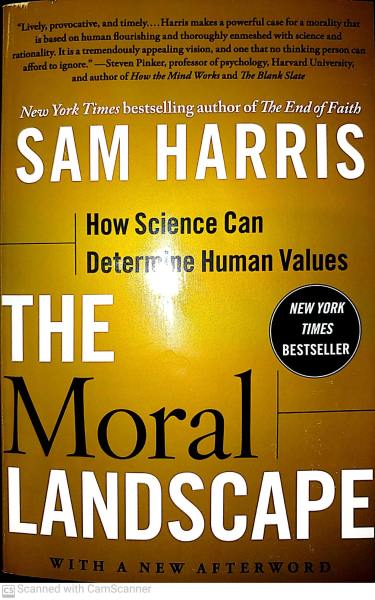
My new book by Sam Harris

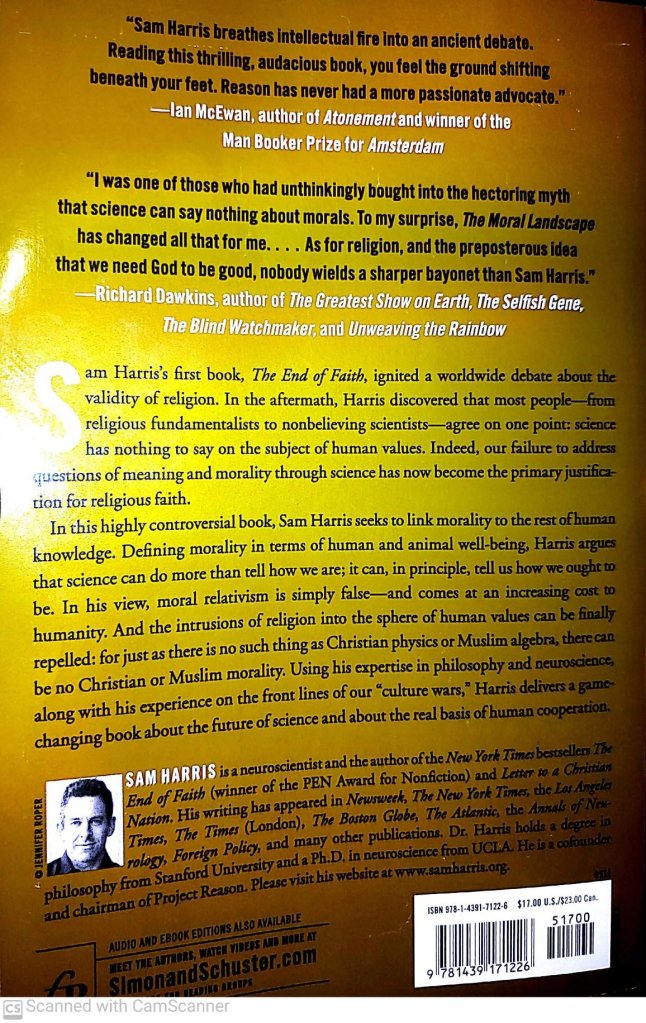
There are facts to be understood about how thoughts and intentions arise in the human brain; there are facts to be learned about how these mental states translate into behavior; there are further facts to be known about how these behaviors influence the world and the experience of other conscious beings. We will see that facts of this sort exhaust what we can reasonably mean by terms like “good” and “evil.” They will also increasingly fall within the purview of science and run far deeper than a person’s religious affiliation. Just as there is no such thing as Christian physics or Muslim algebra, we will see that there is no such thing as Christian or Muslim morality. Indeed, I will argue that morality should be considered an undeveloped branch of science.

Sam Harris

Sterilized Christianity – Alchemist Redemption

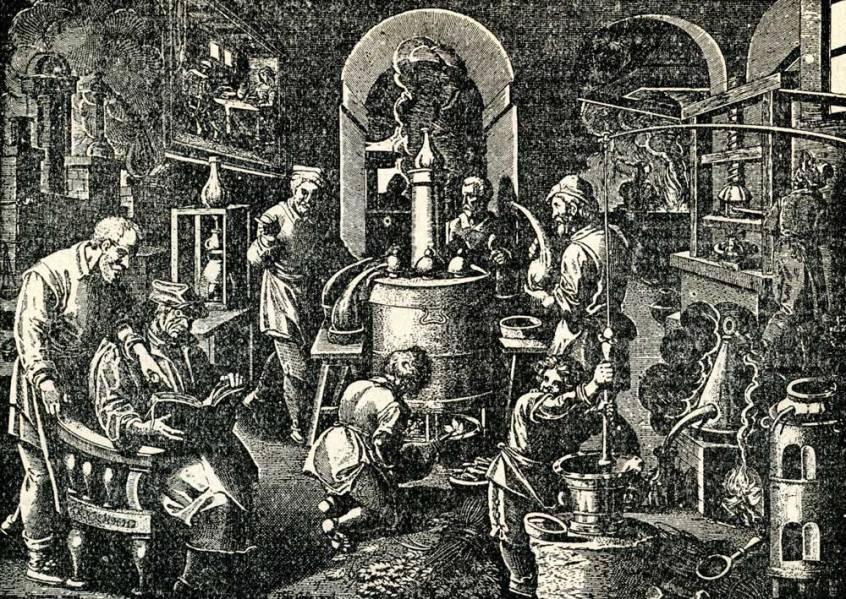
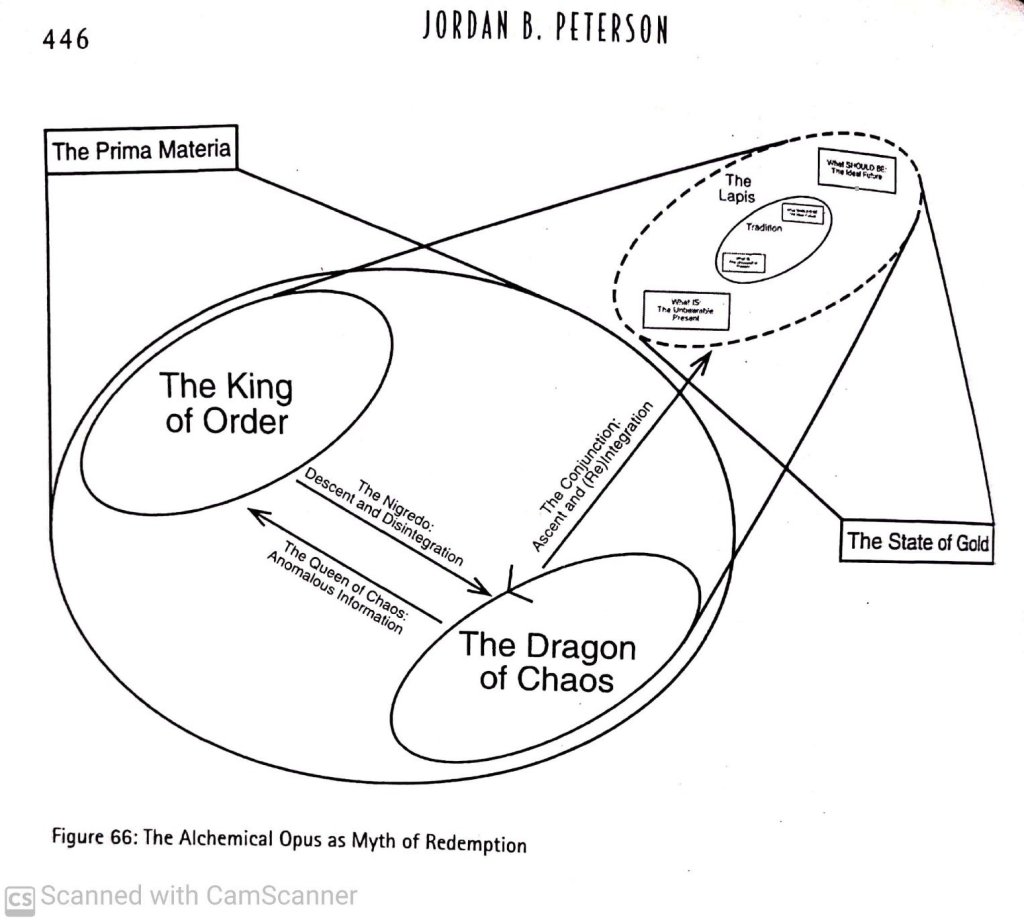
This final value, the goal of the pursuit of the alchemist, is discovery and embodiment of the meaning of life itself: integrated subjective being actively expressing its nature through manipulation of the possibilities inherent in the material / unknown world. This final goal is the production of an integrated intrapsychic condition – identical to that of the mythological hero – “acted out” in a world regarded as equivalent to self. Production of this condition – the lapis philosophorum – constitutes the antidote for the “corruption of the world,” attendant upon the Fall [attendant upon the emergence of “partial” self-consciousness.] The lapis is “agent of transformation,” equivalent to the mythological redemptive hero – able to turn “base metals into gold.” It is, as such, something more valuable than gold – just as the hero is more valuable than any of his concrete productions. The “complete” alchemical opus – with production of the lapis as goal – is presented schematically in figure 66.

Alchemy was a living myth: the myth of the individual man as redeemer. Organized Christianity had “sterilized itself,” so to speak, by insisting on the worship of some external truth as the means to salvation. The Alchemist (re)discovered the error of this presumption, and came to realize that identification with the redeemer was in fact necessary, not his worship; that myths of redemption had true power when they were incorporated, and acted out, rather than believed, in some abstract sense. This meant: to say that Christ was “the greatest man in history” – a combination of the divine and mortal – was not sufficient expression of faith. Sufficient expression meant the attempt to live out the myth of the hero, within the confines of individual personality – to voluntarily shoulder the cross of existence, to “unite the opposites” within a single breast, and to serve as active conscious mediator between the eternal generative forces of known and unknown.

Jordan Peterson

Cyclic Creation of Morals (How Morals are Created)

Moral presumptions of society emerge first in procedural form, as a consequence of individual exploratory activity, which is the process that generates novel behavioral patterns. These behavioral patterns are then hierarchically structured as a consequence of quasi-Darwinian competition, in accordance with the constraints noted previously (appeal to the imagination, self-sustenance, etc.)

The episodic memory systems map procedure, and outcome there of, and thereby come to contain similar paradigmatic structure – imagistically, and then more purely semantically. Over time, the unknown, nature, thereby comes to be represented mythically as the effectively bivalent Great Mother, simultaneously creative and destructive. The known, culture, becomes the Great Father, tyrant and wise king, authoritarian and protective personality, adapted to the unknown. The knower, man, becomes the hostile mythic brothers, sons of convention, hero and anti-hero, Christ and Satan – eternal generator and destroyer of history and tradition.

Semantic cognition, feeding on narrative – the bridge between the episode and the pure verbal extraction – derives “rules” from behavior. Application of the rules alters the environment, including procedural and episodic representation thereof. Thus the cycle continues.

Jordan Peterson

Understanding Morality

It is still the case, however, that description of the domain of morality tend to exceed the capability of declarative thought, and that the nature of much of what we think of as moral behavior is still, therefore, embedded in unconscious procedure. As a consequence, it is easy for us to become confused about the nature of morality, and to draw inappropriate, untimely and dangerous “fixed” conclusions.

Moral behaviors and schemas of valuation arise as a consequence of behavioral interaction undertaken in the social world: every individual, motivated to regulate his emotions through action, modifies the behavior of others, operating in the same environment. The consequence of this mutual modification, operating over time, is the emergence of a stable pattern of behavior, “designed” to match individual and social needs, simultaneously. Eventually, this behavioral pattern comes to be coded in image, heralded and narrative, and explicitly represented in words.

Myths of the “knowledge of good and evil” and the “fall from paradise” represent emergence of this representational capacity, in the guise of a historical event. The consequence of this “event” – that is, the development of “self-consciousness” – is capacity to represent death and understand that the possibility of death is part of the unknown.

These complex systems of action and belief are religious. They are the traditional means of dealing with the shadow cast on life by the knowledge of mortality. Our inability to understand the religious traditions and our consequent conscious denigration of their perspectives dramatically decrease the utility of what they have to offer.

We are conscious enough to destabilize our beliefs and our traditional patterns of action, but not conscious enough to understand them. If the reasons for the existence of our traditions were rendered more explicit, however, perhaps we could develop greater intrapsychic and social integrity. The capacity to develop such understanding might help us use our capacity for reason to support, rather than destroy, the moral systems that discipline and protect us.

Jordan Peterson

The Myth Hypothesis

…mythic stories or fantasies that guide our adaptation, in general, appear to describe or portray or embody three permanent constituent elements of human experience: the unknown, or unexplored territory; the known, or explored territory; and the process – the knower – that mediates between them. These three elements constitute the cosmos – that is, the world of experience – from the narrative or mythological perspective.

No matter where an individual lives – and no matter when – he faces the same set of problems or, perhaps, the same set of metaproblems, since the details differ in endlessly. He is a cultural creature, and must come to terms with the existence of that culture. He must master the domain of the known – explored territory – which is the set of interpretations and behavioral schemas he shares with his societal compatriots. He must understand his role within that culture – a role defined by the necessity of preservation, maintenance and transmission of tradition, as well as by capacity for the revolution and radical update of that tradition, when such update becomes necessary. He must also be able to tolerate and even benefit from the existence of the transcendental unknown – unexplored territory – which is the aspect of experience that cannot be addressed with mere application of memorized and habitual procedures. Finally, he must adapt to the presence of himself – must face the endlessly tragic problem of the knower, the exploratory process, the limited mortal subject; must serve as eternal mediator between the creative and destructive “underworld” of the unknown and the secure, oppressive patriarchal kingdom of human culture.

We cannot see the unknown, because we are protected from it by everything familiar and unquestioned. We are in addition habituated to what is familiar and known – by definition – and are therefore often unable to apprehend its structure (often even unable to perceive that is there). Finally, we remain ignorant of our own true nature, because of its intrinsic complexity, and because we act towards others and ourselves in a socialized manner, which is to say a predictable manner – and thereby shield ourselves from our own mystery. The figures of myth, however, embody the world – “visible” and “invisible.” Through the analysis of such figures, we can come to see just what meaning means, and how it reveals itself, in relationship to our actions. It is through such analysis that we can come to realize the potential breadth and depth of our own emotions, and the nature of our true being; to understand our capacity for great acts of evil – and great acts of good – and our motivations for participating in them.

Jordan Peterson

Temple Initiation

To truly enter the Temple a change in mind set must occur, this is sometimes referred to as “the process of initiation into the Mysteries” – the development of the intelligence of the heart – the Initiate must learn to focus on the inside rather than the outside and look beyond the visible to the invisible, to what lies beneath and the world within.


Its precisely the things we don’t see – we can’t see – that were the secrets of the Mystery schools. A sometimes difficult concept to grasp, it can require an adjustment in thinking and perception, as it focuses not on the physical, material world, but on its underlying causes. The great Mysteries concerned the invisible laws, forces, archetypes, and secret connections that are the building blocks – the invisible templates of our reality – and perhaps the roadmap to operating in higher realms as well.

Magical Egypt Episode 1

Archetypal Reality

I feel this is a very accurate description of what’s going on with our world culture currently. More specifically with politics and social justice.

The world can be validly construed as a forum for action, as well as a place of things. We describe the world as a place of things, using the formal methods of science. The techniques of narrative, however – myth, literature and drama – portray the world as a forum for action.

The world as forum for action is composed, essentially, of three constituent elements, which tends to manifest themselves in typical patterns of metaphoric representation. First is unexplored territory – the Great Mother, nature, creative and destructive, source and final resting place of all determinant things. Second is explored territory – the Great Father, culture, protective and tyrannical, cumulative ancestral wisdom. Third is the process that mediates between unexplored and explored territory – the Divine Son, the archetypal individual, creative exploratory Word and vengeful adversary. We are adapted to this world of divine characters, much as to the objective world. The fact of this adaptation implies that the environment is in reality a forum for action, as well as a place of things.

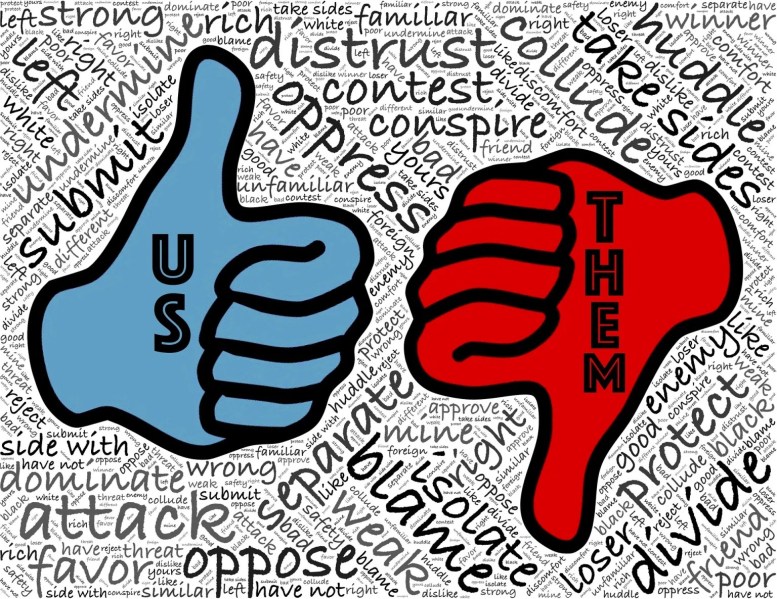
Unprotected exposure to unexplored territory produces fear. The individual is protected from such fear as a consequence of ritual imitation of the Great Father- as a consequence of the adoption of group identity, which restricts the meaning of things, and confers predictability on social interactions. When identification with the group is made absolute, however – when everything has to be controlled, when the unknown is no longer allowed to exist – the creative exploratory process that updates the group can no longer manifest itself. The Restriction of adaptive capacity dramatically increases the probability of social aggression.

Jordan Peterson

As Jung has stated, group identity eliminates individuality to the detriment of the individual.

Thought

Thinking is indispensable to us. It is essential for belief formation, planning, explicit learning, moral reasoning, and many other capacities that make us human. Thinking is the basis of every social relationship and cultural institution we have. It is also the foundation of science. But our habitual identification with thought – that is, our failure to recognize thoughts as thoughts, as appearances in consciousness – is a primary source of human suffering. It also gives rise to the illusion that a separate self is living inside one’s head.

We spend our lives lost in thought. The question is, what should we make of this fact? In the West, the the answer has been “Not much.” In the East, especially in contemplative traditions like those of Buddhism, being distracted by thought is understood to be the very wellspring of human suffering.

From the contemplative point of view, being lost in thoughts of any kind, pleasant or unpleasant, is analogous to being asleep and dreaming. It’s a mode of not knowing what is actually happening in the present moment. It is essentially a form of psychosis. Thought itself is not a problem, but being identified with thought is. Taking oneself to be the thinker of one’s thoughts – that is, not recognizing the present thought to be a transitory appearance of consciousness – is a delusion that produces nearly every species of human conflict and unhappiness. It doesn’t matter if your mind is wandering over current problems in set theory or cancer research; if you are thinking without knowing you are thinking, you are confused about who and what you are.

Sam Harris

Make Your Mind Matter

This presentation is by the author of the book You Are the Placebo: Making Your Mind Matter. This video is a great little summary of the major aspects of his book. This video is deeply illuminating and a absolutely necessary watch.

Our well-being is a reflection of how we perceive the world. If we gain an understanding over how our emotions affect our biology, then we gain the ability to take back control over our health. … You are not a victim of your genetics or enviorment. You have the capacity to experience reality, and, transform it

After Skool