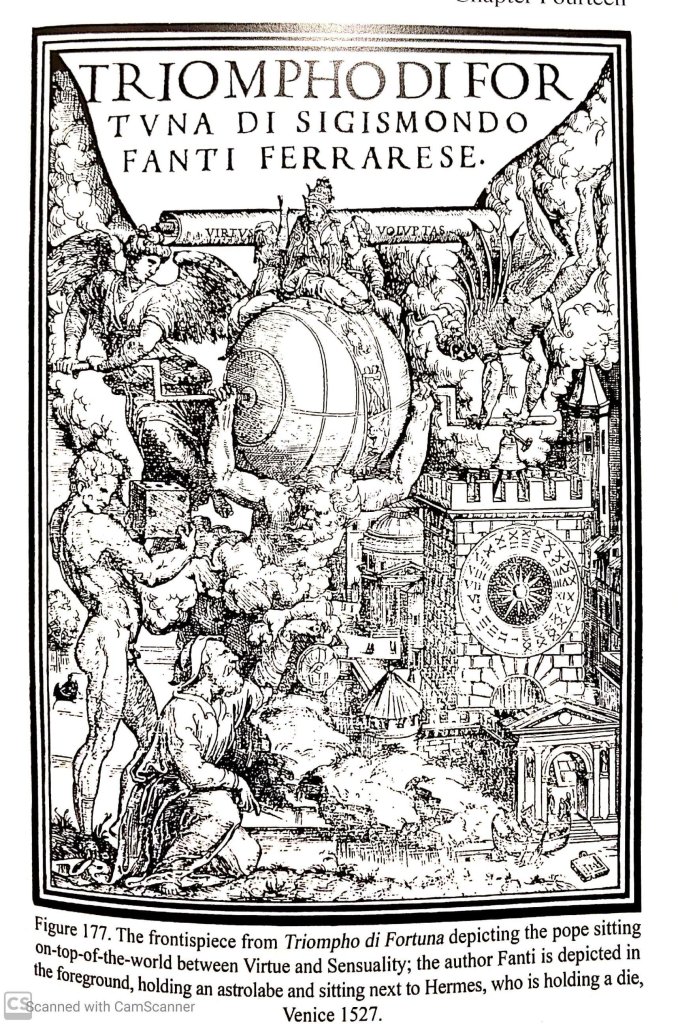
A motif similar to the Lovers can be seen and the frontispiece for the Triompho di Fortuna by Fanti, a fortune book published in Venice in 1527. In this allegorical illustration, we find a large figure of Atlas supporting a globe that is actually an elaborate wheel of Fortune with a belt displaying the signs of the zodiac surrounding it and crank handles extending from the central axes. On our left, there is an angel, representing Good Fortune, turning the handle clockwise. On right, there is a devil, representing Bad Fortune, also turning the handle. At the top of this wheel and globe, sits a pope. As in the Tarot, he represents the highest temporal ruler – he is literally on top of the world. On either side of him, sits one of two women with their names written in latin next to their heads. On the left is Virtus (virtue) and on the right, the same side as the devil, sits Voluptas (sensuality). The Pope’s fate hangs on his choice of a mate.
Robert M. Place

 ErudiTarot