Freemasonry’s Priceless Heritage

The sanctum sanctorum of Freemasonry is ornamented with the gnostic jewels of a thousand ages; its rituals ring with the divinely inspired words of seers and sages. A hundred religions have brought their gifts of wisdom to its altar; arts and sciences unnumbered have contributed to its symbolism. Freemasonry is a world-wide university, teaching the liberal arts and sciences of of the soul to all who will hearken to its words. It’s chairs are seats of learning and its pillars uphold an arch of universal education.

The philosophic power of Freemasonry lies in its symbols – it’s priceless heritage from the Mystery schools of antiquity. In a letter to Robert Freke Gould, Albert Pike writes:

“In it’s symbolism, which and it’s spirit of brotherhood are its essence, Freemasonry is more ancient than any of the world’s living religions. …”

Though Zoroaster, Hermes, Pythagoras, Plato. and Aristotle are now but dim memories in a world once rocked by the transcendency of their intellectual genius, still in the mystic temple of Freemasonry these god-men live again in their words and symbols; and the candidate, passing through the initiations, feels himself face-to-face with these illumined heirphants of days long past.

Manly P. Hall

Metaphorical Truth – Killing God?

Since Neitzche, many people have agreed with the notion that God, in recent generations, is dead. Meaning we aren’t religious anymore (ie. praying, living up to a higher power, engaging in ritual, etc.) and don’t believe in “God”.

While I agree that God is dead or dying in that sense, I believe, even in this current age, that God isn’t dead, God cannot die. To the ancients God(s) existed in the sky, in the forest, rivers, oceans, in our institutions, in our hearts and in our concious minds. God is majoraly a projection of our imagination into the objective realm to help make sense of the world. This doesn’t make God any less real than if he were to actually exist as a literal being – how human behavior manifest, the cause and effects of physical reality and the end results are the same, no matter how you think of God. This is one of those metaphorical truths. Just like it will increase the well-being of an individual acting as if a gun is cocked and loaded, acting as if God was real will increase the well-being of humanity.

This quote is what provoked this post and is relevant here:
“Debord also draws an equivalence between the role of mass media marketing in the present and the role of religions in the past.The spread of commodity-images by the mass media, produces “waves of enthusiasm for a given product” resulting in “moments of fervent exaltation similar to the ecstasies of the convulsions and miracles of the old religious fetishism”.”

God hasn’t died we are just worshipping new idols – God is now the new iPhone, drugs, vanity, or any unhealthy obsession/addiction. God exists in a very real – biologically concrete – way in our minds (it’s how our minds and imagination works), we cannot destroy Him so it would be wise to learn to worship Him in a healthy and constructive way, and to work towards cultivating our highest human faculties. So God isn’t dead/dying, we are only killing ourselves.

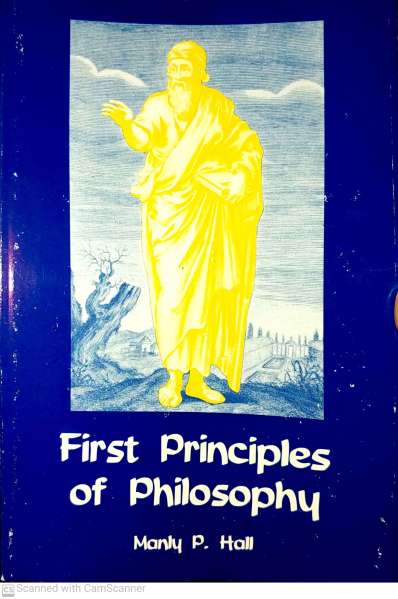
First Principles of Philosophy

I want you to look upon philosophy not as an abstract and difficult word, suggesting arduous labor, but as a simple and friendly term standing for all that is good and all that is real in knowledge.

I want you to make philosophy the great work of your life.

I want you to think of it as the greatest building power in society.

The mastery of philosophy is the supreme accomplishment of which man is capable and the living of philosophy is the most noble of all arts.

In the process of perfecting its disciples, philosophy make use of every known form of knowledge and he who perfects himself in its principles becomes truly divine.

As religion, philosophy leads to the knowledge of God.

As philosophy it leads to the knowledge of self.

And as science it leads to the knowledge and mastery of nature.

In this present age theology leads to confusion. Science, to a hopeless unbelief. Only Philosophy can bring us to “the Golden Time we look for.” Only from philosophy can we derive that enlightened courage with which to face the day. Those who have light within themselves will pass triumphantly through the difficult years which lie ahead.

Manly P. Hall

Temple Initiation

To truly enter the Temple a change in mind set must occur, this is sometimes referred to as “the process of initiation into the Mysteries” – the development of the intelligence of the heart – the Initiate must learn to focus on the inside rather than the outside and look beyond the visible to the invisible, to what lies beneath and the world within.


Its precisely the things we don’t see – we can’t see – that were the secrets of the Mystery schools. A sometimes difficult concept to grasp, it can require an adjustment in thinking and perception, as it focuses not on the physical, material world, but on its underlying causes. The great Mysteries concerned the invisible laws, forces, archetypes, and secret connections that are the building blocks – the invisible templates of our reality – and perhaps the roadmap to operating in higher realms as well.

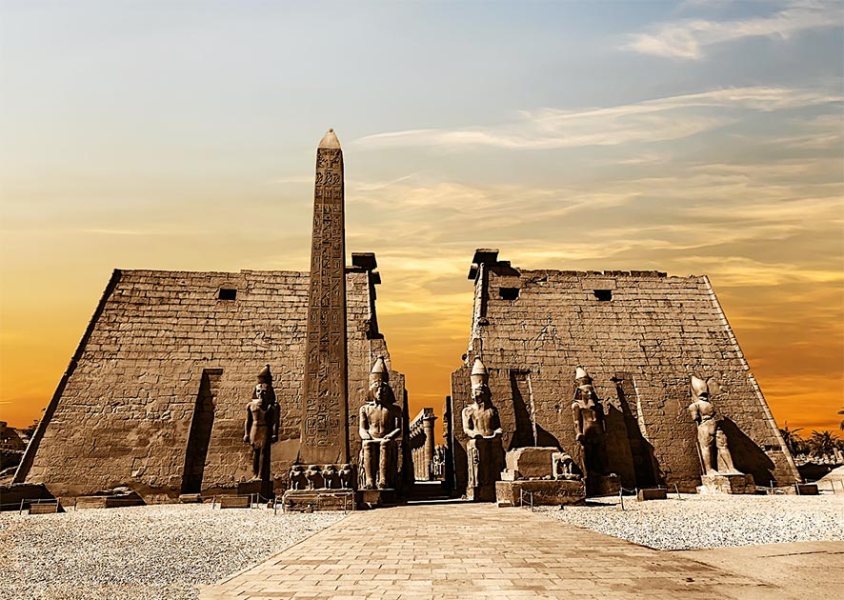
Magical Egypt Episode 1

Occultism

The Occult, what is it? The only time I ever hear the term is in conspiracy videos when someone is referencing Satan/demon worship, human sacrifice, demonic rituals, and lately pedophilia. Or in the mainstream to talk about vampires or, again, satan worship. The term Occult is one of the most misunderstood and misrepresented words that people with zero knowledge of the Occult like to throw around to any ritualistic practice they deem evil. The Christian church has worked for millennia to distance themselves from the term, by using it to label anything spiritual they deem heretic and claiming none of their practices are of the occult, or have any occult origins. Their smear campaign has been so effective it is embedded into all of western thought in both religous and atheistic cirlcles.

The term is a bit vague so it can mean alot of different things, sort of like the term religion. So in simplist terms the occult as a noun is defined as: supernatural, mystical, or magical beliefs, practices, or phenomena and/or matters regarded as involving the action or influence of supernatural or supernormal powers or some secret knowledge of them. It is also used as an adjective, simply meaning: not revealed/secret, not easily apprehended/understood, not manifest or detectable by clinical methods alone, and used in astronomy/astrology to mean: hidden from view/concealed.

In none of that is occult defined as Satan worship, pedophilia, or blood rituals. If you were to define Christianity as Occult is being defined now, then Christianity would mean Jim Jones and kool-aid. Now to briefly address the word “magic”. Again, another totally loaded word that I could make another lengthy post out of, so I’ll define it as simply as possible (doing the word injustice) to not detract from this post. Magic for me is defined as: the means of infulencing/manipulating the subjective and objective world through the act of intention and concentrated will power.

So with these definitions in mind you can see how the Eucharist ritual (Christianity’s communion) is an Occult magic ritual. Many aspects of Christian belief, prayer and ritual/ceremony are of occult narure, utilizing ritual magic. So indeed many of your own beliefs are occult beliefs – whether you practice any religion or not – and are of occult nature/origin.
Native American (or any indigenous people) Shamans, Christian priests, Buddhist, Hindu, and the like prcatice occult arts.

Practically all of the philosophy I profess and all of the books I read are of the “occult”. Any spiritual leader prcatices occult arts. Tarot is occult, meditation and prayer can be ritualistic magic, anything from personal/private, all the way through to Freemason, and on up to Christian rituals are occult rituals.

So as you can see the “Occult” isn’t what you think it is and it is likely you have occult beliefs and practices. The people who throw the term around to call something foreign to them evil have, I’m sure, never truly investigated the occult, or the word wouldn’t be so stigmatized. Please use this to see the term occult as it truly is, just a loaded word that describes a “hidden” magical practice/belief that isn’t at all evil or sinister.
Social Degradation

Written in 1951 but is painfully more relevant now. Paragraph 2 perfectly describes social media. Goes to show no matter what tools we have available to us, we humans constantly make the same mistakes.

With conflict the dominant keynote in modern human relationships, the peacemaker is given slight consideration. He may be branded politically as a pacifist or accused of cowardice. We have long held that it is proper to maintain belligerently and aggressively both our principles and our opinions. Failure to do so is diagnosed as a deficiency of character. In spite of this, however, the long memory of the world still honors the men of peace and those kindly sages who courageously lived and died in defense of the right to be kind.

Living as we do in a social system becoming more intense and confused everyday, we are constantly tempted to become involved in the conflicts of those around us. We are expected to take sides, to defend and offend, to argue and debate, and most of all to appear appropriately disturbed. It is a social error to be composed when others are exhausting their resources in pointless agitation. To such contestants, the peacemaker is not blessed, for he reveals a measure of self-control, which is itself disquieting to the uncontrolled.

Peacemaking is not a profession; it is an instinct, and only succeeds when it is sustained by other gentle and kindly traits of character. When calmness pervades the atmosphere, radiating from a relaxed, well poised person, it is a force to be reckoned with, but when it is demanded or required by some moralizer who knows not whereof he speaks, it has no calming influence.

Manly P. Hall

Indivisible Truth

The miracle is not accomplished by the direct search for health, but by the experience of the inflow of the presence of God. We ask not that our aches and pain shall be taken from us, but that in our hearts we shall know that faith by which all perfect works are possible. There are many weaknesses, but only one strength. There are countless infirmities, but the fact of health is indivisible from the fact of Truth. We cannot accomplish the lesser except through the greater. If we nurtured the root of the tree, we will have many flowers and fruits, but if we attempt to perfect one of the fruits the tree may perish. The cause of health is identical with the cause of peace and security and one cannot be obtained without the other.

Manly P. Hall

Immaculate Conception

The mystic instinctively recognizes that two mysteries are mingled together in the Christian story. The process of interpretation have confused the patterns, but internally we have certain faculties of discrimination which refuse to accept the confusion. Our spiritual need requires the two fold realization, and this need cannot be denied. There is Jesus, the son of man, and Christ the son of God. We accept the fact that Jesus was Christened, but not that Jesus was Christ. As the folk hero, Jesus is humanity, considered individually or collectively. Christ is the redemptive power of God, the Supreme Being manifesting through and upon the human creation. Christ is the son of heaven, and Jesus the son of earth.

The life of Jesus, like the Mystery rituals of the ancient temples, describes “the perilous journey.” Jesus personifies the eternal neophyte seeking admission at the gates of the spiritual universe.

…the Christian mystic meditates upon Jesus as the mystical personification of his own higher nature. In this sense, Jesus was immaculately conceived. He was born of the virgin – the power of the soul – and he came as the fulfilment of the divine promise.

Manly P. Hall

Mystic Illumination

Mysticism escapes from the illusion of history. It frees the mind from its most natural inclination, which is to approach events from the outside. The mind seeks to possess facts by accumulating them and storing them away for future reference. Having arranged them chronologically in the filing system of memory, it considers itself to be well-informed. The heart has no time for such classification. It bridges intervals of time and quality by an instinctive appraisal of values. Mysticism in this way accepts history only as a dated record recording eternal verities. The records of nations are long accounts of hates, fears, hopes, dreams, and intense allegiances. All the manifestations of human instincts may be divided and arranged chronologically, the instincts themselves are not susceptible to such organization. Scriptural writings are important because they re state ever-present emergencies. The heart accepts the lesson, but rejects the historical framework. It gathers all doctrines into an eternal now and experiences them as an immediate impact. In this way the old becomes immanent and can be experienced and thereby known in the spirit rather than in the letter

Manly P. Hall