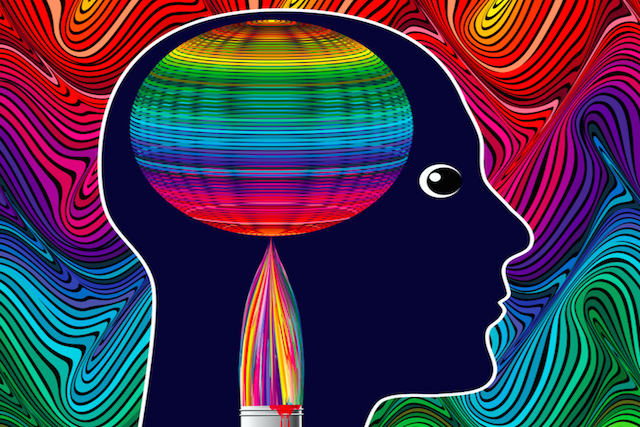
“Get Out of Your Head”

I think a lot of people use the phrase “you need to get out of your head” without truly understanding what it means. This phrase relates to concious and subconscious brain functions.

About 95% of our daily brain processes throughout the day come from subconscious programs we are largely unaware of. What your concious mind is doing during these automatic functions is that it goes “inside” your mind and bounces thoughts around. Most of these automatic (subconscious) programs are detrimental to your mental well being and don’t move you constructively towards your wants/desires. To “get out of your head” is to bring your concious mind out from “inside” your head, expand your awareness (conciousness), and to bring your concious attention to your subconscious (automatic) processes that are driving you.

The benifits of this being that you can start to become aware of these detrimental programs running you, and once these are identified, you can begin to rewire your brain, to write new programs beneficial to your wants/desires.

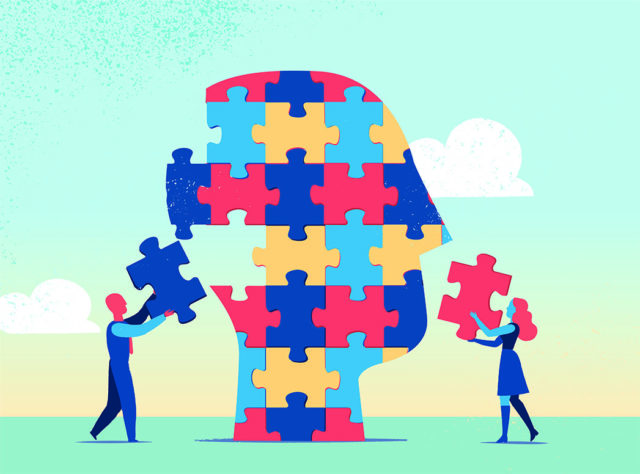
Freemasonry’s Priceless Heritage

The sanctum sanctorum of Freemasonry is ornamented with the gnostic jewels of a thousand ages; its rituals ring with the divinely inspired words of seers and sages. A hundred religions have brought their gifts of wisdom to its altar; arts and sciences unnumbered have contributed to its symbolism. Freemasonry is a world-wide university, teaching the liberal arts and sciences of of the soul to all who will hearken to its words. It’s chairs are seats of learning and its pillars uphold an arch of universal education.

The philosophic power of Freemasonry lies in its symbols – it’s priceless heritage from the Mystery schools of antiquity. In a letter to Robert Freke Gould, Albert Pike writes:

“In it’s symbolism, which and it’s spirit of brotherhood are its essence, Freemasonry is more ancient than any of the world’s living religions. …”

Though Zoroaster, Hermes, Pythagoras, Plato. and Aristotle are now but dim memories in a world once rocked by the transcendency of their intellectual genius, still in the mystic temple of Freemasonry these god-men live again in their words and symbols; and the candidate, passing through the initiations, feels himself face-to-face with these illumined heirphants of days long past.

Manly P. Hall

Thought

Thinking is indispensable to us. It is essential for belief formation, planning, explicit learning, moral reasoning, and many other capacities that make us human. Thinking is the basis of every social relationship and cultural institution we have. It is also the foundation of science. But our habitual identification with thought – that is, our failure to recognize thoughts as thoughts, as appearances in consciousness – is a primary source of human suffering. It also gives rise to the illusion that a separate self is living inside one’s head.

We spend our lives lost in thought. The question is, what should we make of this fact? In the West, the the answer has been “Not much.” In the East, especially in contemplative traditions like those of Buddhism, being distracted by thought is understood to be the very wellspring of human suffering.

From the contemplative point of view, being lost in thoughts of any kind, pleasant or unpleasant, is analogous to being asleep and dreaming. It’s a mode of not knowing what is actually happening in the present moment. It is essentially a form of psychosis. Thought itself is not a problem, but being identified with thought is. Taking oneself to be the thinker of one’s thoughts – that is, not recognizing the present thought to be a transitory appearance of consciousness – is a delusion that produces nearly every species of human conflict and unhappiness. It doesn’t matter if your mind is wandering over current problems in set theory or cancer research; if you are thinking without knowing you are thinking, you are confused about who and what you are.

Sam Harris

Make Your Mind Matter

This presentation is by the author of the book You Are the Placebo: Making Your Mind Matter. This video is a great little summary of the major aspects of his book. This video is deeply illuminating and a absolutely necessary watch.

Our well-being is a reflection of how we perceive the world. If we gain an understanding over how our emotions affect our biology, then we gain the ability to take back control over our health. … You are not a victim of your genetics or enviorment. You have the capacity to experience reality, and, transform it

After Skool

Mindfullness

Practicing and cultivating the skill of “mindfulness”, for me, has been one of the single most important, transcending, and life altering changes I’ve ever made. As Sam states – as well as any other practitioner of mindfulness will tell you – it is an absolutely necessary skill to develop for one to be able to navigate through life with less effort and more happiness.

It’l is always now. This might sound trite, but it is a truth. … The reality of your life is always now. And to realize this, we will see, is liberating. In fact, I think there is nothing more important to understand if you want to be happy in this world.

But we spend most of our lives forgetting this truth – overlooking it, fleeing it, repudiating it. And the horror is that we succeeded. We manage to avoid being happy while struggling to become happy, fulfilling one desire after the next, banishing our fears, grasping at pleasure, recoiling from pain – and thinking interminably, about how best to keep the whole works up and running. As a consequence, we spend our lives being far less content that we might otherwise be. We often fail to appreciate what we have until we lost it. We crave experiences, objects, relationships, only to grow bored with them. And yet the craving puts it. I speak from experience, of course.

…the literature on its psychological benefits is now substantial. There’s nothing spooky about mindfulness. It is simply a state of clear, non-judgmental, and undistracted attention to the contents of consciousness, whether pleasant or unpleasant. Cultivating this quality of mind has been shown to reduce pain, anxiety, and depression; improve cognitive function; and even produce changes in gray matter density in regions of the brain related to learning and memory, emotional regulation, and self-awareness.

Sam Harris