The Moral Landscape

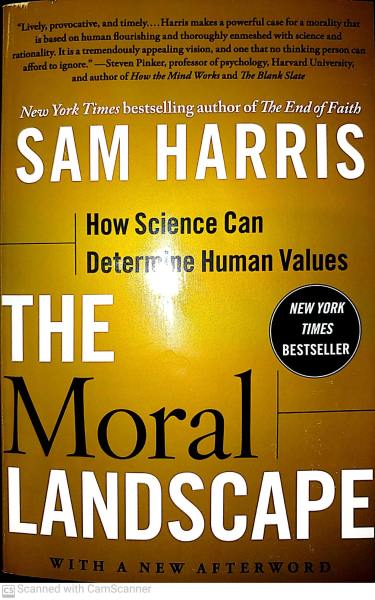
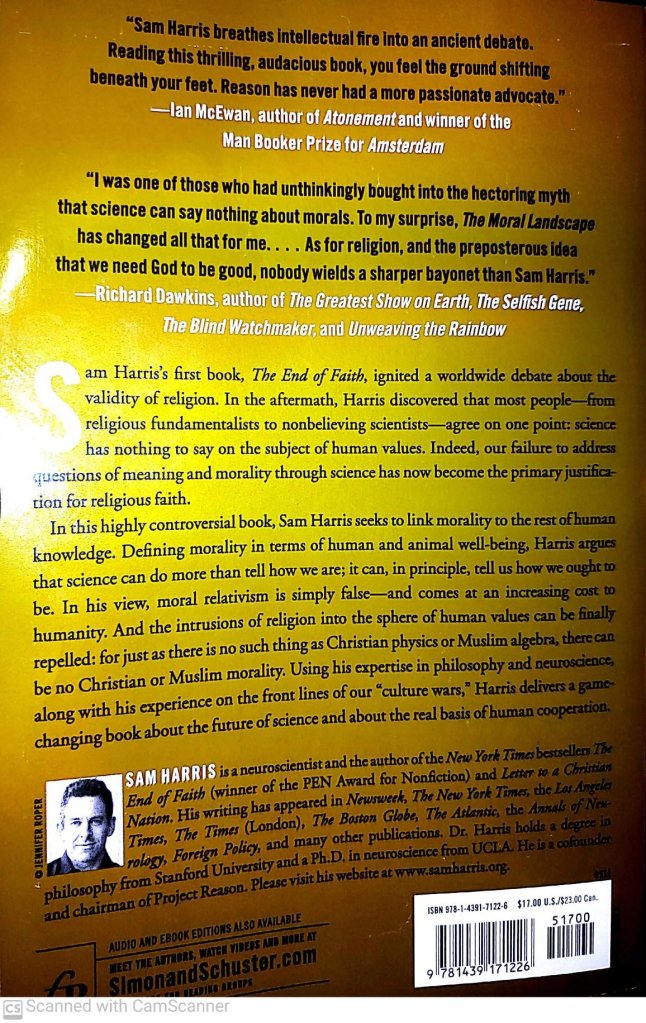
My new book by Sam Harris

There are facts to be understood about how thoughts and intentions arise in the human brain; there are facts to be learned about how these mental states translate into behavior; there are further facts to be known about how these behaviors influence the world and the experience of other conscious beings. We will see that facts of this sort exhaust what we can reasonably mean by terms like “good” and “evil.” They will also increasingly fall within the purview of science and run far deeper than a person’s religious affiliation. Just as there is no such thing as Christian physics or Muslim algebra, we will see that there is no such thing as Christian or Muslim morality. Indeed, I will argue that morality should be considered an undeveloped branch of science.

Sam Harris

Cyclic Creation of Morals (How Morals are Created)

Moral presumptions of society emerge first in procedural form, as a consequence of individual exploratory activity, which is the process that generates novel behavioral patterns. These behavioral patterns are then hierarchically structured as a consequence of quasi-Darwinian competition, in accordance with the constraints noted previously (appeal to the imagination, self-sustenance, etc.)

The episodic memory systems map procedure, and outcome there of, and thereby come to contain similar paradigmatic structure – imagistically, and then more purely semantically. Over time, the unknown, nature, thereby comes to be represented mythically as the effectively bivalent Great Mother, simultaneously creative and destructive. The known, culture, becomes the Great Father, tyrant and wise king, authoritarian and protective personality, adapted to the unknown. The knower, man, becomes the hostile mythic brothers, sons of convention, hero and anti-hero, Christ and Satan – eternal generator and destroyer of history and tradition.

Semantic cognition, feeding on narrative – the bridge between the episode and the pure verbal extraction – derives “rules” from behavior. Application of the rules alters the environment, including procedural and episodic representation thereof. Thus the cycle continues.

Jordan Peterson

Foreign Viewpoint

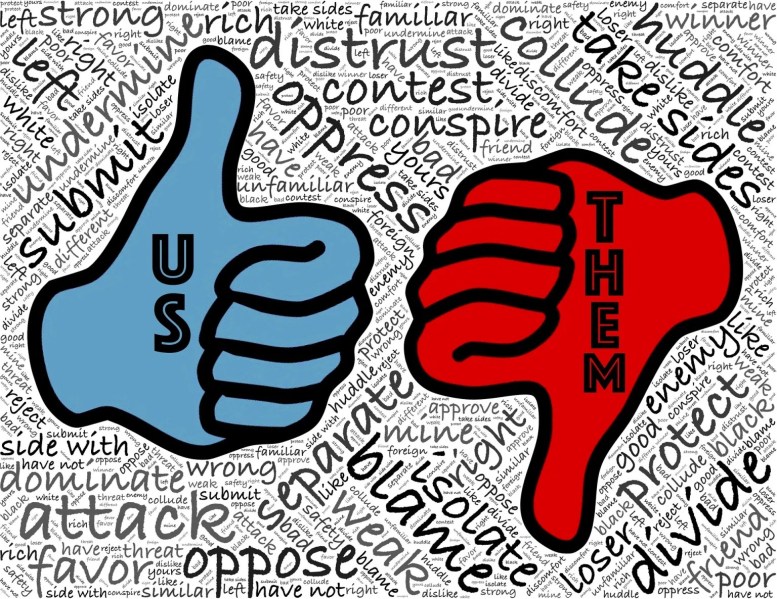
This means essentially that to give serious consideration to another’s viewpoint means to risk exposure to indeterminate uncertainty – to risk a rise in existential anxiety, pain and depression; to experience temporally indeterminate effective, imagistic and cognitive chaos. It is much more likely, in consequence, that a foreign viewpoint will appear evil or will come to be defined as such (especially during times rendered unstable – unbearably novel – for additional alternative reasons).

Once such definition occurs, application of aggression, designed to obliterate the source of threat, appears morally justified, even required by duty. The alternative or foreign viewpoint is in fact reasonably considered evil (although this consideration is dangerously one-sided), when viewed in terms of its potential destructive capacity, from within the strict confines of the historically determined social-psychological adaptive structure. It is only within the domain of meta-morality (which is the morality designed to update moral rules) that the strange may be tolerated or even welcomed.

Jordan Peterson

Logic

People do not keep a consistent logic. By and large, they will adapt their logic to each situation. They use “logic” to confirm personal biases and to convey to others they are just. This is a flimsy foundation for moral ethic. It creates a confused individual that isn’t at all confused. It splits the psyche and facilitates a unconscious war between the subconscious and conciousness, ultimately manifesting into despotism if left un checked.