A Breakthrough in Therapy

I’d like to share a recent breakthrough I’ve had in therapy. You’ll need just a quick background of my symptoms from childhood trauma to understand the break through. Basically I exhibit an irrational rage to any emotionally charged situation. So the closer people are to me and the more emotionally charged the situation, the more I rage. Anger is largely a learned behavior. While my dad wasn’t ever abusive towards us kids, he did have anger issues, he would react with anger to high stress situations. I learned how to react with to the world with anger by watching my father. My abusive mother is what ingrained triggers in me that will provoke an angry response to things that seem to be not at all connected to my trauma.

So these triggers induce a rage in me. What I’ve learned is that I’m not really angry. With humans, anger and rage are almost always a cover for much deeper feelings. In situations that relate to my triggers, I found that what is at the core of my anger is fear. When I get afraid my unconscious reaction is to get angry. The anger and rage completely cover any fear I feel. I know this logically, but I cannot separate the fear and anger internally. I don’t feel afraid at all, just mad, I only know this intellectually because it’s the only thing that explains my over the top reactions I have to everyday minor situations.

Part of my breakthrough is this: In a therapy session, when I was talking about my current feelings, I started to feel the rage build in me. I was guided by my therapist to “walk through” my anger so to speak, to interact with it, ask it questions, investigate it. In doing that, she actually enabled me to separate my anger from my fear. I was able to physically feel my fear separate from my anger in my body. Something that has never happened to me yet, even after a few years of pretty intense therapy.

So in doing this it enabled me to investigate my fear. Again, something I’ve never been able to do. I was able to ask myself what I’m still afraid of after all these years. My mother was physically (and emotionally) abusive when I was a child, back then I was obviously afraid of her in a physically sense. She’s 4 foot 10 inches, so I haven’t been physically scared of her for a long time. What I found is that the same physical fear I used to have, morphed into a fear I have that is wrapped up in guilt. I’m afraid I’m making the wrong decision with my mother. For those that don’t know, about a year ago I cut my mother off completely, like absolutely 0 contact with her at all. Even though my 3 other siblings are still very much involved in her life.

I’m afraid I’m making the wrong choice here. I now have to learn to separate the guilt from the fear. Because the guilt I feel about cutting off my mother is inducing the same fear I felt as a child, which is causing my rage in everyday situations.

That’s the breakthrough I had. Firstly, I was able to actually separate my anger from the fear, to be able to investigate my fear. Then I found that my guilt is wrapped up in my fear, something that is constantly looming over me. I obviously still have a lot more work to do, but now I have a direction to go, I can try to untangle my guilt from my fear.

This is what therapy is for. This is the tough spiritual work one has to go through for real change. You can understand how the human mind works on an intellectual level all you want, but you have to actually put these things to practice in your own mind. You have to have a rich inner life to look into the depths of your soul, to investigate the things that you’re not in control of. This is wisdom. This is gnosis.

Why Esoteric Traditions Veil Their Truths

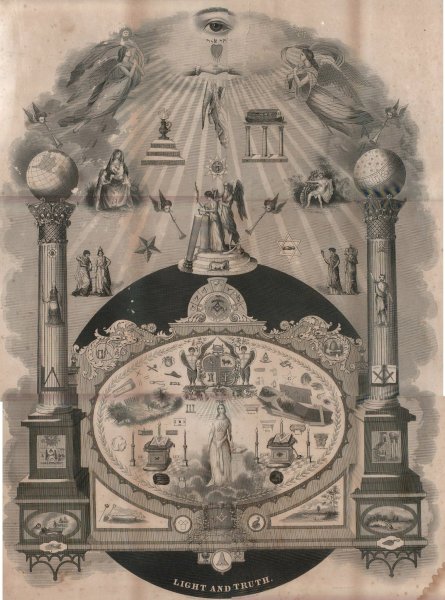
Many people look down on institutions or organizations that openly claim to keep secrets. Christians have been one of the harshest critics about this and baselessly claim Masonic secrets are kept for nefarious reasons. Yet even Christianity veils truths in their scripture and their teachings. Just about every esoteric and/or occult group, practice veiling their deepest truths in symbolism and allegory. Even nature hides Truths in plain sight.

Below are some quotes on the subject, one even coming from the bible.

Masonry, like all the religions, all the Mysteries, Hermeticism and Alchemy, conceals its secrets from all except the adepts and sages, or the elect, and uses false explanations and misinterpretations of its symbols to mislead those who deserve only to be misled; to conceal the Truth, which it calls Light, from them, and to draw them away from it. Truth is not for those who are unworthy or unable to receive it, or would pervert it.

Albert Pike

Do not give what is holy to dogs; and do not cast your pearls before swine, or they will trample them underfoot and turn and mow you.

Matt 7:6

There are a few reasons this is done and it’s not done for any nefarious reasons. Though, obviously a corrupt institution can do it for nefarious reasons.

One of the main reasons this is done is to prevent people from perverting the truth for their own gain. I can use the mainstream accepted “Truth” about Lucifer, from the Bible, as an example. The veiled truth is that Lucifer (as stated in the Bible, he is the Light Bringer) is to be thought of more as a force, not an existing personified demon. Understanding Lucifer as a force means that as an individual, seeing evil in their heart, has to take responsibility for that evil. Because it is a force that stems from them and that they partake in. If the uninitiated, profane, and/or unworthy find out this truth they would pervert it. They would rather think of Lucifer as a personified demon, as something separate from them, so that they can avoid all responsibility for that evil. “It’s not me, it’s the devil, it’s his fault!”

People would rather deny the torture of understanding their baser yearnings in self deceit. The more the actual truth is pushed on certain individuals the more they push back. Self deceit turns into denialism and a whole new way of seeing the world. These people build a new a better truth for themselves, at the detriment to the world around them, so it’s better to veil these deeper truths from the profane.

Another main reason the truth is veiled is because truth is actually a very subjective thing. “Truth is the aim of belief” and we all have different beliefs and aims.

Truth is the property of being in accord with fact or reality. In everyday language, truth is typically ascribed to things that aim to represent reality or otherwise correspond to it, such as beliefs, propositions, and declarative sentences.

Wikipedia: Truth

Just telling an individual the Truth doesn’t work, they have to find the Truth for themselves. So you veil the Truth in such a way that it leads people on a journey to discover it for themselves, in their own way.

Without this method people will never understand the Truth on their own. This is the main reason Masons hide their Truths in symbolism and allegory. This is the philosophy of a Freemason, to attempt to lift the veil of reality into the deeper Truths that lay hidden in plain sight.

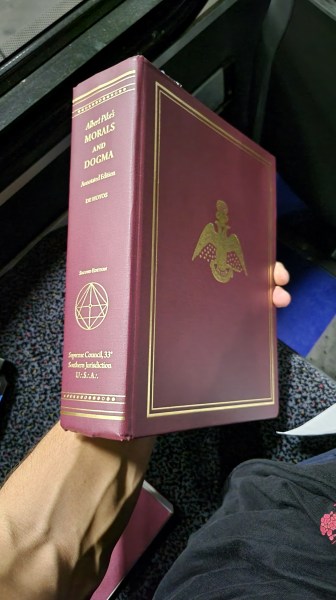
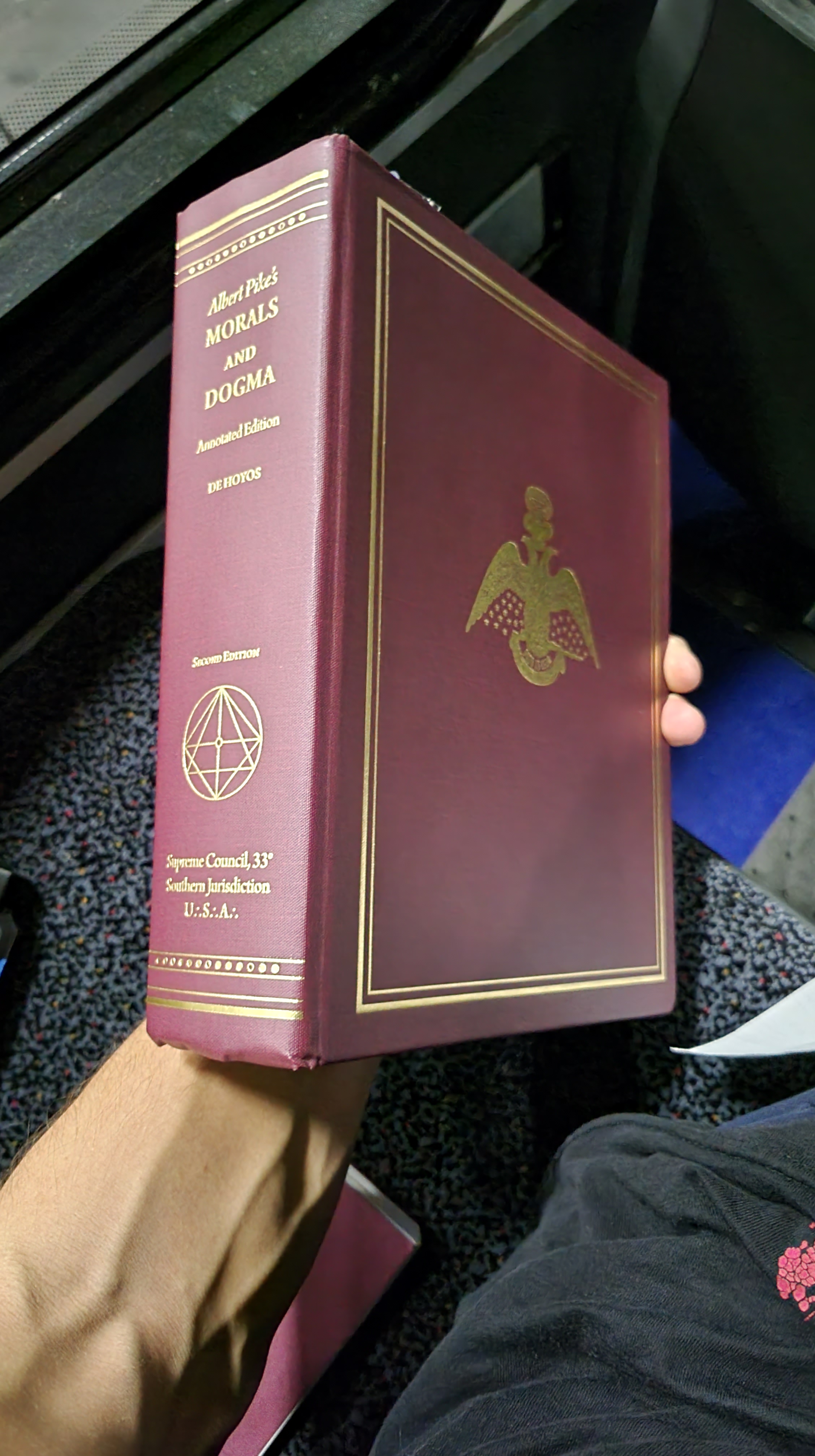
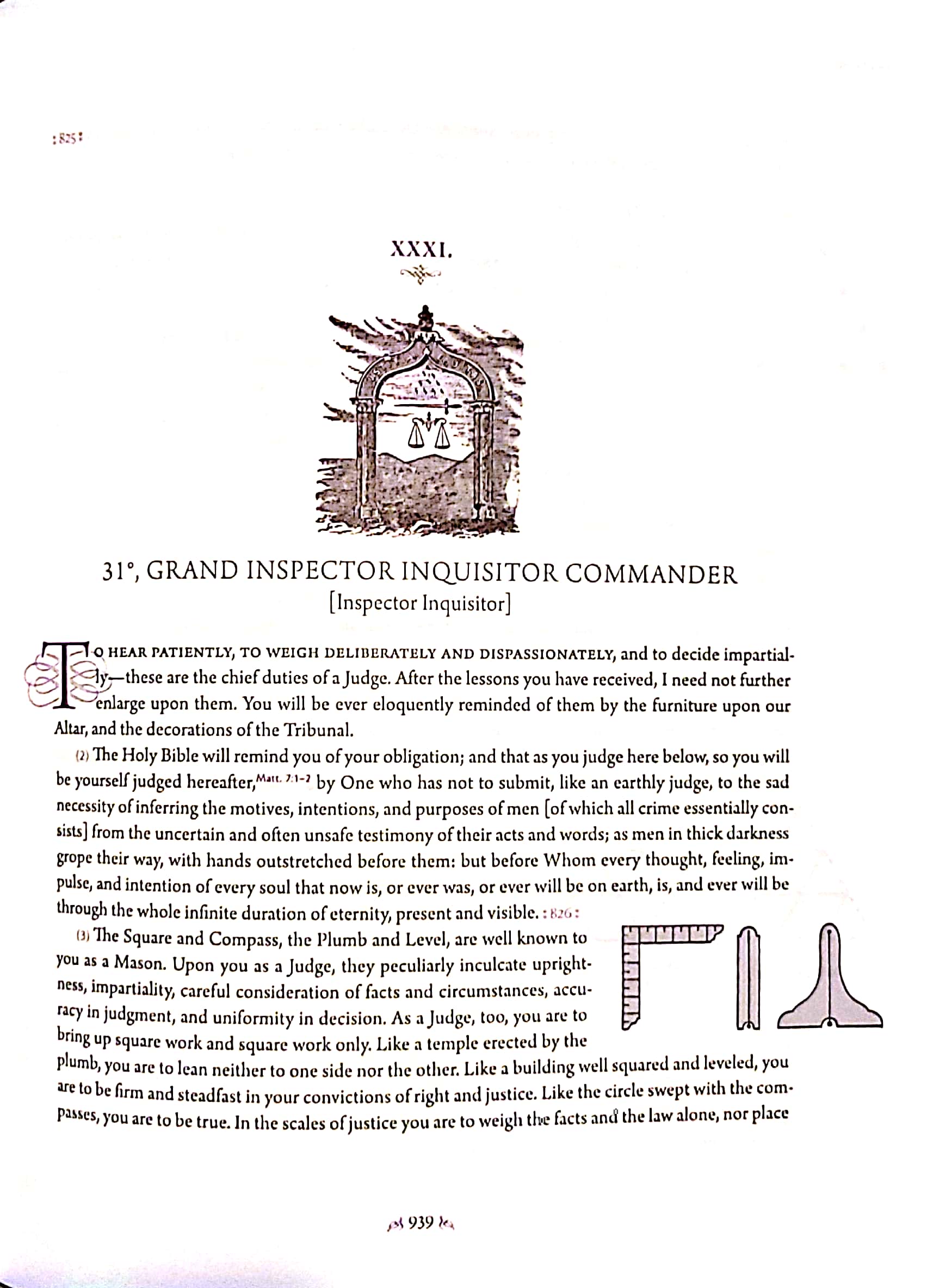
Morals and Dogma

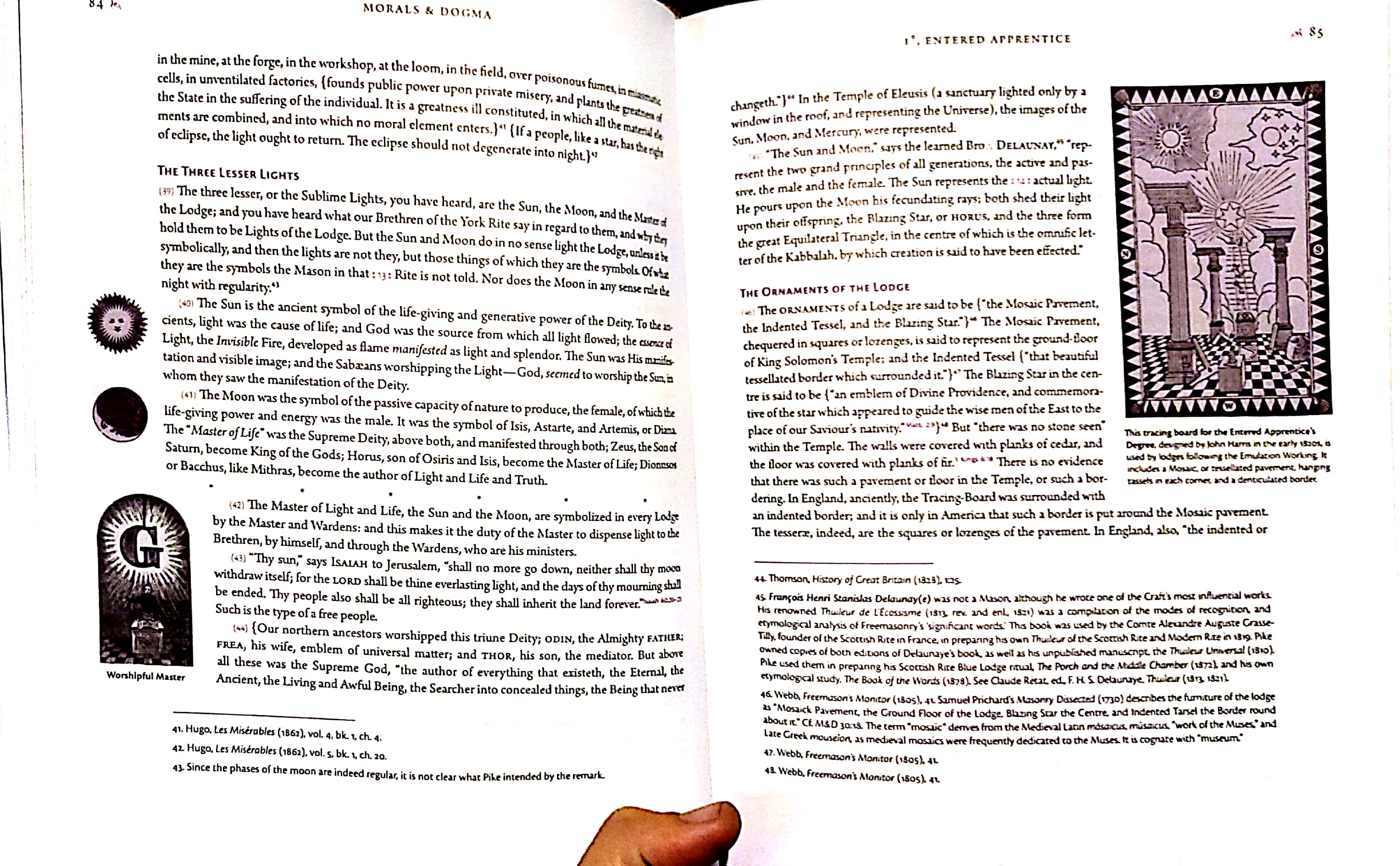
Reading morals and dogma is an epic adventure punctuated by rhapsodic beauty and sheer confusion. Pike and his sources swing our attention to the perennial grear questions: Where do we come from? Who are we? Why are we here? What are the duties of man? What assurance do we have of a Divine Presence in the human spirit? What is the nature of reality? What ethical and moral obligations does one have to the world at large? Is there anything to be learned from human suffering? Can people of different faiths agree on a shared religious duty?

These questions, and many others, agitate the mind, and rivet our attention as much today as they did in Plato or Aristotle’s time, let alone a mere 140 years ago.

The relevance of Morals and Dogma today lies in it’s exploration of the great questions and philosophical dilemmas which have always moved humanity. Particularly for the Mason, this book serves the useful purpose of putting Masonic morality and ethics within the context of the general society. Morals and dogma bids man to think large – to cast aside the petty concerns of everyday life and to be better than he even believes he can be. As initiates of the 30 degree Knight Kadosh are aware, “Strive not to be better than others, but to be better than thyself” Is one of the duties of a Masonic philosopher.

Supreme Council 33 Degree

No Redemption in Equality

Many people have a time or period in their life where they feel their life lacks purpose, meaning, direction, and take on a nihilistic world view. Some people live like that and never escape. When I started my career after school is when this period came for me – which is a very common time for most people.

I felt lost so to speak and became very nihilistic without any purpose, meaning, and direction. In life there is this philisophic principle or idea about “quality”. This idea of “quality” basically says that there are qualitative distinctions between things and that as humans, we have an instinct to make qualitative distinctions. A qualitative distinction is just saying that “this” is better than “that” or vice-versa. So a qualitative distinction is a judgment.

There is this modern idea that we are to accept ourselves and that we are OK just as we are. Many people (especially the younger generations) are conflating what this means and take it literally. They accept themselves and don’t work towards bettering who they are. Jordan Peterson thinks this is an insane idea and couldn’t be more nihilistic. This is because you are NOT ok, and the reason you’re not ok is because you could be WAY more than what you are. So do you want to be ok as you are? Or do you want to strive towards what’s better?

I’ve come a very long way from my nihilism. I have filled my life with copious amounts of purpose and meaning, and have gained plenty of direction in doing so. The turning point for me was because I knew I wasn’t happy with my current mode of Being. I didn’t consider the manner in which I conducted myself to be sufficient. To do this you have to understand the notion that you CAN make “qualitative distinctions” and that there really is a difference between “good” things and “bad” things, or “great” things and “evil” things etc.. This gives you direction and the possibility of moving upward. You have to maintain the idea that we as humans are insufficient as we are and need the movement upward. So you have to conceptualize something like the “highest good” and then strive towards that.

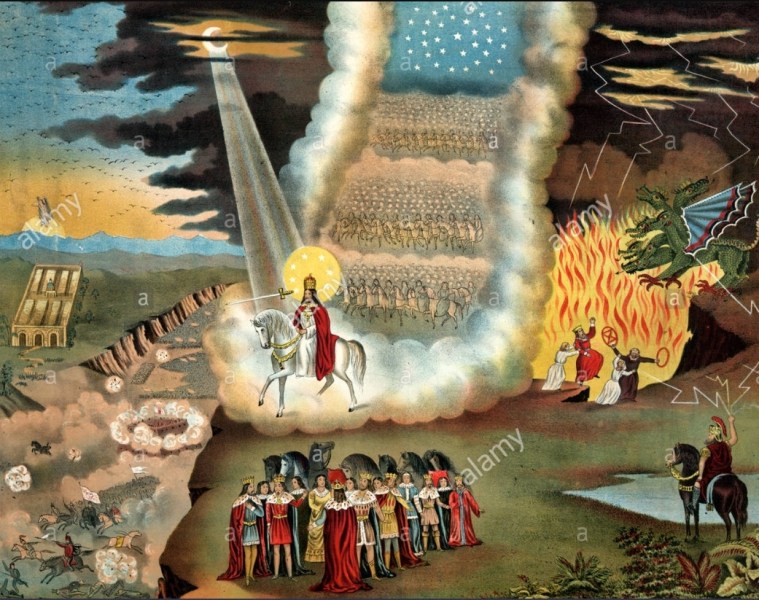
This is what Christ is in the Bible (the highest good) and why the biblical story gives people so much direction and meaning – something to strive towards. There is an idea in Revelations that the “redeemer” and “judge” are the same thing. Christ comes back with a flaming sword in his mouth to judge the people of earth. Most people were damned and some were saved.

There is no difference between conceptualizing the good and being judged. Because to conceptualize the good and move towards it, means that you have to separate from yourselves all the things that aren’t good and leave them behind. This is why “redeemer” and the “judge” are the same thing.

That’s the problem in the modern world with how we are rejecting qualitative distinctions, to not offend anyone/hurt anyone’s feelings, because we are just fine as we are and don’t want to say one thing is better than the other. Sure, it’s not any fun to be casted off with the damned, but if people are insufficient in their present condition (which seems to be the case, try finding someone who is not) and you deny the possibility of qualitative distinctions, because you want to promote a radical egalitarianism, then you remove the possibility of redemption – because there is no movement towards the good. Sacrificing the “good” for the “equal” is catastrophic, because if we were all equal, we’d all be equally un redeemed and miserable.

So to live a life full of meaning, direction, and purpose, you to understand that you are insufficient as you are. You have to conceptualize the highest good and strive for it – the continuation of our species depends on it.

Social Revolution!

Jordan Peterson on remidiating social systems:

He is of the opinion that the proper strategy for implementing social change is to stay within your domain of competence – which requires humility, a virtue that is never promoted in our modern culture, a virtue we can hardly even talk about. He defines humility as “you’re probably not as smart as you think you are and you should be careful”.

So the question may be: “ok I should be careful, but I still want to do good and make positive social change.”

So how do you be careful and do good? You try not to step outside the boundaries of your competence and start small. You start with things that you CAN adjust, that you actually DO understand, with things that you can actually fix.

So what Dr. Peterson promotes is that you should restrict your attempts to fix things to what’s at hand. So things about yourself that you can fix, things about yourself that you know aren’t right, not things about you by anyone else’s opinion. Then maybe there’s things you can adjust in your family and that gets really hard. You really have to have yourself together before you start to tackle your family.

It’s hard to put yourself together, it’s really hard to put your family together, so why would you think you can put the world together? The world is obviously far more complicated than you and your family. So if you’re stymied in your attempts to put your house in order, then that should make you very leary about announcing your broad scale plans for revolution.

And this is a very peculiar thing, because people are much more likely to announce their plans for large scale social revolution, than they are to set themselves or their family straight.

Dr. Peterson thinks this is the case because as soon as you try to adjust yourself or family, the system immediately kicks back at you. Where if you announce your plans for large scale social revolution, the lag between the announcement and the kick back is so long that you don’t realize there is any error there. So you can get away with being wrong if nothing falls on you for a while.

It’s not easy to fix things, especially if you’re not committed to it. And you know if you’re committed to it if you’re trying to change yourself first.

“It’s more difficult to rule yourself than to rule the city.” And that’s not a metaphor.

“Get Out of Your Head”

I think a lot of people use the phrase “you need to get out of your head” without truly understanding what it means. This phrase relates to concious and subconscious brain functions.

About 95% of our daily brain processes throughout the day come from subconscious programs we are largely unaware of. What your concious mind is doing during these automatic functions is that it goes “inside” your mind and bounces thoughts around. Most of these automatic (subconscious) programs are detrimental to your mental well being and don’t move you constructively towards your wants/desires. To “get out of your head” is to bring your concious mind out from “inside” your head, expand your awareness (conciousness), and to bring your concious attention to your subconscious (automatic) processes that are driving you.

The benifits of this being that you can start to become aware of these detrimental programs running you, and once these are identified, you can begin to rewire your brain, to write new programs beneficial to your wants/desires.

Freemasonry’s Priceless Heritage

The sanctum sanctorum of Freemasonry is ornamented with the gnostic jewels of a thousand ages; its rituals ring with the divinely inspired words of seers and sages. A hundred religions have brought their gifts of wisdom to its altar; arts and sciences unnumbered have contributed to its symbolism. Freemasonry is a world-wide university, teaching the liberal arts and sciences of of the soul to all who will hearken to its words. It’s chairs are seats of learning and its pillars uphold an arch of universal education.

The philosophic power of Freemasonry lies in its symbols – it’s priceless heritage from the Mystery schools of antiquity. In a letter to Robert Freke Gould, Albert Pike writes:

“In it’s symbolism, which and it’s spirit of brotherhood are its essence, Freemasonry is more ancient than any of the world’s living religions. …”

Though Zoroaster, Hermes, Pythagoras, Plato. and Aristotle are now but dim memories in a world once rocked by the transcendency of their intellectual genius, still in the mystic temple of Freemasonry these god-men live again in their words and symbols; and the candidate, passing through the initiations, feels himself face-to-face with these illumined heirphants of days long past.

Manly P. Hall

How To Approach The Bible


This is summary of a comment Jordan Peterson made in regards to “atheistic type people”, in so far as they have a type. He thinks that they don’t approach the Bible with enough respect. (And I’d argue most don’t even approach the Bible at all).

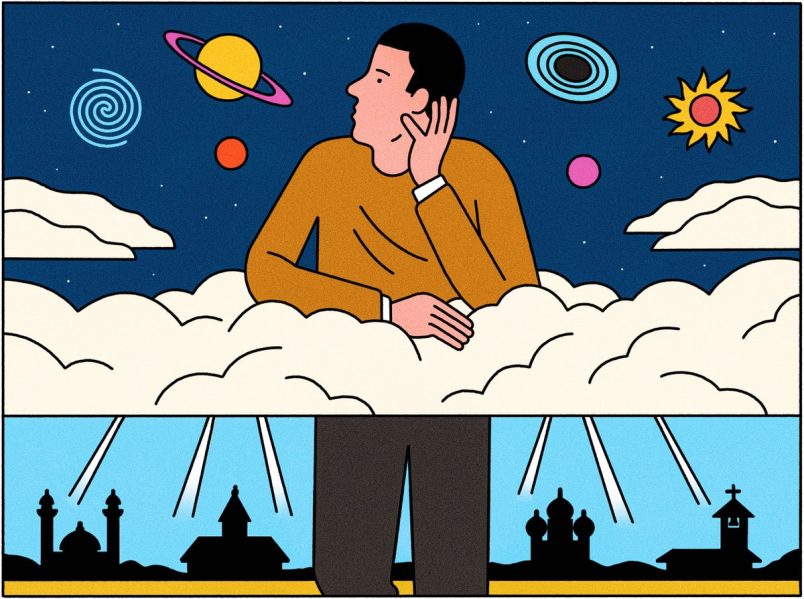
My approach to the Bible is the same as his, and he stated that he approaches it with the presupposition that “there’s probably more to this than I know”, and tries to understand the Bible from that perspective. Rather than to think that this is just a collection of superstitions we’ve outgrown – which isn’t a deep enough analysis.

That thinking has some truth but it doesn’t take into account the fact that the propositions in the Bible still stand at the foundation of our culture. It doesn’t take into account Nietzsche’s central concern, that if you blow out the notion of God, the entire structure crumbles. The “atheist types” haven’t wrestled with the real issues.

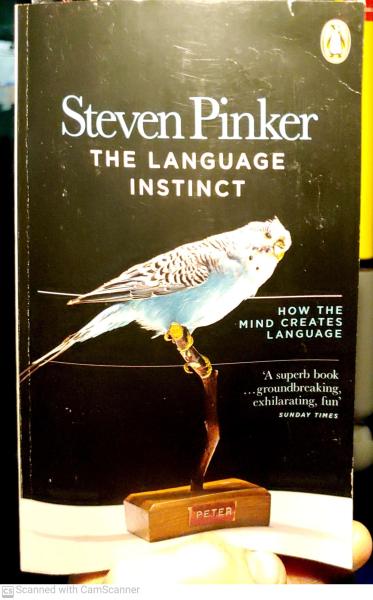
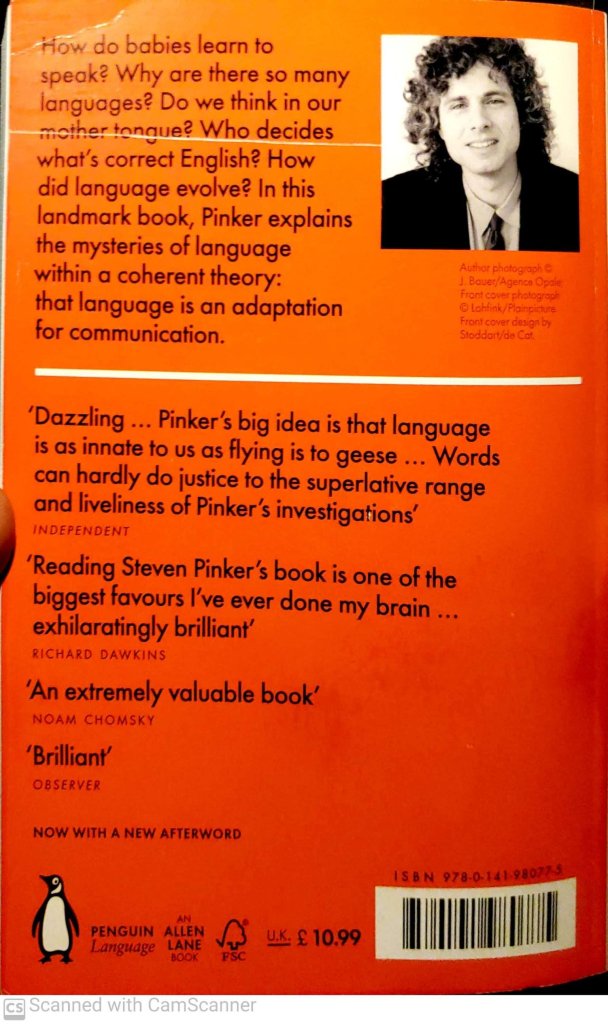
The Language Instinct

I’m reading this because I feel that a better understanding of language will help me connect dots in my research. What exactly? As of yet I do not know.

One insight so far is knowing that language/words and thought/thinking is not the same. The foundational framework of human thought is not rooted in words. Humans have a universal mentalese utilizing representations and symbols – in essence we do not think in English, Chinese, Apache, etc.

This distinction really brings in to focus why the great ancient civilizations put such an emphasis on the universal language of symbolism. Saying that “symbolism is the universal language” is not just some esoteric occult nonsense, this is rooted in a deep transcendent reality modern science is just beginning to understand.

I think it’s fruitful to consider language as an evolutionary adaption, like the eye, it’s major parts designed to carry out important functions. And Chomsky’s arguments about the nature of the language faculty are based on technical analysis of word and sentence structure, often couched in abstruse formalisms. His discussions of flesh and blood speakers are perfunctory and highly idealized. Though I do happen to agree with many of his arguments, I think that a conclusion about the mind is convincing only if many kinds of evidence can converge on it. So the story in this book is highly eclectic, ranging from how DNA builds brains to the pontifications of newspaper language columnists. The best place to begin is to ask why anyone should believe that human language is part of human biology – an instinct – at all.

Steven Pinker

Better Thinking

Reasoning aside, we know that people often acquire their beliefs about the world for reasons that are more emotional and social than strictly cognitive. Wishful thinking, self-serving bias, in-group loyalty, and frank self-deception can lead to monsters departures from the norms of rationality. Most beliefs are evaluated against a background of other beliefs and often in the context of an ideology that a person shares with others. Consequently, people are rarely aa open to revising their views as reason would seem to dictate.

There are some things that we are just naturally bad at. And a mistake people tend to make across a wide range of reasoning tasks are not mere errors; they are systematic errors that are strongly associated both within and across tasks. As one might expect, many of these errors decrease as cognitive ability increases. We also know that training, using both examples and former rules, mitigate many of these problems and can improve a person’s thinking.

On this front, the internet has simultaneously enabled two opposing influences on belief: on the one hand, it has reduced intellectual isolation by making it more difficult for people to remain ignorant of the diversity of opinion on any given subject. But it has also allowed bad ideas to flourish – as anyone with a computer and too much time on his hands can broadcast his point of view and, often enough, find an audience. So while knowledge is increasingly open source, ignorance is, too.

Sam Harris