A Son Growing Up With a Mother Who Has Borderline Personality Disorder
This will be my attempt to describe what my childhood looked like being raised by a mother with Borderline Personality Disorder (BPD). Part of why I’m doing this is because I want to open people up to different types of childhood experience. And, well, this was therapeutic for me to write out. This also gives people a little insight into why I am the way I am and why I expound the philosophy I do. I’m not looking for pity here.
For me, growing up with a mother who suffers from BPD, I have suffered through extreme neglect – physical, mental, emotional. A very strange form of neglect where you are actually very “close” with the parent.

I grew up in enmeshment with my mother, not with intimacy and connection. Enmeshment is a concept in psychology that describes a (typically) familial relationship where there are no boundaries, or, they’re very limited. Enmeshment is an extreme form of closeness between individuals. In children, this leads to a loss of autonomous development. The purpose of enmeshment is to create emotional power and control over the child. This tactic is so powerful that as a 33 year old who hasn’t had any contact with my perpetrator in over 2 years, I still suffer from emotional disregulation because of it. I’m toxically enmeshed with my mother in a way that she still exerts some level of control over me. At times, this makes me feel weak, sad, and hopeless.

She will provoke me to find my boundaries and then constantly push against them. Eventually just blowing over them, then coming back to a place where I was much further from before.  It’s completely draining to be in her presence. Every word she speaks, every move she makes, is an attempt at manipulating me for her own selfish needs. Looking back, I can honestly say that she has never engaged with me from a place of love – a place not selfishly motivated.

As far back as I can remember (3-4 yrs./old), my mother made it clear to me that she was burdened by being a mother. As a small child, I was shamed, punished, and criticized for being too needy or childlike. Punished in every way imaginable,  including cruel physical methods. Throwing whatever object she had close by at me, making me lay face down with my nose buried on a hard floor for extended periods, whipping me, and physically attacking my siblings while I helplessly watched. Also, regularly sleep depriving me by blasting music in the middle of the night, coming into my room waking me from my sleep, just to ransack the room and have me clean it all up while she berated me. Etc. Etc. Etc.
But to anyone who has ever suffered from physical abuse, we all know it’s typically nothing compared to the psychological abuse. Both of which are inextricably linked. The worst part was that her anger/rage and physical violence came with a smile. So I never really knew what to expect from her.

She simply used me for her narcissistic supply. I have always suffered from her “splitting” – cycles of idealization and devaluation. I would be the best son in the world at one moment, then the worst son in the next. Nothing I could ever do would please her, believe me, I’ve tried, I have given her so much. And I can honestly say with nothing in return. She has only ever taken from me, in the worst, most abhorrent ways.

My mother always wanted me for herself. Me having a girlfriend was always a problem for her. She would do anything she could to break us up. Including trying to turn my girlfriends against me (with some success). There were issues of seduction on her end – emotional incest that would occur – codependency, envy, and control. Emotional incest in this regard refers not to sexual incest (although there was also some of that), but it means that she emotionally treated me as a surrogate, husband like partner.
I was constantly judged, shamed, and controlled to feel like I was nothing… nothing without her. Yet, I still love her and, up until the last few years, would defend her.

In fact, she is still running a campaign against me, attempting to turn my entire family on me. Since I cut her off, I’m obviously the bad guy now. Even when I was her golden boy, very involved in her life, helping her with all her demands, she’d still badmouth me to my siblings and girlfriend.

She takes absolutely 0 responsibility for anything she has ever done. And that’s not an exaggeration. She has never admitted that she has done anything wrong at all to anyone in the family. Even though her abuses were so bad that my dad got full custody of 4 children and kicked her out of the house to the streets. Not only does she not take any responsibility, but she puts the blame on everyone else.

To maintain any form of relationship with her is to minimize and ignore any atrocity she has ever committed. And to allow her to constantly lie to your face. You have to live in her reality or you can not be in a relationship with her. Not without a lot of violence and conflict, then pretending like nothing happened. I will no longer pretend like nothing has happened. She rules with chaos. She will always win if you decide to engage with her.

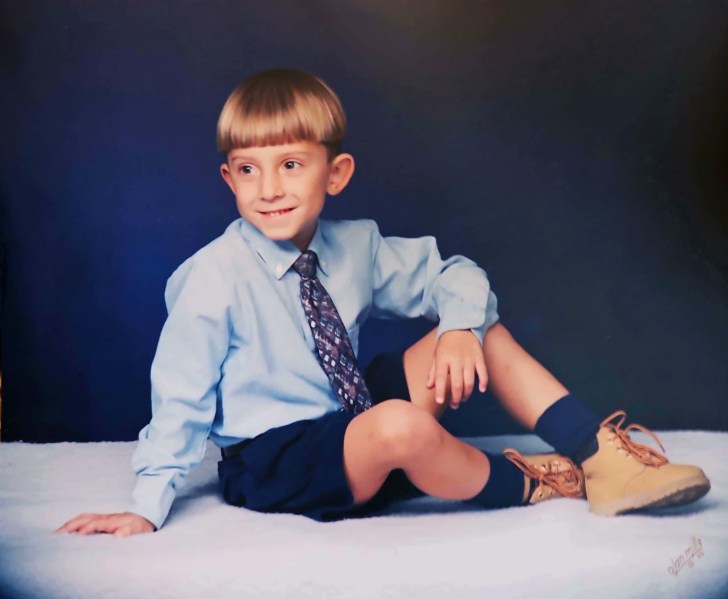
I grew up very lost and confused. My emotional needs were completely neglected by my mother. I had to be the parent/caretaker for her. With only her chaos and complete unpredictability to mirror as I developed. I had low self-esteem, no sense of self, attention issues, anger problems, an inability to regulate emotions, trust issues, not feeling safe and comfortable in my skin, etc. I was never benevolently recognized for any of the good in me. Any good in me was only recognized by some form of punishment. I had to dim much of who I was, hide it from her, which meant hiding it from myself. Meaning showing no emotion to her – no fear, anger, happiness, no nothing. It would all only be used against me later. This is devastating to a developing child. Imagine all of this happening to a 4 year old, continuing into adulthood. Within the last few years as an adult, one of the hardest things for me to do in therapy was to look at pictures of myself at that age during the abuse… it still shakes me to my core.

The confusion I grew up with was the worst part of all of this. And not like a typical high schooler feeling lost and confused. Much deeper than that. It’s very hard to explain. I would have episodes of extreme anxiety that would verge on psychosis. Just totally losing myself and reality. Having nothing to ground me. Going to a really dark and numb place. Strobing white and black, but not the absence of light kind of black. A black void that sucks your soul out of your body, leaving you feeling less than human. Demons and possession are very real. This was all typically prompted by my mother’s brain washing – denying my reality, flipping it on me, and shoving it back into my face. I wouldn’t know which way is up or down. The most fundamental aspects of Being were just totally obliterated. Her manipulation worked…
And I do not use the term ‘brainwashing’ as a figure of speech. The techniques for brainwashing are simple: “isolate the victim, expose them to consistent messages, mix with sleep deprevation, add some form of abuse, get the person to doubt what they know and feel, keep them on their toes, wear them down, and stir well.”

Again, just imagine all of this happening to a 4-9 year old, a sweet little boy. I was shy, timid, non-social, did poorly in school, couldn’t focus on any task, and didn’t know how to connect with others. Not because that’s my proclivity, but because all of that, all of just being a little boy, was beaten out of me at every moment of my life. I didn’t know what feeling safe was. I was in a constant state of fight or flight during my development. To say that all had an effect on my development and becoming an adult is to almost say nothing.

She made me feel like everything bad about me is all my fault. That all the lies and hurtful things she has ever said about me (to me) are real and true. I was made to believe that at my core, I really am a bad child and that my mother is a good mom. I don’t think I need to get into all the details of how little self-worth you have when your mother hates you and acts that out. All the strength and resilience in me came from knowing I survived all of this. All my self-worth has been hard earned, nothing was given to me.

By now, I’ve worked through much of this. I see things more objectively. I know that I’m not crazy. I know that my feelings are valid. I know what the reality is.

These days, the confusion I suffered from is minimal. I know who I am, and I know that I’m not the person my mother made me out to be. Having people like my girlfriend and the fraternity reflecting this back to me has been vital to my growth. I no longer suffer like I used to. I’m no longer living in a constant state of fight or flight. But this has only been since I cut my mother off – as if she is dead – for the last couple of years.

All my anger and rage has turned more into guilt and grief. I still feel waves of guilt for having to completely cut my mother out of my life. I grieve and feel sadness for my mother because at the end of the day, she is deeply sick and hurting. I feel intense grief for the loss of a childhood I never had, I grieve for the hurt little boy in me, and I grieve for a mother that I’ve never had. I mourn her like I would as if she was dead, although she is not. I’ll never be completely “healed.” I’ll never be “over it.” But I am healing and will continue to. And I will continue to get through it and continue to live a rich, deep, and meaningful life.

Mike Tyson has said it best: “it’s never in the past.” Trauma is a lense that will forever color my world, relationships, and perceptions. But I find peace in knowing that I survived. And I will continue to be empowered by the choices I have made to pull myself out of the depths. I’ve stared into the abyss, met the devil at the crossroads, and carved out a new path to the light that was always buried within.

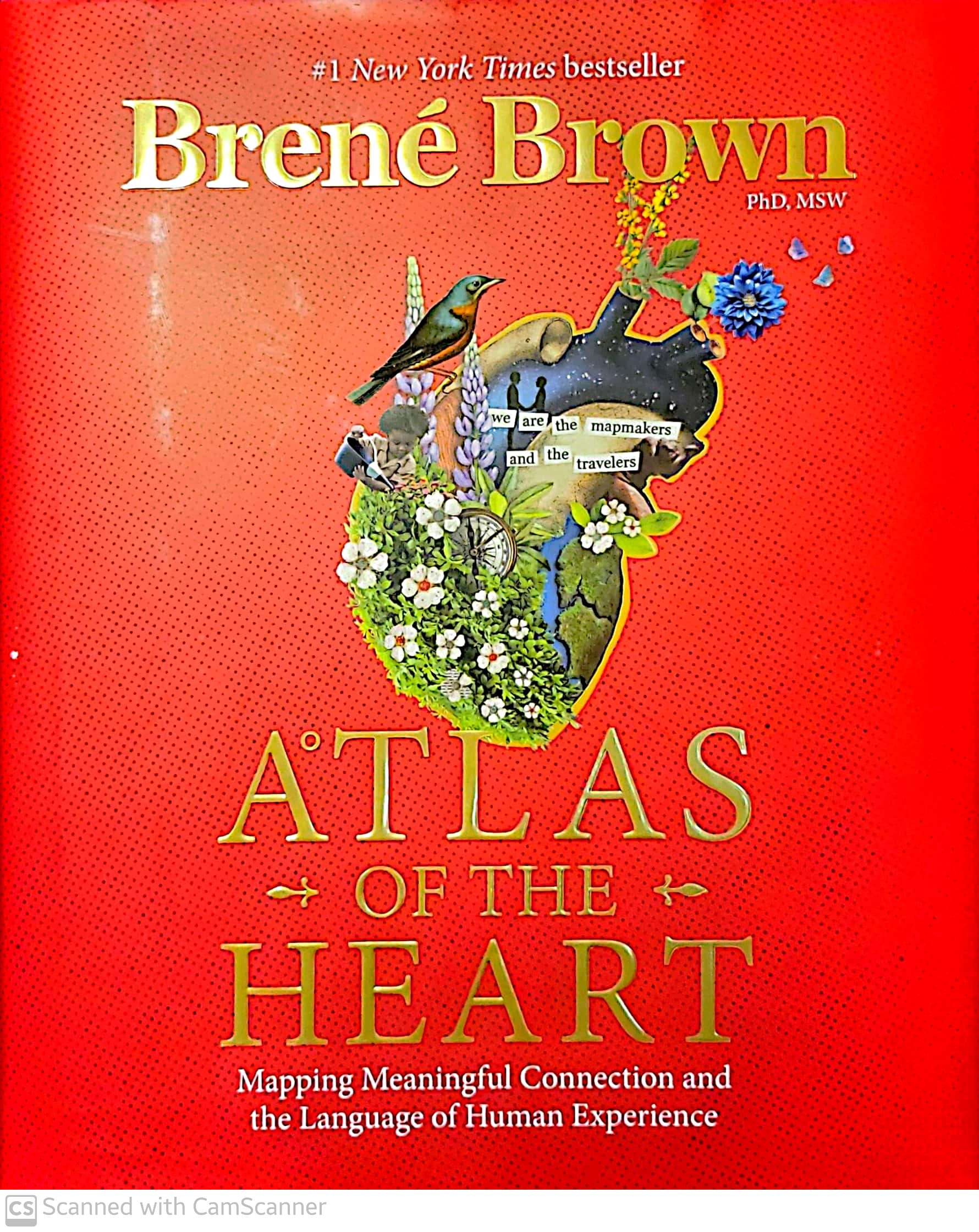
Atlas of the Heart

This is a deeply profound book. It’s almost biblical. In the introduction alone, there is a handful of lines you can spend ages breaking down and interpreting. Just about everything is quotable.

This book is sort of the hard, data driven science, behind the Christian maxim of redemption of the soul is to be found in truthful speech. This work also helps to explain the LOGOS (the creative power behind words/truthful speech).

Language is our portal to meaning making, connection, healing, learning, and self awareness. Having access to the right words can open up entire universes. When we don’t have the language to talk about what we are experiencing, our ability to make sense of what’s happening and share it with others is severely limited. Without accurate language, we struggle to get the help we need, we don’t always regulate or manage our emotions and experiences in a way that allows us to move through them productively, and our self awareness is diminished. Language shows us that naming and experience doesn’t give the experience more power, it gives us the power of understanding and meaning….

Language speeds and strengthens connections in the brain when we are processing sensory information. But newer research shows that when our access to emotional language Is blocked, our ability to interpret incoming emotional information is significantly diminished. Likewise, having the correct words to describe specific emotions makes us better able to identify those emotions in others, as well as to recognize and manage the emotional experiences when we feel them ourselves.

Brene Brown

Art – The Foundation of the Process by Which We Unite Ourselves Psychologically

Making something beautiful is difficult, but it is amazingly worthwhile. If you learn to make something in your life truly beautiful – even one thing – then you have established a relationship with beauty. From there you can begin to expand that relationship out into other elements of your life and the world. That is an invitation to the divine. That is the reconnection with the immortality of childhood, and the true beauty and majesty of the Being you can no longer see. You must be daring to try that.

If you study art (and literature anf the humanities), you do it so that you can familiarize yourself with the collected wisdom of our civilization. This is a very good idea – a veritable necessity – because people have been working out how to live for a very long time. What they have produced is a strange but also rich beyond comparison, so why not use it as a guide? Your vision will be grander and your plans more comprehensive. You will consider other people more intelligently and completely. You will take care of yourself more effectively. You will understand the present more profoundly, rooted as it is in the past, and you will come to conclusions much more carefully. You will come to treat the future, as well, as a more concrete reality (because you will have developed some true sense of time) and be less likely to sacrifice it to impulsive pleasure.  You will develop some depth, gravitas, and true thoughtfulness. You will speak more precisely, and other people will become more likely to listen to and cooperate productively with you, as you will with them. You will become more your own person, and less a dull and hapless tool of peer pressure, vogue, fad, and ideology.

Buy a piece of art. Find one that speaks to you and make the purchase. If it is a genuine artistic production, it will invade your life and change it. A real piece of art is a window into the transcendent, and you need that in your life, because you are finite and limited and bounded by your ignorance. Unless you can make a connection to the transcendent, you will not have the strength to prevail when the challenges of life become daunting. You need to establish a link with what is beyond you, like a man overboard in high seas requires a life preserver, and the invitation of beauty into your life is one means by which that may be accomplished.

It is for such reasons that we need to understand the rule of art, and stop thinking about it as an option, or a luxury, or worse, an affectation. Art is the bedrock of culture itself. It is the foundation of the process by which we unite ourselves psychologically, and come to see established productive peace with others. As it is said, “Man shall not live by bread alone”. That is exactly right. We cannot live without some connection to the divine – and beauty is divine – because in its absence life is too short, too dismal, and too tragic. And we must be sharp and awake and prepared so that we can strive properly, and orient the world properly, and not destroy things, including ourselves – and beauty can help us appreciate the wonder of Being and motivate us to seek gratitude when we might otherwise be prone to destructive resentment.

Jordan Peterson

A Symbolist’s Vision

Partially what has inspired me, and led me to the path that I’m on, is watching and learning from the great Symbolists. People that can readily and pragmatically, extract meaning from, and interpret, esoteric/occult/religious symbolism, art and the like. People that approach dreams, the imagination and spirituality, with a more academic approach. I want to be able to see the world as they do, because they see the world in a completely different way than the lay person.

So one of the main focuses in my study is the development of my intuition, with the intention of being able to understand and interpret the universal language of symbolism. As you can imagine, or know from experience, this is very difficult to do. Partially because symbolism is intentionally vague, yet has to be interpreted through a certain framework. You have to train your intuition and study the roots of the symbology academically.

Starting out years ago, I wasn’t able to extract hardly any sort of meaning, from any kind of symbolism and/or art. I’d look at say a tarot card, and get nothing out of it without looking up what everything means, and relying on other people’s interpretation, which defeats the purpose of esoteric/occult symbolism.

I see a lot of people (and this was myself in the past) ask: “What does this image mean?”. No one can tell you what the image means. Esoteric and occult symbolism is intentionally vague to allow the individual to impart their own personal level of interpretation (again, still limited within a certain framework). The subtle aspects of our nature is what makes us more than who we are, more than just an animal, or just material elements in a meat sack. The things that you can’t quite explain, feelings and meanings you can’t articulate, phenomenon that can’t be explained by material science – it’s these aspects of our being that esoteric/occult symbolism is supposed to communicate with. It’s supposed to invite these divine, subtle aspects of our nature to step forward. The meaning has to come from within.

For years I have had the same problem I described above, about not being able to extract meaning from the symbolism. Finally, after many years of research, study and training, I have gotten to a point where I’m starting to intuit meaning from the art. It sort of just hit me out of no where. I guess a piece of the divine spark has touched me. So I’d like to share one of my recent interpretations. Partly because I’m very proud of myself, but majoraly because I want to let people in on how profound this ability is.

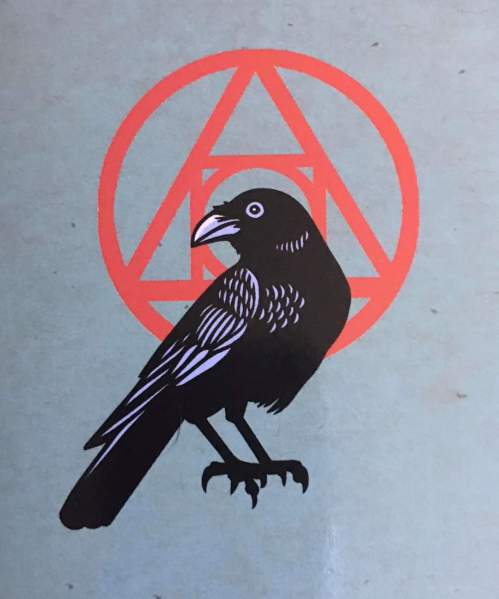
Below will be my interpretation of this image. For people not read on hermetic or qabbalistic philosophy, you’ll likely see most of this as gibberish. A quick Google search on the hermetic principle of the “All”, and a search on the alchemical “magnum opus”, will definitely help and for the most part, get you up to speed.

For me the raven represents sort of the most evolved intelligence in the bird kingdom – specifically noting how social and intuitive they are. Plus all the other traditional meanings birds imply. So in other words the most advanced state of consciousness in the bird kingdom.

Seeing the circle, encapsulated (or perhaps “nested”) in the square, the square in the triangle, and triangle in the circle, represents a totality of the structure of our material and divine constitution within the “All” (the hermetic and qabbalistic concept of the All).

I see the first circle as me (us – humans), it’s the “dot” or “point” (perhaps one individual seed of conciousness), radiating out, unfolded in its highest, most divine form, yet still encapsulated in this material realm.

The square, or us in the four fold material realm, is us realized to it’s most divine capacity, partaking or touching the higher, divine, trinitarian, ethereal realm of spirit.
So that threefold aspect of divine cosmic spirit is nested within the “limitless and boundless” All (again I’m speaking in hermetic and qabbalistic terms).

So I see this image sort of as a reminder of what is possible with our “baser” self(s). The raven also intimates towards the alchemical philosophers stone or the magnum opus. A reminder that with just base elements you can create something evolved to its highest potential (ie. the raven), something that takes part in, or something that becomes divine. That with mastery over the material and spiritual realms, we can bring ourselves back to unity with the All.

But the deeper meaning this image has for me, I can’t articulate. This is why I love esoteric and occult symbolism. Partly because with just some simple symbols you can convey truths and realities that cannot be articulated. As I stated above, just as the subtle parts of the raven is what makes it divine, and the subtle parts of our nature is what makes us divine, occult symbolism speaks to that higher more ethereal parts of our nature. It stimulates and invites out our divine nature to step forward. The universal language of symbolism is a direct path to diety and brings you closer to divinity with every step. This is a Symbolist’s vision.

No Redemption in Equality

Many people have a time or period in their life where they feel their life lacks purpose, meaning, direction, and take on a nihilistic world view. Some people live like that and never escape. When I started my career after school is when this period came for me – which is a very common time for most people.

I felt lost so to speak and became very nihilistic without any purpose, meaning, and direction. In life there is this philisophic principle or idea about “quality”. This idea of “quality” basically says that there are qualitative distinctions between things and that as humans, we have an instinct to make qualitative distinctions. A qualitative distinction is just saying that “this” is better than “that” or vice-versa. So a qualitative distinction is a judgment.

There is this modern idea that we are to accept ourselves and that we are OK just as we are. Many people (especially the younger generations) are conflating what this means and take it literally. They accept themselves and don’t work towards bettering who they are. Jordan Peterson thinks this is an insane idea and couldn’t be more nihilistic. This is because you are NOT ok, and the reason you’re not ok is because you could be WAY more than what you are. So do you want to be ok as you are? Or do you want to strive towards what’s better?

I’ve come a very long way from my nihilism. I have filled my life with copious amounts of purpose and meaning, and have gained plenty of direction in doing so. The turning point for me was because I knew I wasn’t happy with my current mode of Being. I didn’t consider the manner in which I conducted myself to be sufficient. To do this you have to understand the notion that you CAN make “qualitative distinctions” and that there really is a difference between “good” things and “bad” things, or “great” things and “evil” things etc.. This gives you direction and the possibility of moving upward. You have to maintain the idea that we as humans are insufficient as we are and need the movement upward. So you have to conceptualize something like the “highest good” and then strive towards that.

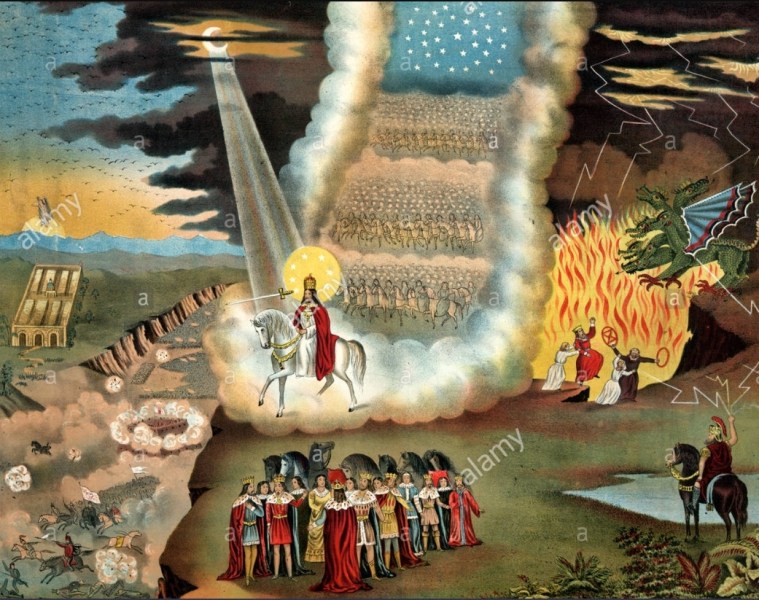
This is what Christ is in the Bible (the highest good) and why the biblical story gives people so much direction and meaning – something to strive towards. There is an idea in Revelations that the “redeemer” and “judge” are the same thing. Christ comes back with a flaming sword in his mouth to judge the people of earth. Most people were damned and some were saved.

There is no difference between conceptualizing the good and being judged. Because to conceptualize the good and move towards it, means that you have to separate from yourselves all the things that aren’t good and leave them behind. This is why “redeemer” and the “judge” are the same thing.

That’s the problem in the modern world with how we are rejecting qualitative distinctions, to not offend anyone/hurt anyone’s feelings, because we are just fine as we are and don’t want to say one thing is better than the other. Sure, it’s not any fun to be casted off with the damned, but if people are insufficient in their present condition (which seems to be the case, try finding someone who is not) and you deny the possibility of qualitative distinctions, because you want to promote a radical egalitarianism, then you remove the possibility of redemption – because there is no movement towards the good. Sacrificing the “good” for the “equal” is catastrophic, because if we were all equal, we’d all be equally un redeemed and miserable.

So to live a life full of meaning, direction, and purpose, you to understand that you are insufficient as you are. You have to conceptualize the highest good and strive for it – the continuation of our species depends on it.

Social Revolution!

Jordan Peterson on remidiating social systems:

He is of the opinion that the proper strategy for implementing social change is to stay within your domain of competence – which requires humility, a virtue that is never promoted in our modern culture, a virtue we can hardly even talk about. He defines humility as “you’re probably not as smart as you think you are and you should be careful”.

So the question may be: “ok I should be careful, but I still want to do good and make positive social change.”

So how do you be careful and do good? You try not to step outside the boundaries of your competence and start small. You start with things that you CAN adjust, that you actually DO understand, with things that you can actually fix.

So what Dr. Peterson promotes is that you should restrict your attempts to fix things to what’s at hand. So things about yourself that you can fix, things about yourself that you know aren’t right, not things about you by anyone else’s opinion. Then maybe there’s things you can adjust in your family and that gets really hard. You really have to have yourself together before you start to tackle your family.

It’s hard to put yourself together, it’s really hard to put your family together, so why would you think you can put the world together? The world is obviously far more complicated than you and your family. So if you’re stymied in your attempts to put your house in order, then that should make you very leary about announcing your broad scale plans for revolution.

And this is a very peculiar thing, because people are much more likely to announce their plans for large scale social revolution, than they are to set themselves or their family straight.

Dr. Peterson thinks this is the case because as soon as you try to adjust yourself or family, the system immediately kicks back at you. Where if you announce your plans for large scale social revolution, the lag between the announcement and the kick back is so long that you don’t realize there is any error there. So you can get away with being wrong if nothing falls on you for a while.

It’s not easy to fix things, especially if you’re not committed to it. And you know if you’re committed to it if you’re trying to change yourself first.

“It’s more difficult to rule yourself than to rule the city.” And that’s not a metaphor.

Ritual and the Freemasonic Tradition

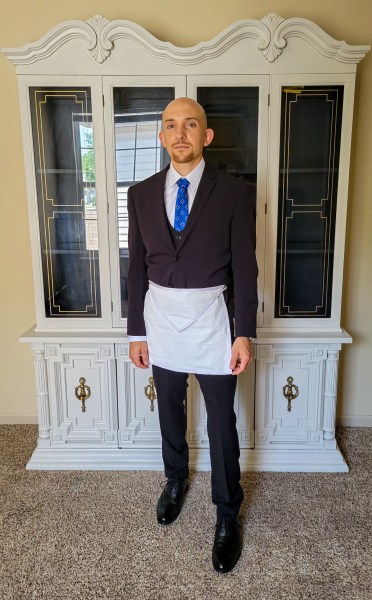
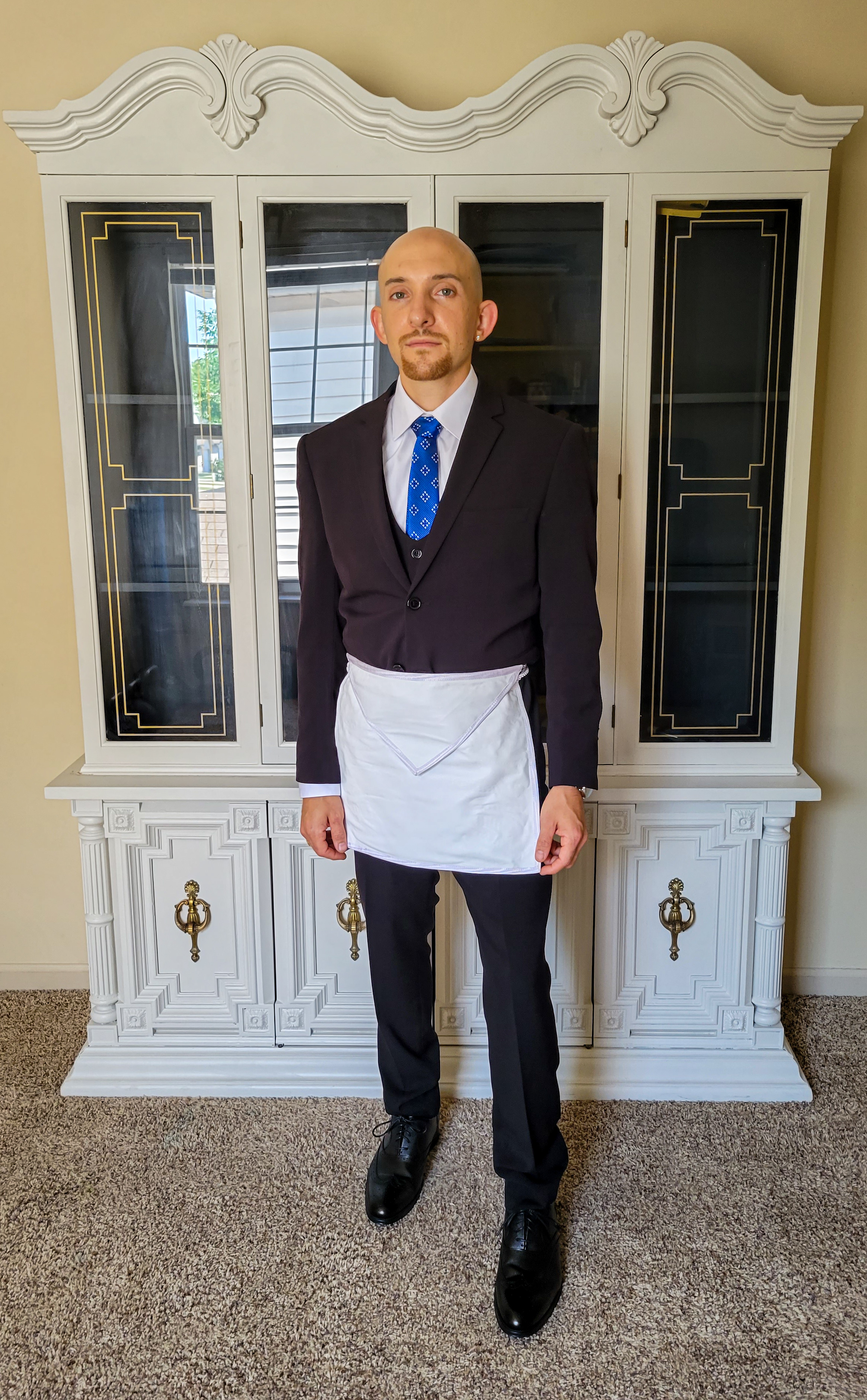
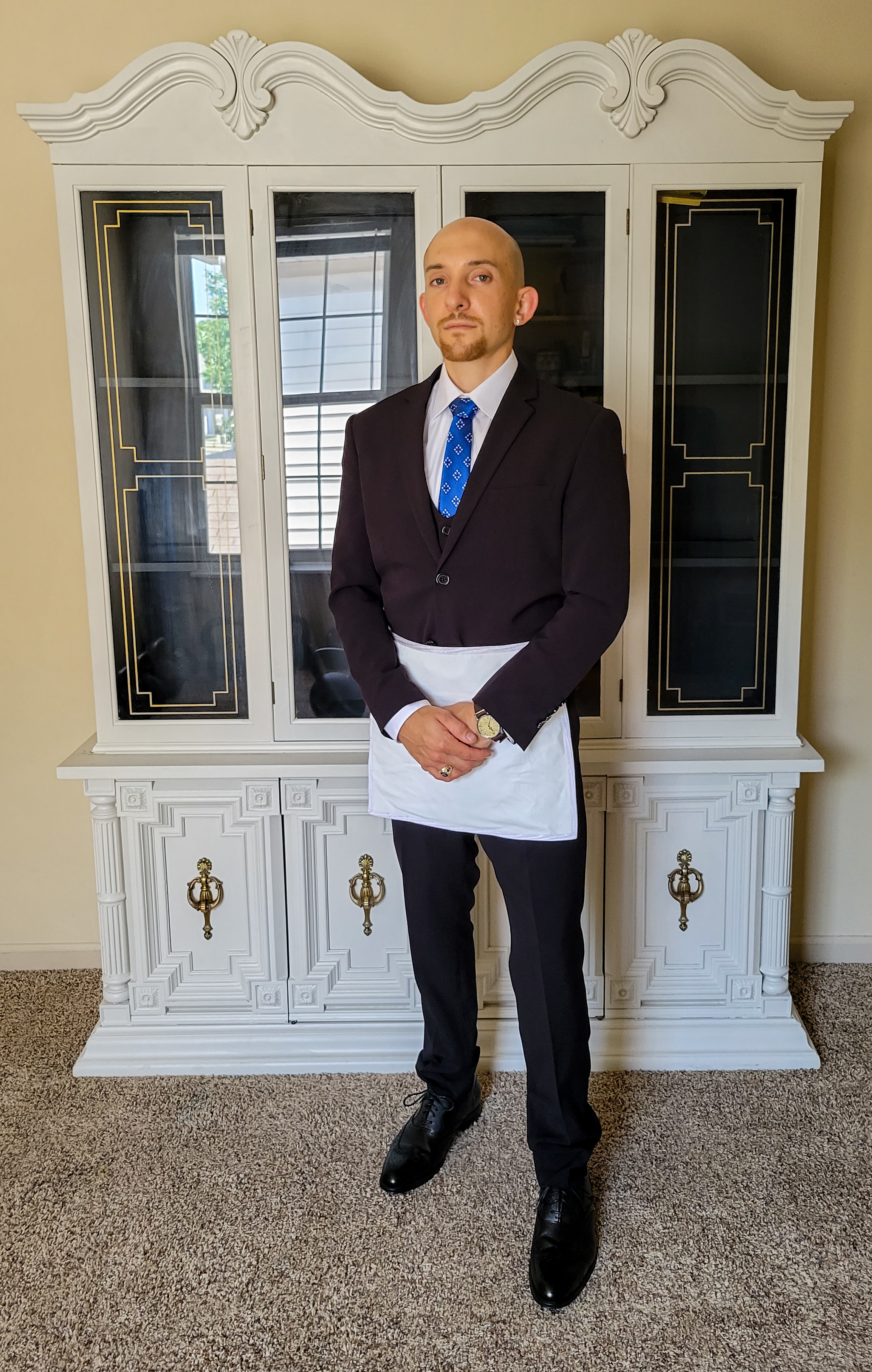
Freemasonry is different things for different men. We all join the fraternity for different reasons, nonetheless, we are all bound by one core tenet, and that is: to make good men better. We’re all here to improve ourselves individually and to help lift each other up as a group. 


I became a Freemason, and maintain my position in the lodge, for a few reasons. One of the main reasons, the one that has had the most profound effect on me, is the ritual. 


There really are no secrets in Freemasonry. All of their teachings are self evident, universal truths, known to all of humankind. The only thing that is “secret” (i’d say a better term is hidden, or rather, occult knowledge) about Freemasonry is how that information is taught/delivered. They do this through ritual. Most people start thinking Satan worship when they hear of occult rituals, this couldn’t be further from the truth in Freemasonry. Their rituals are basically just plays we act out and that’s how the knowledge is delivered. 


As humans, we all have a part of ourselves that extends itself out to the world, in an attempt to understand the things that we don’t know. We do this in our behavior, in image, myth, story, drama, ritual, symbolism, etc..There is something very profound about ritual as a phenomenon. Evolutionarily, this is one of the most vital and essential ways we have passed down our knowledge, for 100s of 1000s (if not millions) of years. The most ancient stories we have as a species allude to this. Using the Bible for example, the biblical stories were created in part from observing each other and our behavior for millennia. They are patterns of human behavior that we observed, acted out (ritual/play/drama), then articulated in the biblical narrative. (Partly why Bible verse is used in our ritual)


Ritual is at the very core of how we evolved as a species, it cannot be stressed enough how crucial this has been for our evolution. Understanding and knowledge begin with ritual. We first act things out as human beings, behaviorally, it’s essentially just a drama/play. Understanding isn’t just knowledge, understanding means you embody the information and act it out. It’s like children playing (“rough housing”), they don’t KNOW what they’re doing conciously, they’re just acting it out, observing each others behavior (learning), then distilling that information. That’s why we are able to dance with each other, it’s just knowledge and understanding that we embody and act out.


So this process of acting things out in our environment behaviorally, observing it, then distilling that information, is a process that has taken place for millions of years (arguably since beings with nervous systems have existed). This eventually led us to a place where we could actually articulate that knowledge, like the biblical narratives. This is powerful beyond comprehension. This how we have been able to pass down information, largely un changed, for millennia. Just like you can only get certain information/knowledge from a book that you can’t get from a movie, or movie to a book, or video game to movie or book etc., ritual is unique in the information it contains and how it distills that information. Ritual being a core process for our evolutionary success, it can teach you in ways nothing else can. It is absolutely fundamental to understanding. Ritual is powerful in inarticulate ways, something you just have to experience yourself to understand. These rituals are far from being just archaic and silly superstition (as many believe).

Many people may claim to understand and know Masonic teachings, and while they are universal truths, you will never quite understand what Freemasonry is about without experiencing their rituals. One thing is for sure though, I can attest to the profundity in the Freemasonic tradition. There is also a very powerful feeling knowing that you are part of, and have gone through, the same experience as many other very influential men from the past (14 presidents included). With vague ties as far back as the ancient Egyptian temple initiations, all the way through the ancient Mystery School traditions, culminating in the Age of Enlightenment when the fraternity was founded. 


I am an initiate of the flame, a seeker of Truth, bringer of light, warden of wisdom, and a candidate that has been raised to the sublime degree of Master Mason. I have been forever changed for the better, this no doubt has been another rebirth for me, and a start to a very new and exciting chapter of my life. 

How To Approach The Bible


This is summary of a comment Jordan Peterson made in regards to “atheistic type people”, in so far as they have a type. He thinks that they don’t approach the Bible with enough respect. (And I’d argue most don’t even approach the Bible at all).

My approach to the Bible is the same as his, and he stated that he approaches it with the presupposition that “there’s probably more to this than I know”, and tries to understand the Bible from that perspective. Rather than to think that this is just a collection of superstitions we’ve outgrown – which isn’t a deep enough analysis.

That thinking has some truth but it doesn’t take into account the fact that the propositions in the Bible still stand at the foundation of our culture. It doesn’t take into account Nietzsche’s central concern, that if you blow out the notion of God, the entire structure crumbles. The “atheist types” haven’t wrestled with the real issues.

The Redemptive Hero

Watching Son(s) of Sam on Netflix got me thinking about the human desire of wanting to be a part of a group, something bigger than yourself. This seems to be neurophysiological condition hard wired into us.

The problem being, not knowing if a group, organization, religion, cult, policy or the like, is dangerous or worthy of your time/sacrifice. There is one concrete and guaranteed principle you can use as a rule to determine if any said group is dangerous and should be avoided. That is: the group should never require you to sacrifice your individuality for the group.

Any group, society, organization, etc. that requires you to sacrifice your individuality for the “greater good” of the group is doomed to fail. This is a tenet that has been potrayed in the oldest myths – from the ancient Summerian’s to the Egyptian’s all the way through the East to the West including Christianity.

The “group/society” will stagnate and die without renewal from the heroic individual. That’s what these myths are essentially saying, that we need to embody and act out being the redemptive hero to revivify the stagnated state.

The most glaring examples of groups doomed to failure, from sacrificing the individual for the group being Communism and Fascism. This is how our laws are set up in every successful civilization – that there is something redemptive and divine in every individual, as a human being. This includes murderers, rapists, or any criminal – we acknowledge that there is something divine, worthy and capable of redemption in each individual. Whether you know this and/or believe this explicitly or not, this is what we all act out.

This is how I know Freemasonry, as a fraternal organization, is founded on safe and solid principles. They explicitly state that your first priority as a Brother Mason is your “vocation”, not just meaning your work, but meaning working on yourself, as an individual, is priority #1 – then comes your brothers and the lodge (the group).

So this applies to any group (ie. LGBTQ, cars, environmental, etc.), government, organization religion, etc., etc.. While this isn’t the only criteria, it is the first and foremost, one that CANNOT be infringed upon. If they want you to sacrifice yourself for the group (whether explicitly stated or not – typically it’s not and cleverly veiled) GET OUT! It will be doomed to fail and could be dangerous.

Slavery Will Set You Free

Nietzsche has said that in order to be free you first have to become a slave. What he means by that is you just don’t grow up from being a (free) child to the same (free) generalized individuality as an adult, without first dedicating yourself to some sort of discipline (ie. religion, sports, the Scouts, school, etc.), to become something specific – a voluntary slavery if you will – and that sets the foundation for developing your individuality as an adult.

The discipline sets you free to becoming an individual as an adult. I see this as a necessary step, one that cannot be dismissed or avoided.

If you don’t have the discipline to voluntarily commit yourself to becoming something specific, other than just being “yourself”, you will not develop an individuality as an adult. You’ll be a nobody, nihilistically wandering through life, constantly reacting, never in control, a slave to life’s burdens and suffering – never being able to “find” who you are.

This is the nihilism I’m seeing so much of today with my generation and the one’s under me coming up. You HAVE to have the discipline to dedicate yourself to becoming something other than what you are, or you’ll always be a nobody, just a slave to the harshest parts of this reality. In order to be free, you first have to become a slave, it’s better to choose something constructive to be a slave to.