…Freemasonry is exceptional. That is, I believe that Freemasonry is something special. It isn’t the same as the Rotary, Lions, or any other civic group. Nor is it equivalent to your bowling team. It is a very specific system designed to effect the moral and spiritual transformation of its members. When done conciously and properly, it should actually change the men who join. It should set them in a lifelong journey of spiritual, moral, and mental growth that the average person can’t get anywhere else.
Making something beautiful is difficult, but it is amazingly worthwhile. If you learn to make something in your life truly beautiful – even one thing – then you have established a relationship with beauty. From there you can begin to expand that relationship out into other elements of your life and the world. That is an invitation to the divine. That is the reconnection with the immortality of childhood, and the true beauty and majesty of the Being you can no longer see. You must be daring to try that.
If you study art (and literature anf the humanities), you do it so that you can familiarize yourself with the collected wisdom of our civilization. This is a very good idea – a veritable necessity – because people have been working out how to live for a very long time. What they have produced is a strange but also rich beyond comparison, so why not use it as a guide? Your vision will be grander and your plans more comprehensive. You will consider other people more intelligently and completely. You will take care of yourself more effectively. You will understand the present more profoundly, rooted as it is in the past, and you will come to conclusions much more carefully. You will come to treat the future, as well, as a more concrete reality (because you will have developed some true sense of time) and be less likely to sacrifice it to impulsive pleasure. You will develop some depth, gravitas, and true thoughtfulness. You will speak more precisely, and other people will become more likely to listen to and cooperate productively with you, as you will with them. You will become more your own person, and less a dull and hapless tool of peer pressure, vogue, fad, and ideology.
Buy a piece of art. Find one that speaks to you and make the purchase. If it is a genuine artistic production, it will invade your life and change it. A real piece of art is a window into the transcendent, and you need that in your life, because you are finite and limited and bounded by your ignorance. Unless you can make a connection to the transcendent, you will not have the strength to prevail when the challenges of life become daunting. You need to establish a link with what is beyond you, like a man overboard in high seas requires a life preserver, and the invitation of beauty into your life is one means by which that may be accomplished.
It is for such reasons that we need to understand the rule of art, and stop thinking about it as an option, or a luxury, or worse, an affectation. Art is the bedrock of culture itself. It is the foundation of the process by which we unite ourselves psychologically, and come to see established productive peace with others. As it is said, “Man shall not live by bread alone”. That is exactly right. We cannot live without some connection to the divine – and beauty is divine – because in its absence life is too short, too dismal, and too tragic. And we must be sharp and awake and prepared so that we can strive properly, and orient the world properly, and not destroy things, including ourselves – and beauty can help us appreciate the wonder of Being and motivate us to seek gratitude when we might otherwise be prone to destructive resentment.
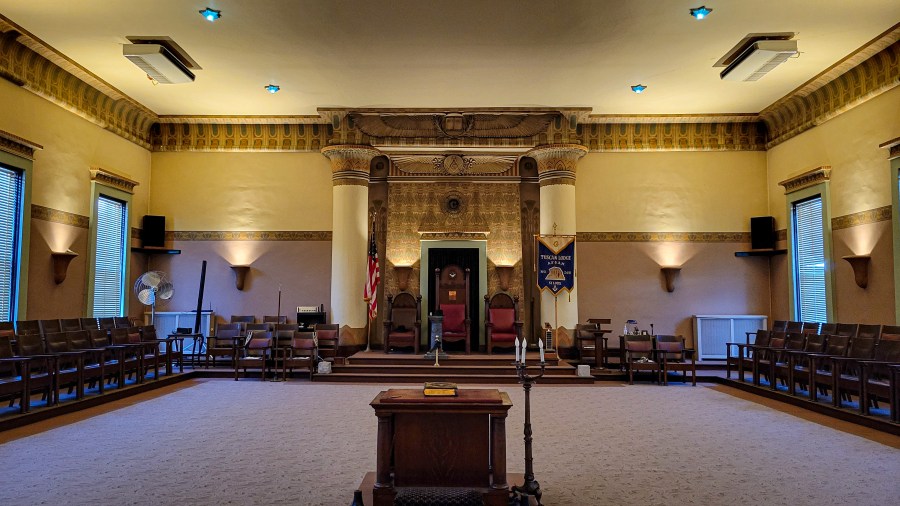
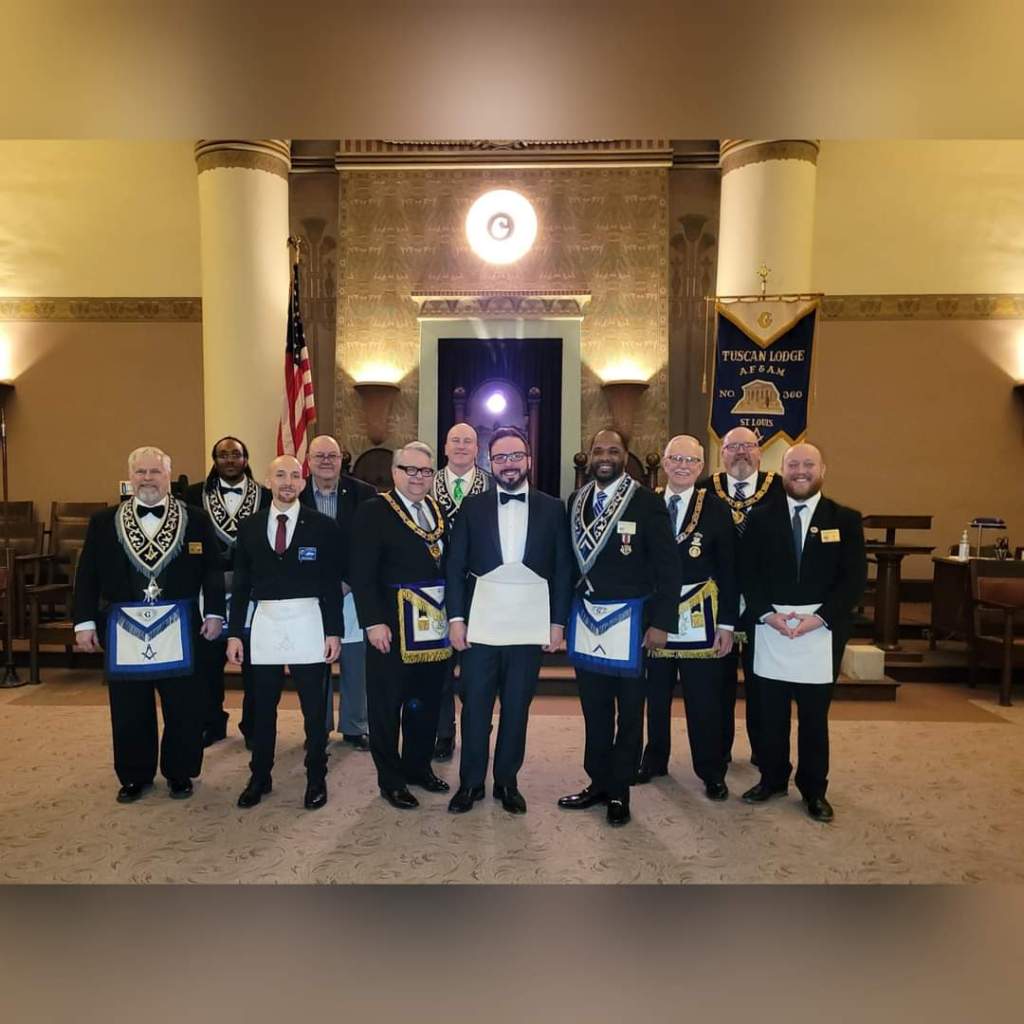
It was a huge honor and quite the experience for me to work side by side with Missouri’s Most Worshipful Grand Master and other Grand Lodge officers, in this temple.
Since it’s relevant, and I’m sure many have the question, as did I, I’d like to clarify and explain the naming convention of “Worshipful Master” we use in Freemasonry. Firstly, we do not worship any man. The term Worshipful comes from ancient England and was an honorary title that simply meant “respected” in the past. The structure of each individual lodge/temple consists of a Worshipful Master at the top and a few offers that support him. Basically, the WM (Worshipful Master) serves as the chief officer and oversees all lodge functions, lodge officer duties, and presides over each lodge meeting. He ultimately has the last say on matters but we are all considered equal.
Now, if you define worship as what most people see in the Abrahamic religions (ie. singing, prayer, sermon, praising God directly, etc.), I’d say Freemasons do not worship anyone or anything period. I know this was my definition of worship, basically just praising/kneeling to God directly in different ways.
My definition of worship has expanded though. If you define worship as: a wwide-rangedavenue to give adoration and respect to diety, a personal act of the heart rather than outward actions, and that worship can be expressed in all areas of life – then you could argue we do worship.
But I would say what we worship more specifically isn’t diety per se, but the divine spark that resides in each of us. So worshipping the sanctity and power of the individual. Something I clearly support and stand behind.
So long story short: Missouri has many individual temples/lodges (city to city), in each, a Worshipful Master presides over it. Each state in the U.S. has a Grand Lodge, which is the overarching governing body over all the individual lodges in the state and functions just as the rest of the lodges do. So, the Grand Lodge’s Worshipful Master title is “Most Worshipful Grand Master.”
Charity is one of the core principles of Freemasonry that a new canindate is instructed in, in the very 1st degree. The lesson is taught to us in a very dramatic, almost harsh way. We are told that charity lies at the foundation of Freemasonry.
Freemasonrys mission is to help reduce suffering in all of society. We strive to do this on a global scale. Part of how this is done is by “making good men better” and through charity. Charity isn’t just about handouts. You can be charitable with your time and conduct. We square our actions by the square of virtue.
A small handful of the more active guys in the lodge put some money together to make these complete Thanksgiving dinner baskets. We reached out to a local elementary school to find families in need and delivered the baskets. Though it’s a very small and humble gesture, I believe that no act of kindness is too small. Sometimes that’s all somebody needs to keep going.
It is true that Freemasonry is the parent of all religion, the original worldwide cosmic gnosis, diffused in ancient times to the uttermost ends of the earth. Freemasonry is the Pompeii of prehistoric science. All the Masonic ritual, it’s Egyptian signs, it’s Chaldean grips, it’s Sanskirt passwords, is ancient Hebrew symbols, it’s cabalistic allusions and its historical records are supremely scientific and a survival through long ages, by various underground channels, of the knowledge of the universe which was gained by Sabian astronomers from the temple tops of Chaldea, India and China and recorded by the equally learned geometers and mathematicians of the ancient Orient.
Partially what has inspired me, and led me to the path that I’m on, is watching and learning from the great Symbolists. People that can readily and pragmatically, extract meaning from, and interpret, esoteric/occult/religious symbolism, art and the like. People that approach dreams, the imagination and spirituality, with a more academic approach. I want to be able to see the world as they do, because they see the world in a completely different way than the lay person.
So one of the main focuses in my study is the development of my intuition, with the intention of being able to understand and interpret the universal language of symbolism. As you can imagine, or know from experience, this is very difficult to do. Partially because symbolism is intentionally vague, yet has to be interpreted through a certain framework. You have to train your intuition and study the roots of the symbology academically.
Starting out years ago, I wasn’t able to extract hardly any sort of meaning, from any kind of symbolism and/or art. I’d look at say a tarot card, and get nothing out of it without looking up what everything means, and relying on other people’s interpretation, which defeats the purpose of esoteric/occult symbolism.
I see a lot of people (and this was myself in the past) ask: “What does this image mean?”. No one can tell you what the image means. Esoteric and occult symbolism is intentionally vague to allow the individual to impart their own personal level of interpretation (again, still limited within a certain framework). The subtle aspects of our nature is what makes us more than who we are, more than just an animal, or just material elements in a meat sack. The things that you can’t quite explain, feelings and meanings you can’t articulate, phenomenon that can’t be explained by material science – it’s these aspects of our being that esoteric/occult symbolism is supposed to communicate with. It’s supposed to invite these divine, subtle aspects of our nature to step forward. The meaning has to come from within.
For years I have had the same problem I described above, about not being able to extract meaning from the symbolism. Finally, after many years of research, study and training, I have gotten to a point where I’m starting to intuit meaning from the art. It sort of just hit me out of no where. I guess a piece of the divine spark has touched me. So I’d like to share one of my recent interpretations. Partly because I’m very proud of myself, but majoraly because I want to let people in on how profound this ability is.
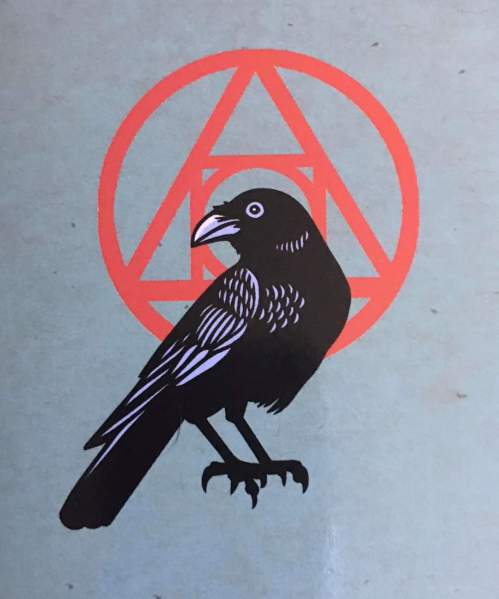
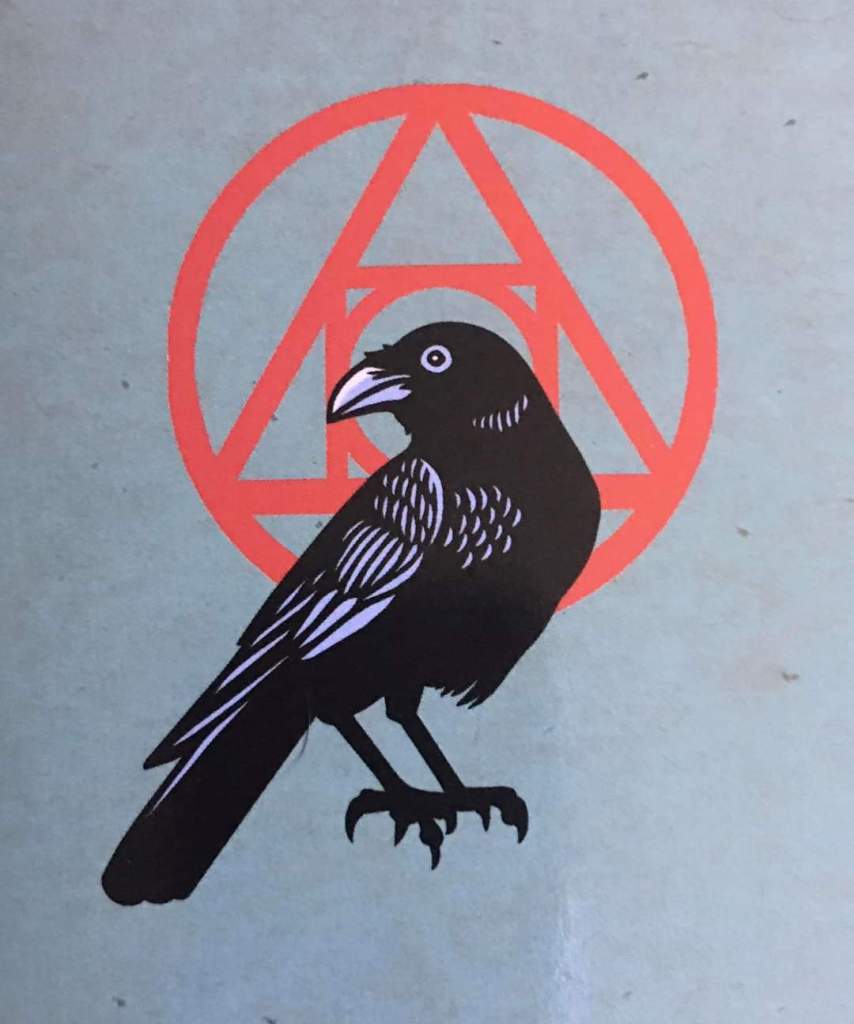
Below will be my interpretation of this image. For people not read on hermetic or qabbalistic philosophy, you’ll likely see most of this as gibberish. A quick Google search on the hermetic principle of the “All”, and a search on the alchemical “magnum opus”, will definitely help and for the most part, get you up to speed.
For me the raven represents sort of the most evolved intelligence in the bird kingdom – specifically noting how social and intuitive they are. Plus all the other traditional meanings birds imply. So in other words the most advanced state of consciousness in the bird kingdom.
Seeing the circle, encapsulated (or perhaps “nested”) in the square, the square in the triangle, and triangle in the circle, represents a totality of the structure of our material and divine constitution within the “All” (the hermetic and qabbalistic concept of the All).
I see the first circle as me (us – humans), it’s the “dot” or “point” (perhaps one individual seed of conciousness), radiating out, unfolded in its highest, most divine form, yet still encapsulated in this material realm.
The square, or us in the four fold material realm, is us realized to it’s most divine capacity, partaking or touching the higher, divine, trinitarian, ethereal realm of spirit. So that threefold aspect of divine cosmic spirit is nested within the “limitless and boundless” All (again I’m speaking in hermetic and qabbalistic terms).
So I see this image sort of as a reminder of what is possible with our “baser” self(s). The raven also intimates towards the alchemical philosophers stone or the magnum opus. A reminder that with just base elements you can create something evolved to its highest potential (ie. the raven), something that takes part in, or something that becomes divine. That with mastery over the material and spiritual realms, we can bring ourselves back to unity with the All.
But the deeper meaning this image has for me, I can’t articulate. This is why I love esoteric and occult symbolism. Partly because with just some simple symbols you can convey truths and realities that cannot be articulated. As I stated above, just as the subtle parts of the raven is what makes it divine, and the subtle parts of our nature is what makes us divine, occult symbolism speaks to that higher more ethereal parts of our nature. It stimulates and invites out our divine nature to step forward. The universal language of symbolism is a direct path to diety and brings you closer to divinity with every step. This is a Symbolist’s vision.
Many people look down on institutions or organizations that openly claim to keep secrets. Christians have been one of the harshest critics about this and baselessly claim Masonic secrets are kept for nefarious reasons. Yet even Christianity veils truths in their scripture and their teachings. Just about every esoteric and/or occult group, practice veiling their deepest truths in symbolism and allegory. Even nature hides Truths in plain sight.
Below are some quotes on the subject, one even coming from the bible.
Masonry, like all the religions, all the Mysteries, Hermeticism and Alchemy, conceals its secrets from all except the adepts and sages, or the elect, and uses false explanations and misinterpretations of its symbols to mislead those who deserve only to be misled; to conceal the Truth, which it calls Light, from them, and to draw them away from it. Truth is not for those who are unworthy or unable to receive it, or would pervert it.
Albert Pike
Do not give what is holy to dogs; and do not cast your pearls before swine, or they will trample them underfoot and turn and mow you.
Matt 7:6
There are a few reasons this is done and it’s not done for any nefarious reasons. Though, obviously a corrupt institution can do it for nefarious reasons.
One of the main reasons this is done is to prevent people from perverting the truth for their own gain. I can use the mainstream accepted “Truth” about Lucifer, from the Bible, as an example. The veiled truth is that Lucifer (as stated in the Bible, he is the Light Bringer) is to be thought of more as a force, not an existing personified demon. Understanding Lucifer as a force means that as an individual, seeing evil in their heart, has to take responsibility for that evil. Because it is a force that stems from them and that they partake in. If the uninitiated, profane, and/or unworthy find out this truth they would pervert it. They would rather think of Lucifer as a personified demon, as something separate from them, so that they can avoid all responsibility for that evil. “It’s not me, it’s the devil, it’s his fault!”
People would rather deny the torture of understanding their baser yearnings in self deceit. The more the actual truth is pushed on certain individuals the more they push back. Self deceit turns into denialism and a whole new way of seeing the world. These people build a new a better truth for themselves, at the detriment to the world around them, so it’s better to veil these deeper truths from the profane.
Another main reason the truth is veiled is because truth is actually a very subjective thing. “Truth is the aim of belief” and we all have different beliefs and aims.
Truth is the property of being in accord with fact or reality. In everyday language, truth is typically ascribed to things that aim to represent reality or otherwise correspond to it, such as beliefs, propositions, and declarative sentences.
Wikipedia: Truth
Just telling an individual the Truth doesn’t work, they have to find the Truth for themselves. So you veil the Truth in such a way that it leads people on a journey to discover it for themselves, in their own way.
Without this method people will never understand the Truth on their own. This is the main reason Masons hide their Truths in symbolism and allegory. This is the philosophy of a Freemason, to attempt to lift the veil of reality into the deeper Truths that lay hidden in plain sight.
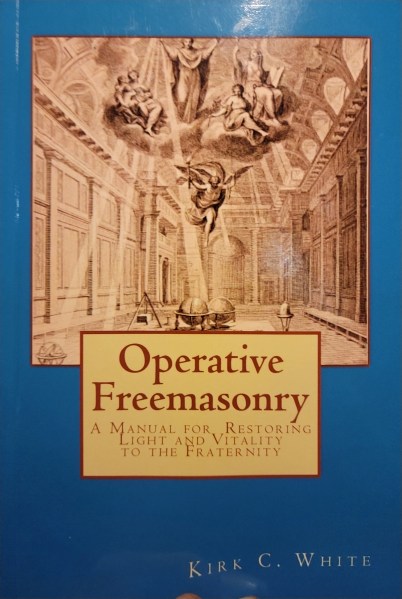
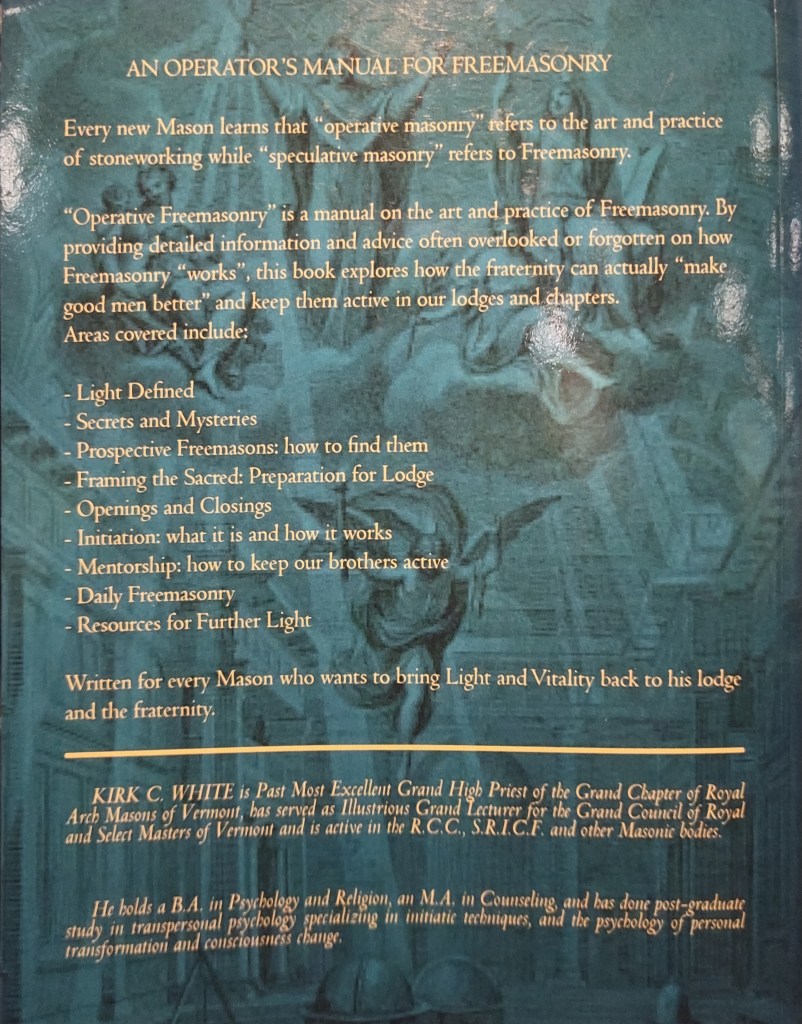
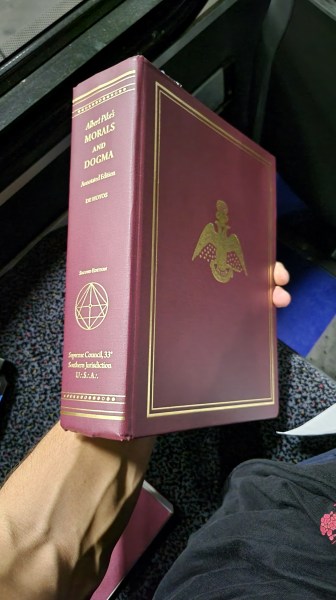
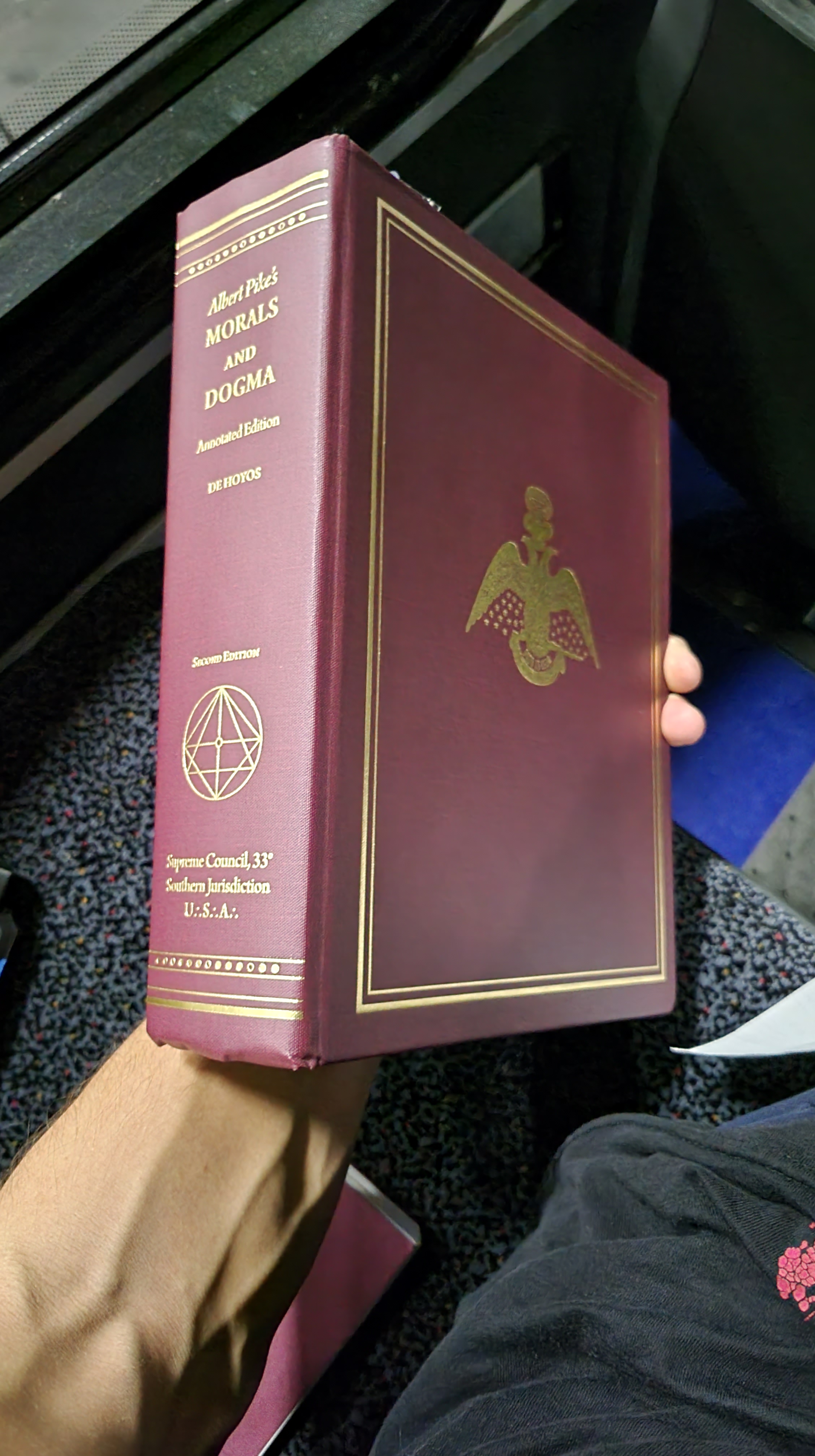
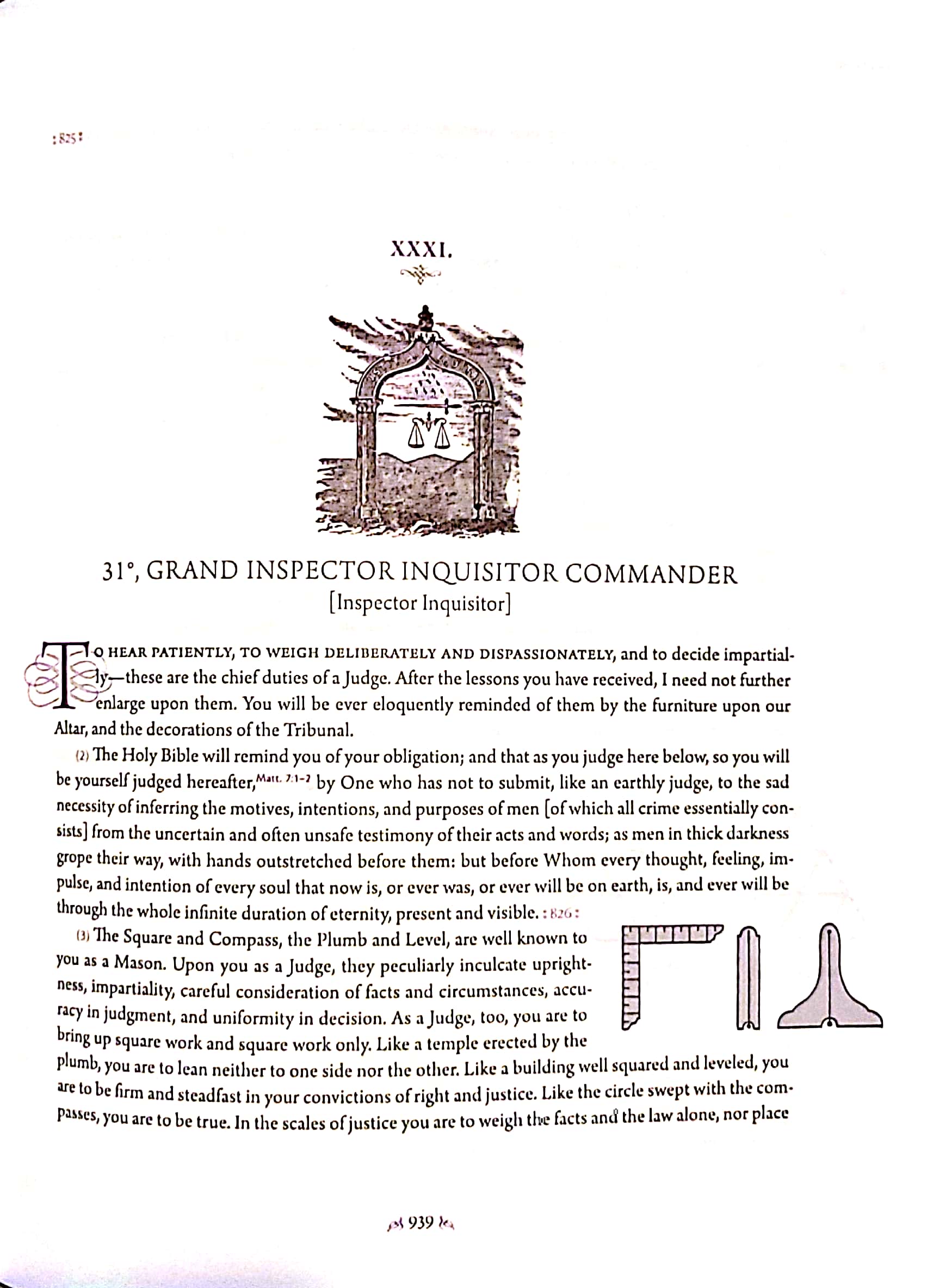
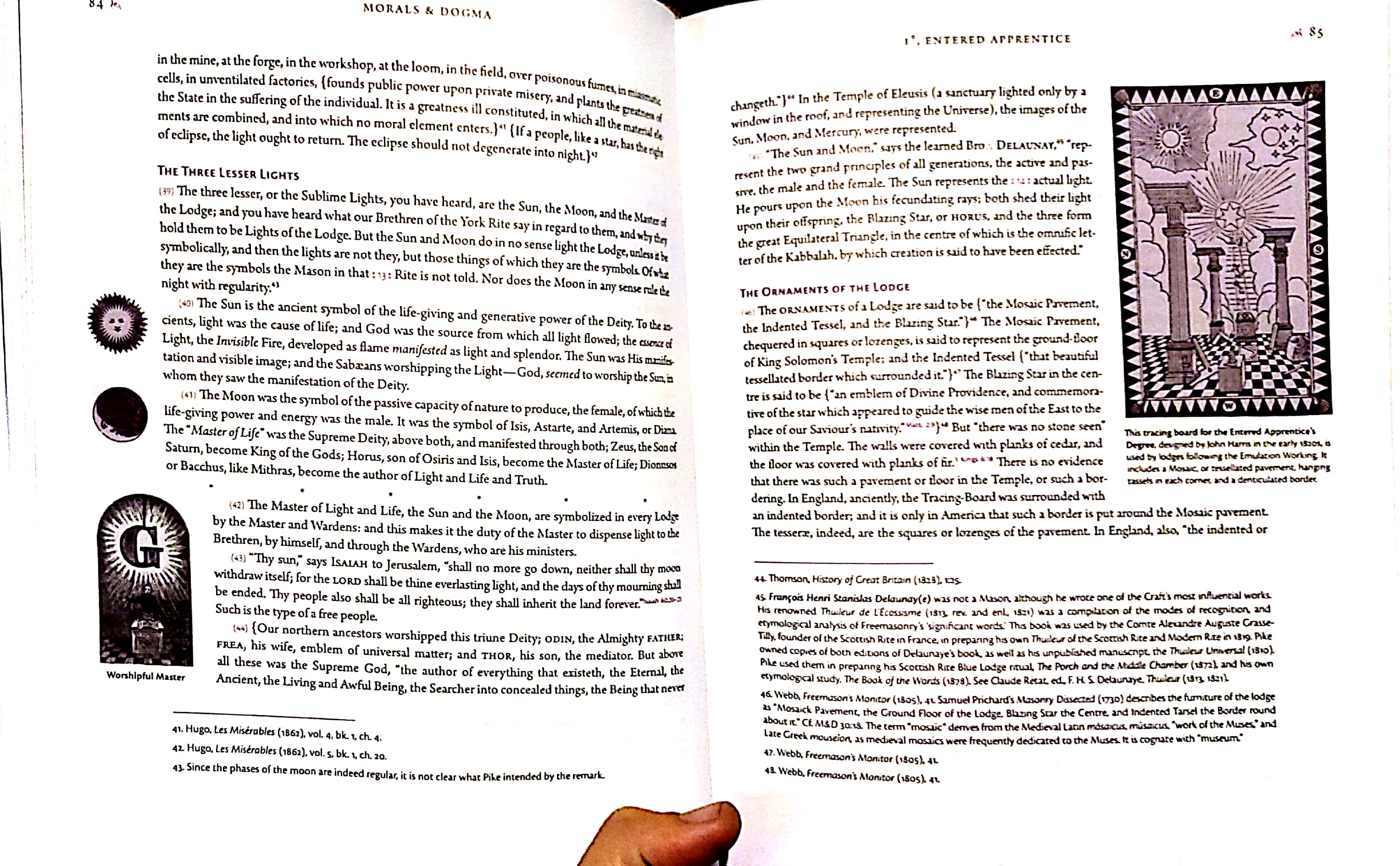
This edition of the book is of very high quality paper, illustrations, and binding.
Reading morals and dogma is an epic adventure punctuated by rhapsodic beauty and sheer confusion. Pike and his sources swing our attention to the perennial grear questions: Where do we come from? Who are we? Why are we here? What are the duties of man? What assurance do we have of a Divine Presence in the human spirit? What is the nature of reality? What ethical and moral obligations does one have to the world at large? Is there anything to be learned from human suffering? Can people of different faiths agree on a shared religious duty?
These questions, and many others, agitate the mind, and rivet our attention as much today as they did in Plato or Aristotle’s time, let alone a mere 140 years ago.
The relevance of Morals and Dogma today lies in it’s exploration of the great questions and philosophical dilemmas which have always moved humanity. Particularly for the Mason, this book serves the useful purpose of putting Masonic morality and ethics within the context of the general society. Morals and dogma bids man to think large – to cast aside the petty concerns of everyday life and to be better than he even believes he can be. As initiates of the 30 degree Knight Kadosh are aware, “Strive not to be better than others, but to be better than thyself” Is one of the duties of a Masonic philosopher.
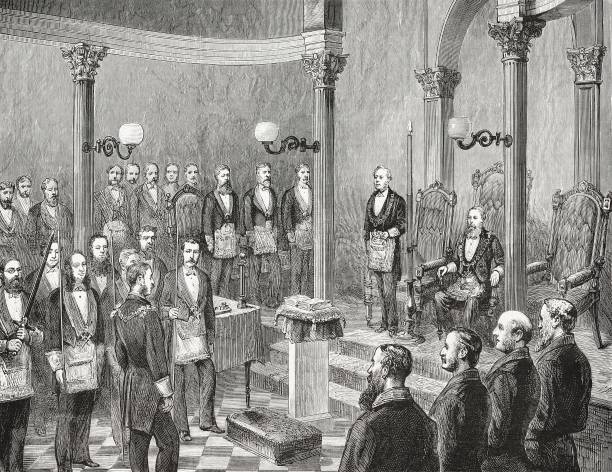
In the course of one lodge meeting, Freemasonry is a spiritual organization when the chaplain leads the brethren in prayer and asks for the blessing of Diety. It is a guild when the Master of the lodge teaches the new Mason the symbolic uses of stonemason’s tools. It becomes a school of instruction when the new brother learns about the importance of the 7 liberal arts and sciences. At other moments, it is an amateur theater company when the ritual is performed. The lodge becomes a men’s social club when meeting for dinner and fellowship. It becomes a charitable group when relief is provided to distressed brothers, their families or the local community perlocal community. It is also a business association when members with similar interests share ideas. The lodge resembles a family when fathers and sons, strangers and friends bond as ‘brothers’, and it is a community league when volunteers are needed for a project.
Traditionally, the primary purpose of the ritual is to educate the candidate. The rituals are closer to a play/drama/performance than anything else.
The ceremonial lore revolves around the period during which the First Temple at Jerusalem was built by King Solomon. King Solomon. The stories build from a peaceful and regal beginning which explains the inspiration for and construction of the Temple, leading up to a cataclysmic event which has come to symbolize the central morality of Speculative Freemasonry.
Throughout the series of short plays, you’ll come across dozens of metaphors, imparting the moral criteria which a Freemason is expected to aspire to. The ritual is composed of exquisitely crafted language, and for most masons the messages go in and stay in, enabling them to live a more positive and fulfilled live.
Rick Smith
Many avoid Freemasonry because they feel it would be “too religious” for them (myself included, until I learned more about the fraternity). If you have no issues with attending a church wedding or funeral, or being a Godfather for someone’s new baby, you should not meet any greater religious demands in craft masonry. Masons do not worship in craft lodges; that is the role of the Church.
The obvious overlap between Religion and Freemasonry is morality, which both teach as a primary function. The key difference in their approach is that fundamental religion tends towards ‘God-fearing morality’ whilst craft masonry speaks more to the Moral Compass, and the idea that your behavior in life should be geared towards preserving the stability of society and the happiness of everyone around you. For the purpose of learning and executing Masonic craft ritual, religion has no direct relevance whatsoever.
The say that “Politics is showbiz for ugly people!” For the rest of us, there’s Masonry. Ritual’s primary purpose is to implant the moral metaphors of Masonic teaching. That’s unequivocal.
Rick Smith
Being initiated into the 1st degree of Freemasonry, passed to the 2nd degree, and raised to the 3rd degree of Master Mason, does not at all make you instantly enlightened. You’re more or less just obligated into keeping the “secrets” of Masonry at that point. Being the candidate, going through the three degrees (plays), you’re really not participating, you’re just being instructed and walked through. So actually learning the ritual, being engaged and involved, actually playing a role in the ritual (drama/play), is what enables you to really learn the metaphors/teachings. It really is something you’ll be taking in and learning for a lifetime – and that’s the point. While also finding fulfillment in having an active role in passing down these teachings, bettering yourself, your brothers, and community.
So in short: As I’ve stated before, there really is no secrets in Freemasonry, all the “secret” knowledge is passed down through the ritual. This secret knowledge being universal teachings we all know and live by as humans. The only real secret being how this knowledge is delivered, via the ritual.
The main reason for the secrecy is because it’s like spoiling a movie. If I tell you what the ritual is, everything that’s in it and how it’s delivered, then when you experience it yourself it won’t have the same impact and effect as it would if you didn’t know anything about it. Knowing all that beforehand would totally ruin the experience and the effect it is supposed to have on your psyche.