No Redemption in Equality

Many people have a time or period in their life where they feel their life lacks purpose, meaning, direction, and take on a nihilistic world view. Some people live like that and never escape. When I started my career after school is when this period came for me – which is a very common time for most people.

I felt lost so to speak and became very nihilistic without any purpose, meaning, and direction. In life there is this philisophic principle or idea about “quality”. This idea of “quality” basically says that there are qualitative distinctions between things and that as humans, we have an instinct to make qualitative distinctions. A qualitative distinction is just saying that “this” is better than “that” or vice-versa. So a qualitative distinction is a judgment.

There is this modern idea that we are to accept ourselves and that we are OK just as we are. Many people (especially the younger generations) are conflating what this means and take it literally. They accept themselves and don’t work towards bettering who they are. Jordan Peterson thinks this is an insane idea and couldn’t be more nihilistic. This is because you are NOT ok, and the reason you’re not ok is because you could be WAY more than what you are. So do you want to be ok as you are? Or do you want to strive towards what’s better?

I’ve come a very long way from my nihilism. I have filled my life with copious amounts of purpose and meaning, and have gained plenty of direction in doing so. The turning point for me was because I knew I wasn’t happy with my current mode of Being. I didn’t consider the manner in which I conducted myself to be sufficient. To do this you have to understand the notion that you CAN make “qualitative distinctions” and that there really is a difference between “good” things and “bad” things, or “great” things and “evil” things etc.. This gives you direction and the possibility of moving upward. You have to maintain the idea that we as humans are insufficient as we are and need the movement upward. So you have to conceptualize something like the “highest good” and then strive towards that.

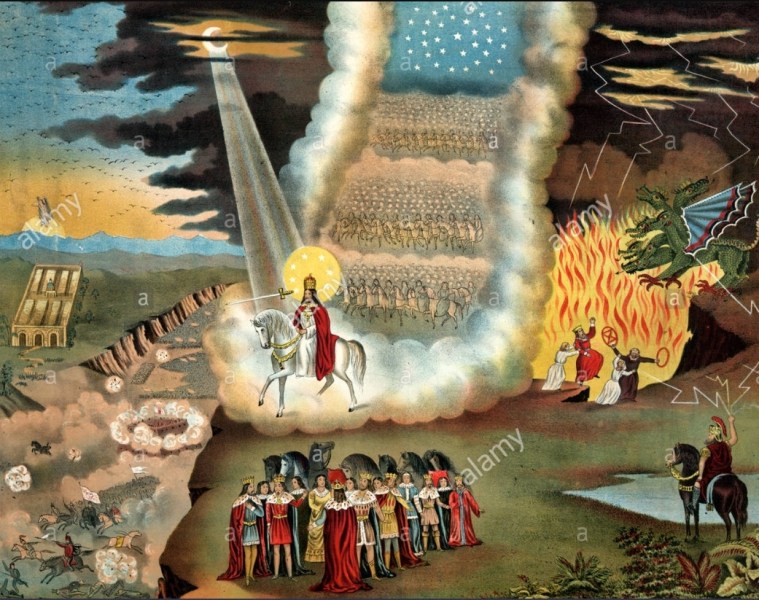
This is what Christ is in the Bible (the highest good) and why the biblical story gives people so much direction and meaning – something to strive towards. There is an idea in Revelations that the “redeemer” and “judge” are the same thing. Christ comes back with a flaming sword in his mouth to judge the people of earth. Most people were damned and some were saved.

There is no difference between conceptualizing the good and being judged. Because to conceptualize the good and move towards it, means that you have to separate from yourselves all the things that aren’t good and leave them behind. This is why “redeemer” and the “judge” are the same thing.

That’s the problem in the modern world with how we are rejecting qualitative distinctions, to not offend anyone/hurt anyone’s feelings, because we are just fine as we are and don’t want to say one thing is better than the other. Sure, it’s not any fun to be casted off with the damned, but if people are insufficient in their present condition (which seems to be the case, try finding someone who is not) and you deny the possibility of qualitative distinctions, because you want to promote a radical egalitarianism, then you remove the possibility of redemption – because there is no movement towards the good. Sacrificing the “good” for the “equal” is catastrophic, because if we were all equal, we’d all be equally un redeemed and miserable.

So to live a life full of meaning, direction, and purpose, you to understand that you are insufficient as you are. You have to conceptualize the highest good and strive for it – the continuation of our species depends on it.
The Many Dimensions of a Freemasonic Lodge Meet

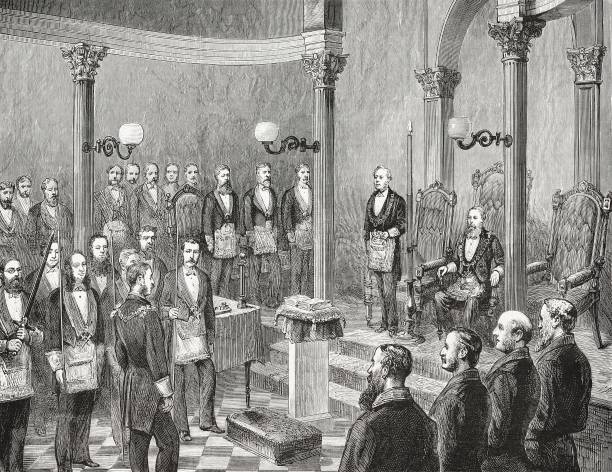
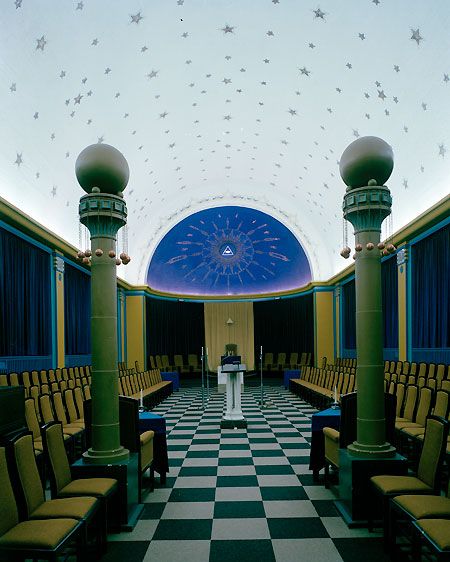
In the course of one lodge meeting, Freemasonry is a spiritual organization when the chaplain leads the brethren in prayer and asks for the blessing of Diety. It is a guild when the Master of the lodge teaches the new Mason the symbolic uses of stonemason’s tools. It becomes a school of instruction when the new brother learns about the importance of the 7 liberal arts and sciences. At other moments, it is an amateur theater company when the ritual is performed. The lodge becomes a men’s social club when meeting for dinner and fellowship. It becomes a charitable group when relief is provided to distressed brothers, their families or the local community perlocal community. It is also a business association when members with similar interests share ideas. The lodge resembles a family when fathers and sons, strangers and friends bond as ‘brothers’, and it is a community league when volunteers are needed for a project.

Mark Tabbert

So, What is Masonic Ritual?

Traditionally, the primary purpose of the ritual is to educate the candidate. The rituals are closer to a play/drama/performance than anything else.

The ceremonial lore revolves around the period during which the First Temple at Jerusalem was built by King Solomon. King Solomon. The stories build from a peaceful and regal beginning which explains the inspiration for and construction of the Temple, leading up to a cataclysmic event which has come to symbolize the central morality of Speculative Freemasonry.

Throughout the series of short plays, you’ll come across dozens of metaphors, imparting the moral criteria which a Freemason is expected to aspire to. The ritual is composed of exquisitely crafted language, and for most masons the messages go in and stay in, enabling them to live a more positive and fulfilled live.

Rick Smith

Many avoid Freemasonry because they feel it would be “too religious” for them (myself included, until I learned more about the fraternity). If you have no issues with attending a church wedding or funeral, or being a Godfather for someone’s new baby, you should not meet any greater religious demands in craft masonry. Masons do not worship in craft lodges; that is the role of the Church.

The obvious overlap between Religion and Freemasonry is morality, which both teach as a primary function. The key difference in their approach is that fundamental religion tends towards ‘God-fearing morality’ whilst craft masonry speaks more to the Moral Compass, and the idea that your behavior in life should be geared towards preserving the stability of society and the happiness of everyone around you. For the purpose of learning and executing Masonic craft ritual, religion has no direct relevance whatsoever.

They say that “Politics is showbiz for ugly people!” For the rest of us, there’s Masonry. Ritual’s primary purpose is to implant the moral metaphors of Masonic teaching. That’s unequivocal.

Rick Smith

Being initiated into the 1st degree of Freemasonry, passed to the 2nd degree, and raised to the 3rd degree of Master Mason, does not at all make you instantly enlightened. You’re more or less just obligated into keeping the “secrets” of Masonry at that point. Being the candidate, going through the three degrees (plays), you’re really not participating, you’re just being instructed and walked through. So, actually learning the ritual, being engaged and involved, actually playing a role in the ritual (drama/play), is what enables you to really learn the metaphors/teachings. It is meant to be something that you will be taking in and learning for a lifetime – and that’s the point. While also finding fulfillment in having an active role in passing down these teachings, bettering yourself, your brothers, and community.

So, in short: As I’ve stated before, there really are no secrets in Freemasonry, all the “secret” knowledge is passed down through the ritual. This “secret knowledge” being universal teachings that we all know and live by as humans. The only real secret being how this knowledge is delivered — via the ritual.

The main reason for the secrecy is because it’s like spoiling a movie. If I tell you what the ritual is, everything that’s in it and how it’s delivered, then when you experience it yourself it won’t have the same impact and effect as it would if you didn’t know anything about it. Knowing everything beforehand would totally ruin the experience and the effect it is supposed to have on your psyche.

The Divine Power

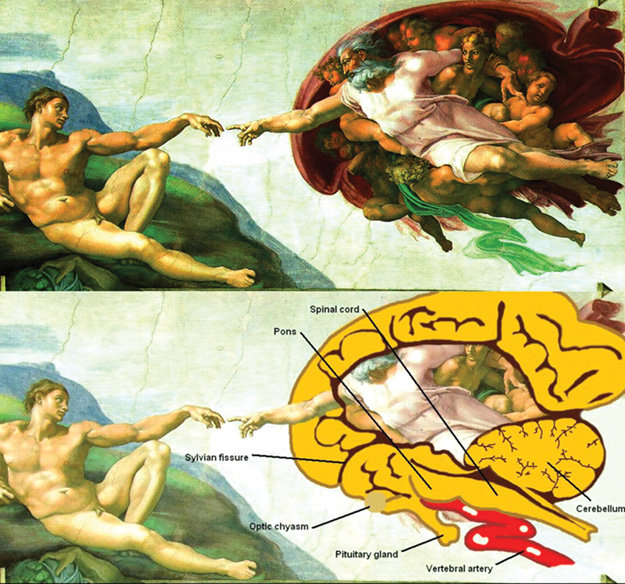
Nearly all the sacred books of the world can be traced in anatomical analogy. This is most evident in their creation myths.

Proceeding from this assumption of the first theologians that man is actually fashioned in the image of God, the initiated minds of past ages erected the stupendous structure of theology on the foundation of the human body. The religious world of today is almost totally ignorant of the fact that the science of biology is the fountainhead of its doctrines and tenants. Many of the codes and laws believed by modern divines to have been direct revelations from Divinity are in reality the fruitage of ages of patient delving into the intricacies of the human constitution and the infinite wonder is revealed by such a study.

Christianity itself may be cited as an example.

The entire New Testament is in fact an ingenuously concealed exposition of the secret processes of human regeneration. The characters so long considered as historical men and women are really the personification of certain processes which take place in the human body when man begins the task of consciously liberating himself from the bondage of ignorance and death.

Manly P. Hall

Freemasonry’s Priceless Heritage

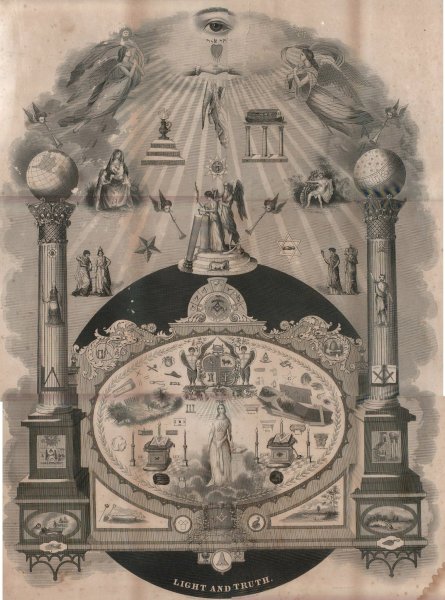
The sanctum sanctorum of Freemasonry is ornamented with the gnostic jewels of a thousand ages; its rituals ring with the divinely inspired words of seers and sages. A hundred religions have brought their gifts of wisdom to its altar; arts and sciences unnumbered have contributed to its symbolism. Freemasonry is a world-wide university, teaching the liberal arts and sciences of of the soul to all who will hearken to its words. It’s chairs are seats of learning and its pillars uphold an arch of universal education.

The philosophic power of Freemasonry lies in its symbols – it’s priceless heritage from the Mystery schools of antiquity. In a letter to Robert Freke Gould, Albert Pike writes:

“In it’s symbolism, which and it’s spirit of brotherhood are its essence, Freemasonry is more ancient than any of the world’s living religions. …”

Though Zoroaster, Hermes, Pythagoras, Plato. and Aristotle are now but dim memories in a world once rocked by the transcendency of their intellectual genius, still in the mystic temple of Freemasonry these god-men live again in their words and symbols; and the candidate, passing through the initiations, feels himself face-to-face with these illumined heirphants of days long past.

Manly P. Hall

How To Approach The Bible


This is summary of a comment Jordan Peterson made in regards to “atheistic type people”, in so far as they have a type. He thinks that they don’t approach the Bible with enough respect. (And I’d argue most don’t even approach the Bible at all).

My approach to the Bible is the same as his, and he stated that he approaches it with the presupposition that “there’s probably more to this than I know”, and tries to understand the Bible from that perspective. Rather than to think that this is just a collection of superstitions we’ve outgrown – which isn’t a deep enough analysis.

That thinking has some truth but it doesn’t take into account the fact that the propositions in the Bible still stand at the foundation of our culture. It doesn’t take into account Nietzsche’s central concern, that if you blow out the notion of God, the entire structure crumbles. The “atheist types” haven’t wrestled with the real issues.

Metaphorical Truth – Killing God?

Since Neitzche, many people have agreed with the notion that God, in recent generations, is dead. Meaning we aren’t religious anymore (ie. praying, living up to a higher power, engaging in ritual, etc.) and don’t believe in “God”.

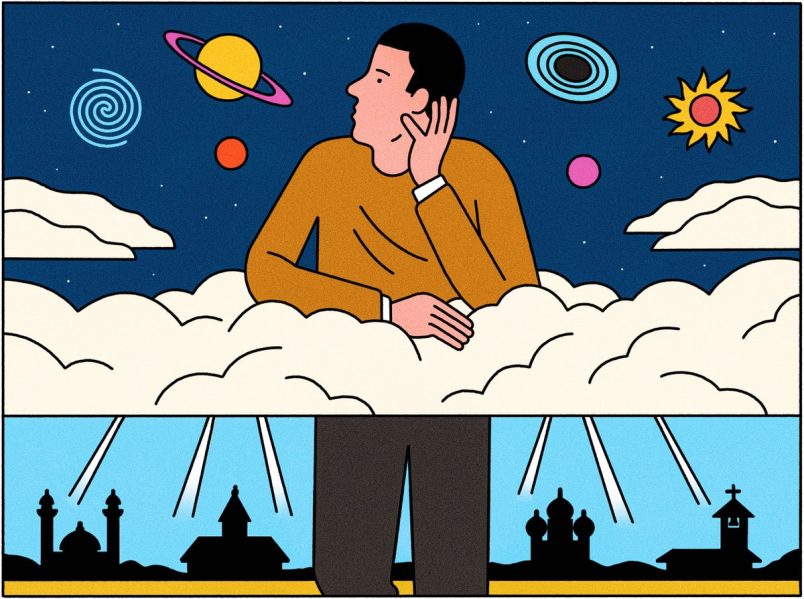
While I agree that God is dead or dying in that sense, I believe, even in this current age, that God isn’t dead, God cannot die. To the ancients God(s) existed in the sky, in the forest, rivers, oceans, in our institutions, in our hearts and in our concious minds. God is majoraly a projection of our imagination into the objective realm to help make sense of the world. This doesn’t make God any less real than if he were to actually exist as a literal being – how human behavior manifest, the cause and effects of physical reality and the end results are the same, no matter how you think of God. This is one of those metaphorical truths. Just like it will increase the well-being of an individual acting as if a gun is cocked and loaded, acting as if God was real will increase the well-being of humanity.

This quote is what provoked this post and is relevant here:
“Debord also draws an equivalence between the role of mass media marketing in the present and the role of religions in the past.The spread of commodity-images by the mass media, produces “waves of enthusiasm for a given product” resulting in “moments of fervent exaltation similar to the ecstasies of the convulsions and miracles of the old religious fetishism”.”

God hasn’t died we are just worshipping new idols – God is now the new iPhone, drugs, vanity, or any unhealthy obsession/addiction. God exists in a very real – biologically concrete – way in our minds (it’s how our minds and imagination works), we cannot destroy Him so it would be wise to learn to worship Him in a healthy and constructive way, and to work towards cultivating our highest human faculties. So God isn’t dead/dying, we are only killing ourselves.