Never Look Away From Pain

Don’t look away. Don’t look down.
Don’t pretend not to see hurt.
Look people in the eye.
Even when their pain is overwhelming.
And when you’re hurting and in pain, find the people who can look you in the eye.

We need to know we’re not alone – especially when we’re hurting.

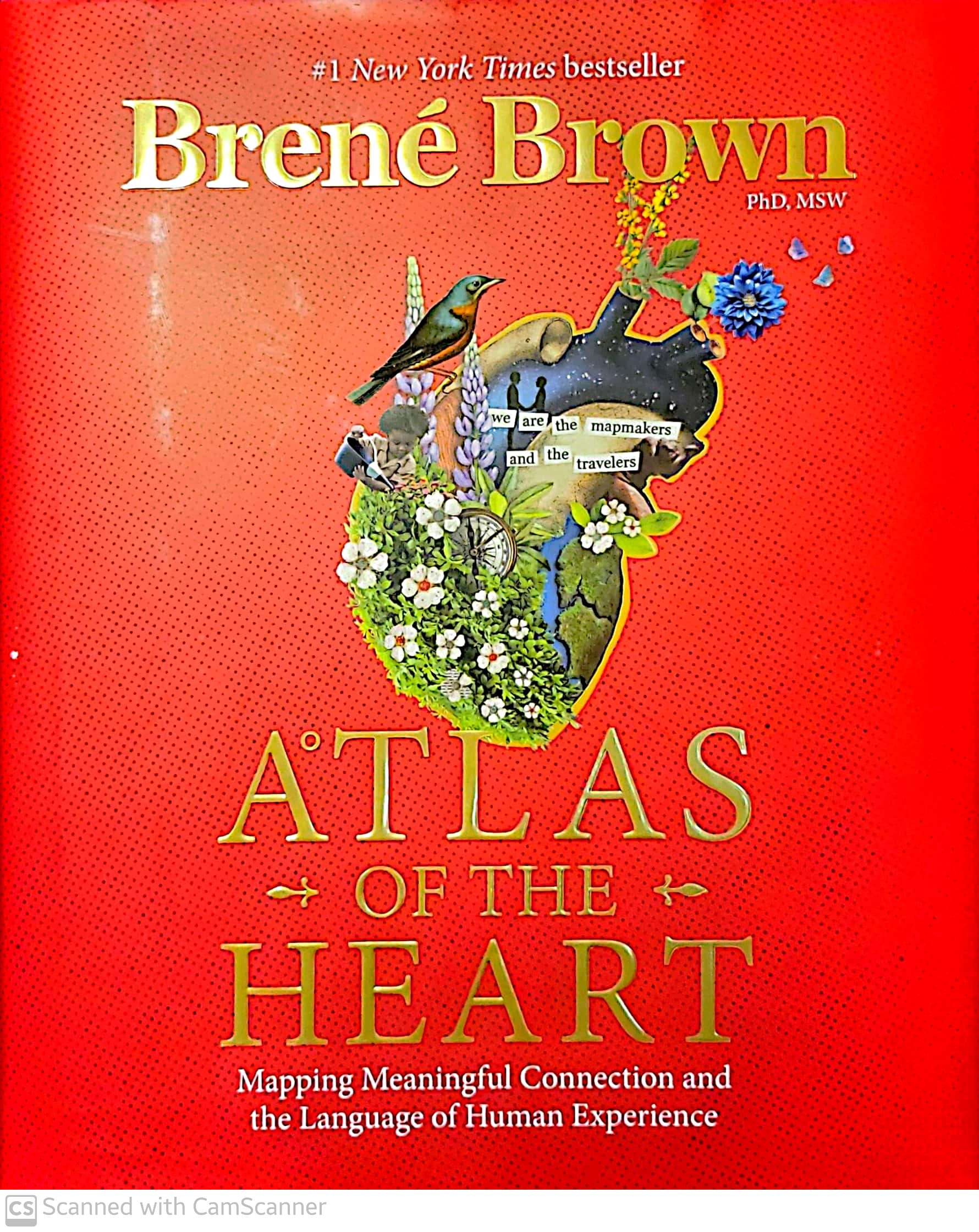
Brene Brown

Atlas of the Heart

This is a deeply profound book. It’s almost biblical. In the introduction alone, there is a handful of lines you can spend ages breaking down and interpreting. Just about everything is quotable.

This book is sort of the hard, data driven science, behind the Christian maxim of redemption of the soul is to be found in truthful speech. This work also helps to explain the LOGOS (the creative power behind words/truthful speech).

Language is our portal to meaning making, connection, healing, learning, and self awareness. Having access to the right words can open up entire universes. When we don’t have the language to talk about what we are experiencing, our ability to make sense of what’s happening and share it with others is severely limited. Without accurate language, we struggle to get the help we need, we don’t always regulate or manage our emotions and experiences in a way that allows us to move through them productively, and our self awareness is diminished. Language shows us that naming and experience doesn’t give the experience more power, it gives us the power of understanding and meaning….

Language speeds and strengthens connections in the brain when we are processing sensory information. But newer research shows that when our access to emotional language Is blocked, our ability to interpret incoming emotional information is significantly diminished. Likewise, having the correct words to describe specific emotions makes us better able to identify those emotions in others, as well as to recognize and manage the emotional experiences when we feel them ourselves.

Brene Brown

Freemasonry and Healing Trauma – Analogy/Metaphor

Since I’ve been quiet with my blog post/writing lately I’d like to explain why. Most of the content for my blog post come from the books I read and I was reading at least 5 days a week. I haven’t really been reading much due to the time I’m investing into Freemasonry. Instead of reading, in the last 7 months, I’ve learned the bulk of all 3 degree ceremonies. I’ve learned the lines and floor work for big roles in these plays – a total of around 5k-6k words in different chunks. This includes learning/mastering a 3,000 word lecture (20+ consecutive mins of talking). The ceremonies don’t really change so once you learn everything then you’re set and can perform in all the ceremonies. I’m trying to get to that point.


With books, it’s easy to extract information from what you’re reading. The insights I’m gaining from Freemasonry come much slower. Partly because right now I’m too busy learning lines, floor work,  getting over nerves, etcetera to extract deep meaning from the teachings. You really have to get proficient and confident with the ceremonies to be able to focus on extracting deeper meaning from them. What I’m learning is also very repetitive, so I’m not really learning anything “new” so to speak. The information comes slower but, perhaps, more rewarding. Such is the nature of any esoteric teachings but more so with Freemasonry than any other esoteric teachings I’ve engaged with.


There is something very profound about Freemasonry that I’ve uncovered with my therapist about what Freemasonry is doing for me. One of the core aspects of counseling is that the therapy session is a safe place you can express your feelings/emotions and explore your thoughts/desires. A safe place to speak your truth – safe meaning both physically and emotionally. 
This is one reason I advocate for everyone needing therapy. We have to have a safe place to explore our minds openly. Most people use their spouse, friend, family, and the like for their safe place(s). But there is nothing like having a professional to help you better navigate your internal world. 


In mitigating trauma, having a safe place is absolutely essential for healing and growth. This safe place allows you to explore your trauma in a healthy and controlled way. Instead of your triggers controlling your thoughts and behavior. Because when you’re in that state, it’s almost impossible to explore your feelings in any constructive way.


One of the roadblocks I face right now, in relation to therapy and my personal development, is that underneath my anger/rage I have a fear driving those emotions. I know this logically, but I can’t explore the fear underlying my rage. I can’t explore my fear because I do not physically feel it in my body at all. I really need to be able to explore my anger and fear in the moment, which is really hard to do. This is because not too many things trigger this emotion, and when it does, it puts me in a state of fight or flight so I’m not thinking cognitively to watch it.
Freemasonry is very nerve-racking for me. With performing in the ceremonies you have to speak/lecture to strangers while looking them in the eye, while a crowd is watching you, knowing that everyone is criticizing your every word and action. It’s very much out of my comfort zone. The fear I feel when performing is the closest feeling I’ve ever gotten to my anger/rage feeling, while still being in control. 


With all that in mind, Freemasonry is giving me a safe place that I can explore my fear. A place that I can conquer, master, and get curious with my fear. They say metaphor and analogy are the key to life. This Freemasonry fear analogy is helping me to unlock my fear and empower myself. I think this is a big reason why I enjoy Freemasonry so much. 
So find small and manageable ways to explore your trauma via analogy. This is how you “sit with your demons”, talk to them, ask them questions, find out what they want/need so you can integrate them into your being – shadow work essentially. There is a lifetime of secrets to unlock in Freemasonry and I’m just hitting the tip of the iceberg. 
Metaphorical Truth – Killing God?

Since Neitzche, many people have agreed with the notion that God, in recent generations, is dead. Meaning we aren’t religious anymore (ie. praying, living up to a higher power, engaging in ritual, etc.) and don’t believe in “God”.

While I agree that God is dead or dying in that sense, I believe, even in this current age, that God isn’t dead, God cannot die. To the ancients God(s) existed in the sky, in the forest, rivers, oceans, in our institutions, in our hearts and in our concious minds. God is majoraly a projection of our imagination into the objective realm to help make sense of the world. This doesn’t make God any less real than if he were to actually exist as a literal being – how human behavior manifest, the cause and effects of physical reality and the end results are the same, no matter how you think of God. This is one of those metaphorical truths. Just like it will increase the well-being of an individual acting as if a gun is cocked and loaded, acting as if God was real will increase the well-being of humanity.

This quote is what provoked this post and is relevant here:
“Debord also draws an equivalence between the role of mass media marketing in the present and the role of religions in the past.The spread of commodity-images by the mass media, produces “waves of enthusiasm for a given product” resulting in “moments of fervent exaltation similar to the ecstasies of the convulsions and miracles of the old religious fetishism”.”

God hasn’t died we are just worshipping new idols – God is now the new iPhone, drugs, vanity, or any unhealthy obsession/addiction. God exists in a very real – biologically concrete – way in our minds (it’s how our minds and imagination works), we cannot destroy Him so it would be wise to learn to worship Him in a healthy and constructive way, and to work towards cultivating our highest human faculties. So God isn’t dead/dying, we are only killing ourselves.

Archetypal Reality

I feel this is a very accurate description of what’s going on with our world culture currently. More specifically with politics and social justice.

The world can be validly construed as a forum for action, as well as a place of things. We describe the world as a place of things, using the formal methods of science. The techniques of narrative, however – myth, literature and drama – portray the world as a forum for action.

The world as forum for action is composed, essentially, of three constituent elements, which tends to manifest themselves in typical patterns of metaphoric representation. First is unexplored territory – the Great Mother, nature, creative and destructive, source and final resting place of all determinant things. Second is explored territory – the Great Father, culture, protective and tyrannical, cumulative ancestral wisdom. Third is the process that mediates between unexplored and explored territory – the Divine Son, the archetypal individual, creative exploratory Word and vengeful adversary. We are adapted to this world of divine characters, much as to the objective world. The fact of this adaptation implies that the environment is in reality a forum for action, as well as a place of things.

Unprotected exposure to unexplored territory produces fear. The individual is protected from such fear as a consequence of ritual imitation of the Great Father- as a consequence of the adoption of group identity, which restricts the meaning of things, and confers predictability on social interactions. When identification with the group is made absolute, however – when everything has to be controlled, when the unknown is no longer allowed to exist – the creative exploratory process that updates the group can no longer manifest itself. The Restriction of adaptive capacity dramatically increases the probability of social aggression.

Jordan Peterson

As Jung has stated, group identity eliminates individuality to the detriment of the individual.

Chaos and Order

I know Jordan Peterson’s philosophy has been highly influenced by Carl Jung and that this isn’t an exclusive Peterson thought. This Jung quote just reminded me of what Peterson regularly expounds, that, “having one foot in chaos and one foot in order” is necessary to living a healthy and constructive life.

It has become abundantly clear to me that life can flow forward only along the path of the gradient. But there is no energy unless there is a tension of opposites; hence it is necessary to discover the opposite to the attitude of the conscious mind. It is interesting to see how this compensation by opposites also plays its part in the historical theories of neurosis: Freud’s theory espoused Eros, Adler’s the will to power. Logically, the opposite of love is hate, and of Eros, Phobos (fear); but psychologically it is the will to power. Where love reins, there is no will To power, and where the will to power is paramount, love is lacking. The one is but the shadow of the other…

Seen from the one-sided point of view of the conscious attitude, the shadow is an inferior component of the personality and is consequently repressed through intensive resistance. But the repressed content must be made conscious so as to produce a tension of opposites, without which no forward movement is possible. The conscious mind is on top, the shadow underneath, and just as high always longs for low and hot for cold, so all consciousness, perhaps without being aware of it, seeks its unconscious opposite, lacking which it is doomed to stagnation, congestion, and ossification. Life is born only of the spark of opposites.

…every process is a phenomenon of energy, and that all energy can proceed only from the tension of opposites.

Carl Jung

Intrinsic Morality

In his book “How the Mind Works”, Steven Pinker uses the computational theory of mind to explain how the mind works, which states that the mind operates like a computer. This coupled with Darwinian thought explains how we developed an intrinsic morality. It appears that Jung also agrees morality is intrinsic to us humans, not requiring some religous doctrine for morality.

It should never be forgotten that morality was not brought down on tablets of stone from Sinai and imposed upon the people, but is a function of the human soul, as old as humanity itself. Morality is not imposed from the outside; we have it in ourselves from the start – not the law, but our moral nature without which the collective life of human society would be impossible. This is why morality is found at all levels of society. It is the instinctive regulator of action which also governs the collective life of the herd.

Carl Jung

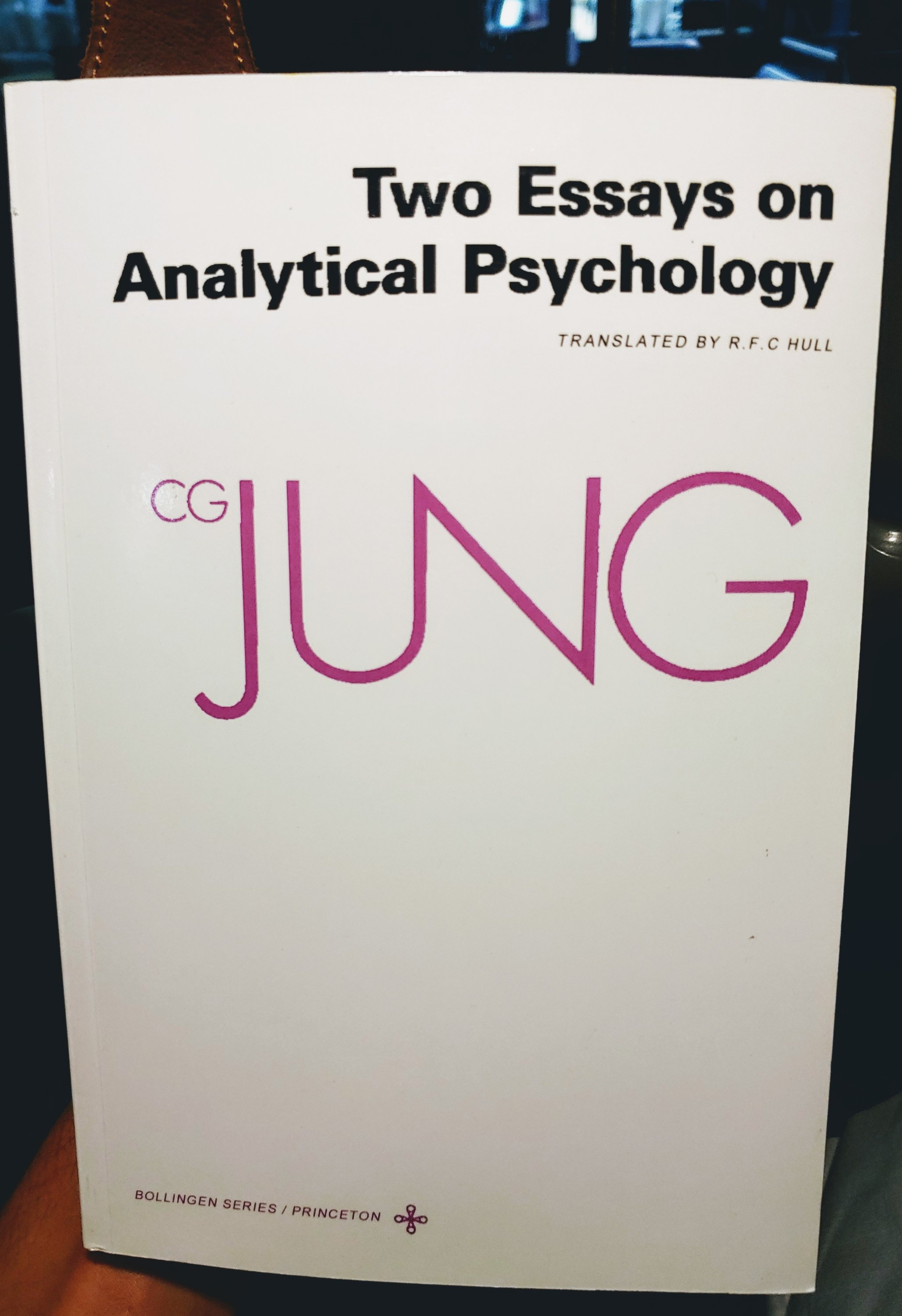
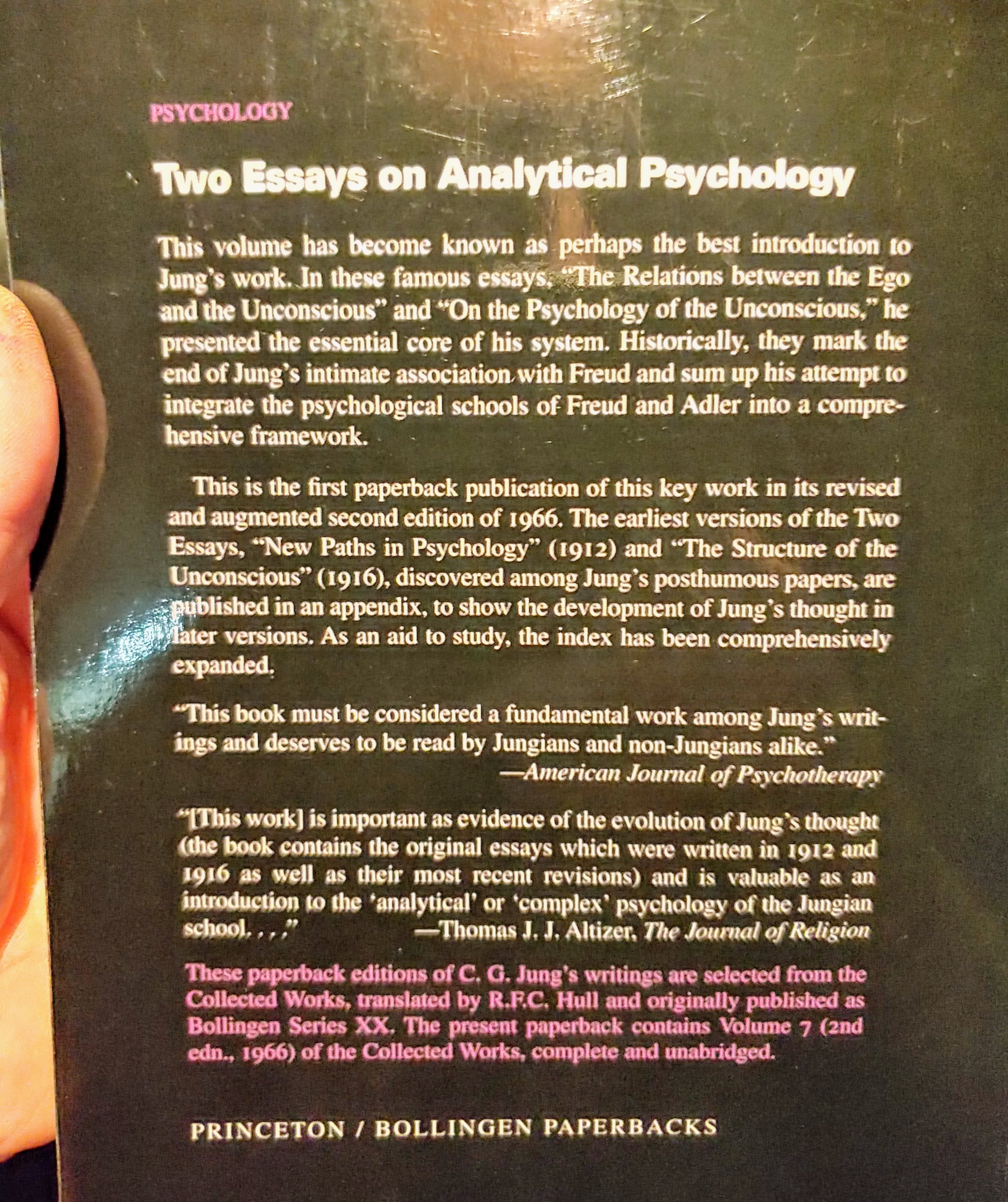
Two Essays on Analytical Psychology

Using the Tarot is a way of communicating with the unconscious. The more one learns about the psyche and unconscious, the better tuned his/her intuition will be, and will have a more complete understanding / interpretation of the Tarot.

The main reason I am reading this book is for the second essay “The Relations Between the Ego and the Unconscious”. This essay is about the danger of what Jung calls ego inflation. This at times is a consequence after someone has a revelatory experience. “Ego inflation” is to erase the relationship / the boundary between the specific consciousness of the ego and the more generalized consciousness as such, which is a dangerous thing to do, something I feel I currently need help with. So this is a document that tells you how to avoid that if one is playing in these realms.