Masonic Archeology

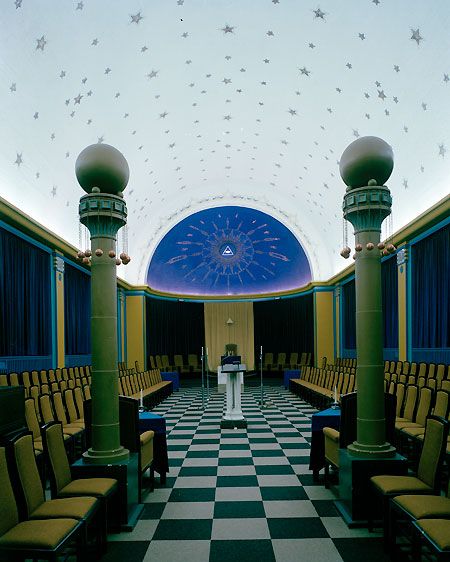
It is true that Freemasonry is the parent of all religion, the original worldwide cosmic gnosis, diffused in ancient times to the uttermost ends of the earth. Freemasonry is the Pompeii of prehistoric science. All the Masonic ritual, it’s Egyptian signs, it’s Chaldean grips, it’s Sanskirt passwords, is ancient Hebrew symbols, it’s cabalistic allusions and its historical records are supremely scientific and a survival through long ages, by various underground channels, of the knowledge of the universe which was gained by Sabian astronomers from the temple tops of Chaldea, India and China and recorded by the equally learned geometers and mathematicians of the ancient Orient.

Frank C. Higgins

So, What is Masonic Ritual?

Traditionally, the primary purpose of the ritual is to educate the candidate. The rituals are closer to a play/drama/performance than anything else.

The ceremonial lore revolves around the period during which the First Temple at Jerusalem was built by King Solomon. King Solomon. The stories build from a peaceful and regal beginning which explains the inspiration for and construction of the Temple, leading up to a cataclysmic event which has come to symbolize the central morality of Speculative Freemasonry.

Throughout the series of short plays, you’ll come across dozens of metaphors, imparting the moral criteria which a Freemason is expected to aspire to. The ritual is composed of exquisitely crafted language, and for most masons the messages go in and stay in, enabling them to live a more positive and fulfilled live.

Rick Smith

Many avoid Freemasonry because they feel it would be “too religious” for them (myself included, until I learned more about the fraternity). If you have no issues with attending a church wedding or funeral, or being a Godfather for someone’s new baby, you should not meet any greater religious demands in craft masonry. Masons do not worship in craft lodges; that is the role of the Church.

The obvious overlap between Religion and Freemasonry is morality, which both teach as a primary function. The key difference in their approach is that fundamental religion tends towards ‘God-fearing morality’ whilst craft masonry speaks more to the Moral Compass, and the idea that your behavior in life should be geared towards preserving the stability of society and the happiness of everyone around you. For the purpose of learning and executing Masonic craft ritual, religion has no direct relevance whatsoever.

The say that “Politics is showbiz for ugly people!” For the rest of us, there’s Masonry. Ritual’s primary purpose is to implant the moral metaphors of Masonic teaching. That’s unequivocal.

Rick Smith

Being initiated into the 1st degree of Freemasonry, passed to the 2nd degree, and raised to the 3rd degree of Master Mason, does not at all make you instantly enlightened. You’re more or less just obligated into keeping the “secrets” of Masonry at that point. Being the candidate, going through the three degrees (plays), you’re really not participating, you’re just being instructed and walked through. So actually learning the ritual, being engaged and involved, actually playing a role in the ritual (drama/play), is what enables you to really learn the metaphors/teachings. It really is something you’ll be taking in and learning for a lifetime – and that’s the point. While also finding fulfillment in having an active role in passing down these teachings, bettering yourself, your brothers, and community.

So in short: As I’ve stated before, there really is no secrets in Freemasonry, all the “secret” knowledge is passed down through the ritual. This secret knowledge being universal teachings we all know and live by as humans. The only real secret being how this knowledge is delivered, via the ritual.

The main reason for the secrecy is because it’s like spoiling a movie. If I tell you what the ritual is, everything that’s in it and how it’s delivered, then when you experience it yourself it won’t have the same impact and effect as it would if you didn’t know anything about it. Knowing all that beforehand would totally ruin the experience and the effect it is supposed to have on your psyche.

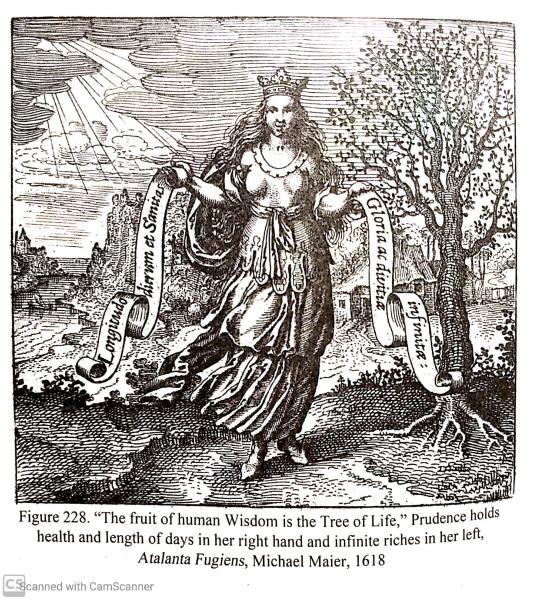
Sterilized Christianity – Alchemist Redemption

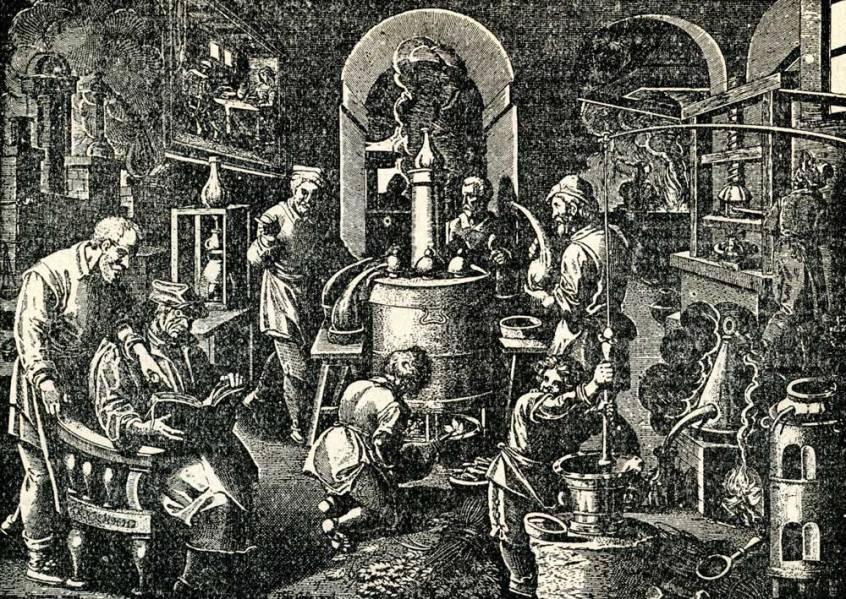
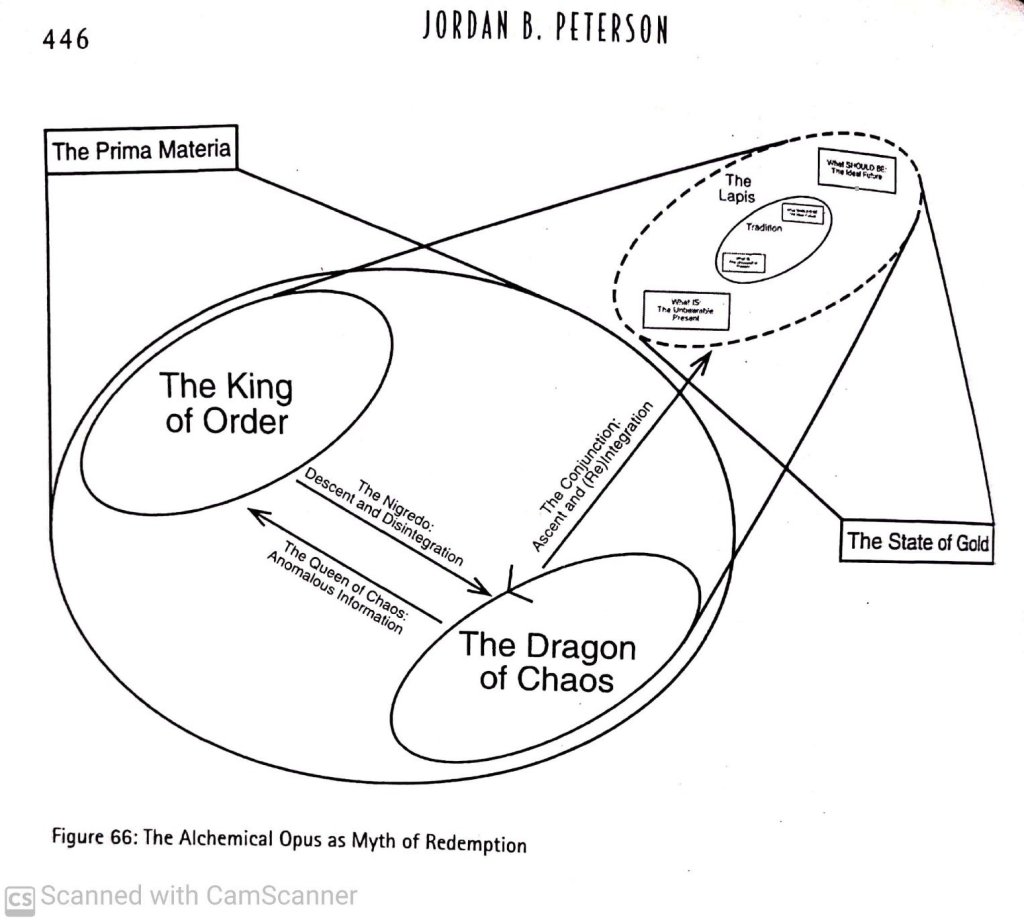
This final value, the goal of the pursuit of the alchemist, is discovery and embodiment of the meaning of life itself: integrated subjective being actively expressing its nature through manipulation of the possibilities inherent in the material / unknown world. This final goal is the production of an integrated intrapsychic condition – identical to that of the mythological hero – “acted out” in a world regarded as equivalent to self. Production of this condition – the lapis philosophorum – constitutes the antidote for the “corruption of the world,” attendant upon the Fall [attendant upon the emergence of “partial” self-consciousness.] The lapis is “agent of transformation,” equivalent to the mythological redemptive hero – able to turn “base metals into gold.” It is, as such, something more valuable than gold – just as the hero is more valuable than any of his concrete productions. The “complete” alchemical opus – with production of the lapis as goal – is presented schematically in figure 66.

Alchemy was a living myth: the myth of the individual man as redeemer. Organized Christianity had “sterilized itself,” so to speak, by insisting on the worship of some external truth as the means to salvation. The Alchemist (re)discovered the error of this presumption, and came to realize that identification with the redeemer was in fact necessary, not his worship; that myths of redemption had true power when they were incorporated, and acted out, rather than believed, in some abstract sense. This meant: to say that Christ was “the greatest man in history” – a combination of the divine and mortal – was not sufficient expression of faith. Sufficient expression meant the attempt to live out the myth of the hero, within the confines of individual personality – to voluntarily shoulder the cross of existence, to “unite the opposites” within a single breast, and to serve as active conscious mediator between the eternal generative forces of known and unknown.

Jordan Peterson

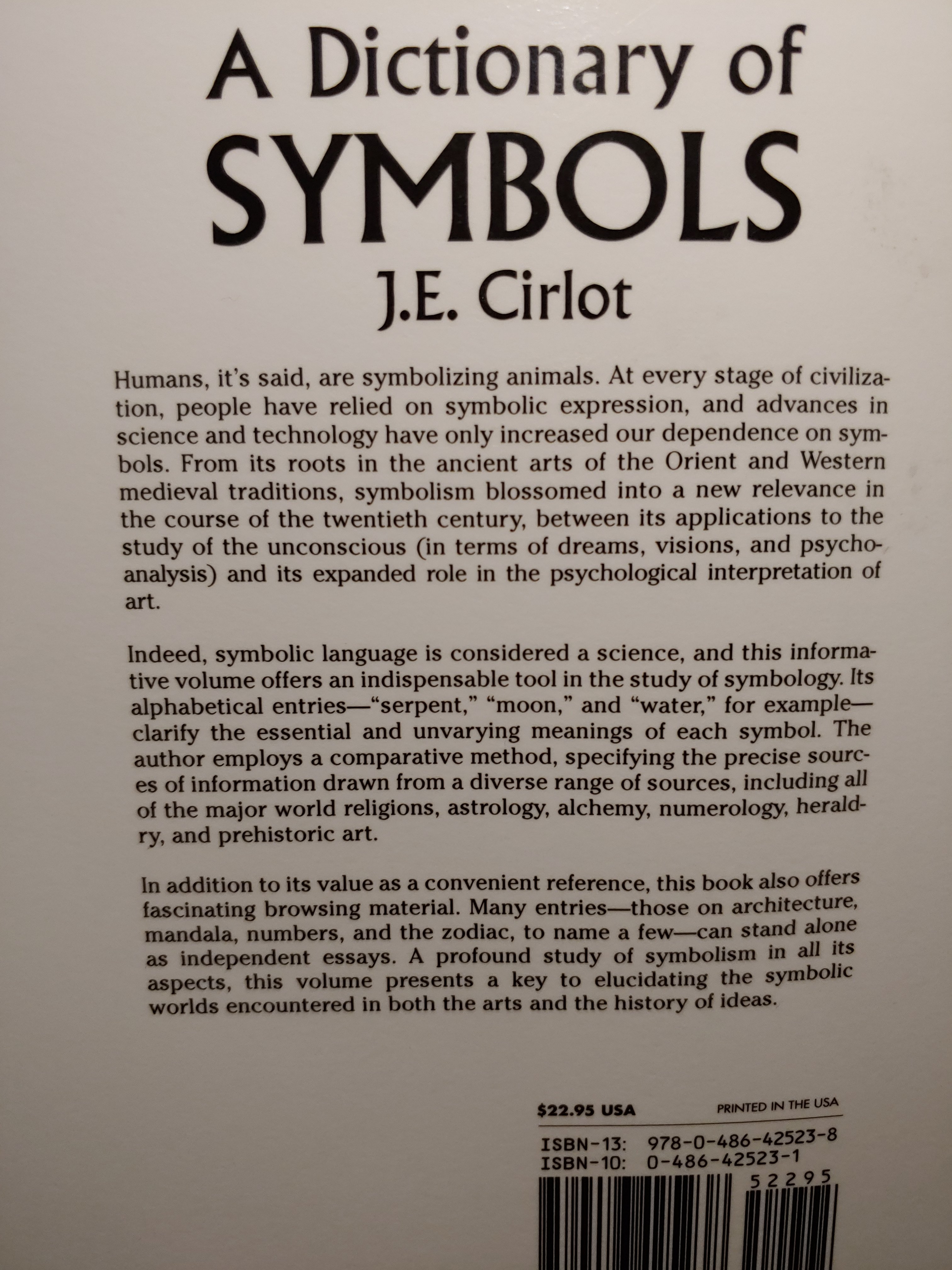
A Dictionary of Symbols

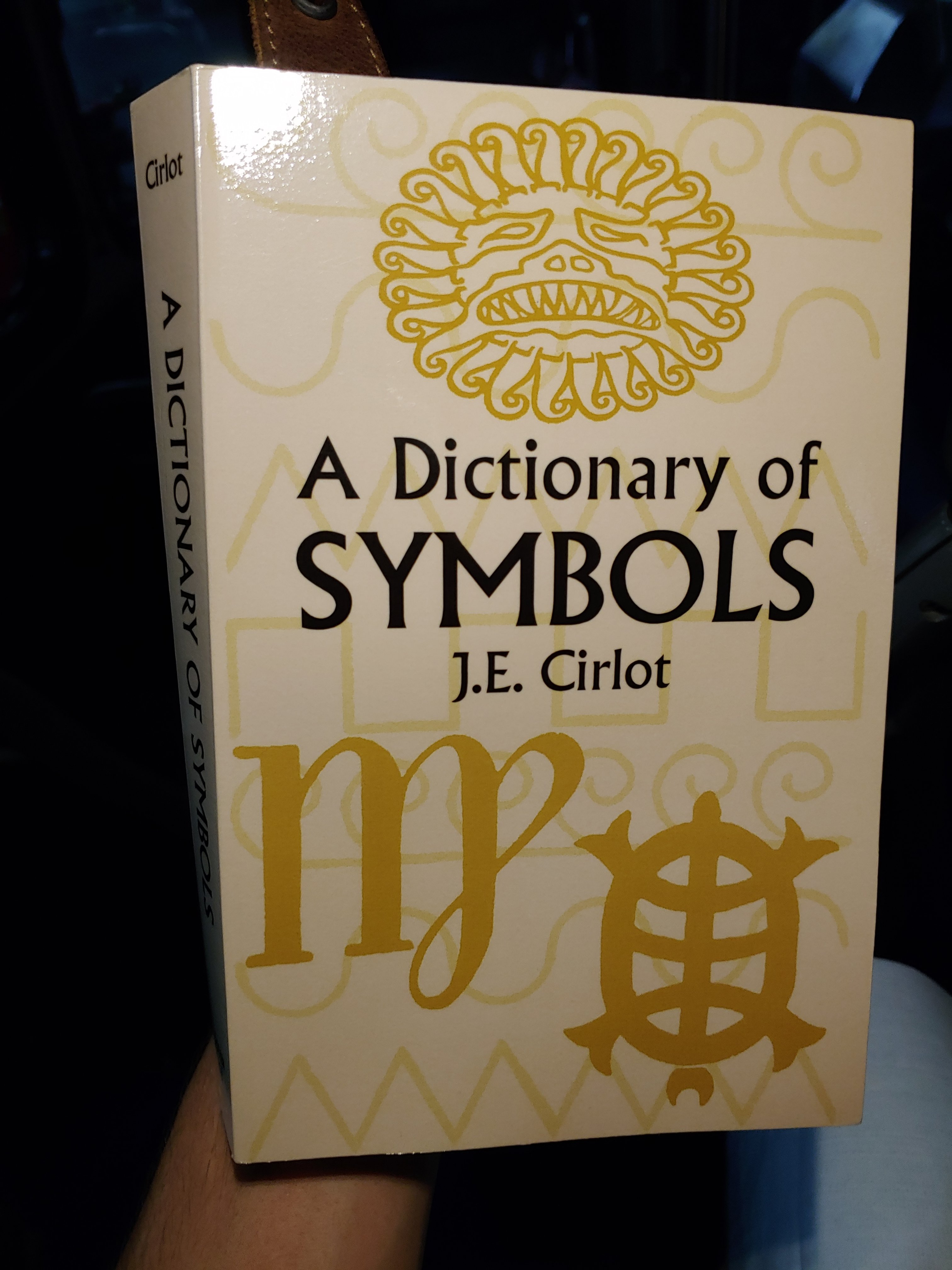
Man, it has been said, its a symbolizing animal; it is evident that at no stage in the development of civilization has man been able to dispense with symbols. Science and technology have not freed man from his dependence on symbols: indeed, it may be argued that they have increased his need for them. In any case, symbology itself is now a science, and this volume is a necessary instrument in its study.

Herbert Read

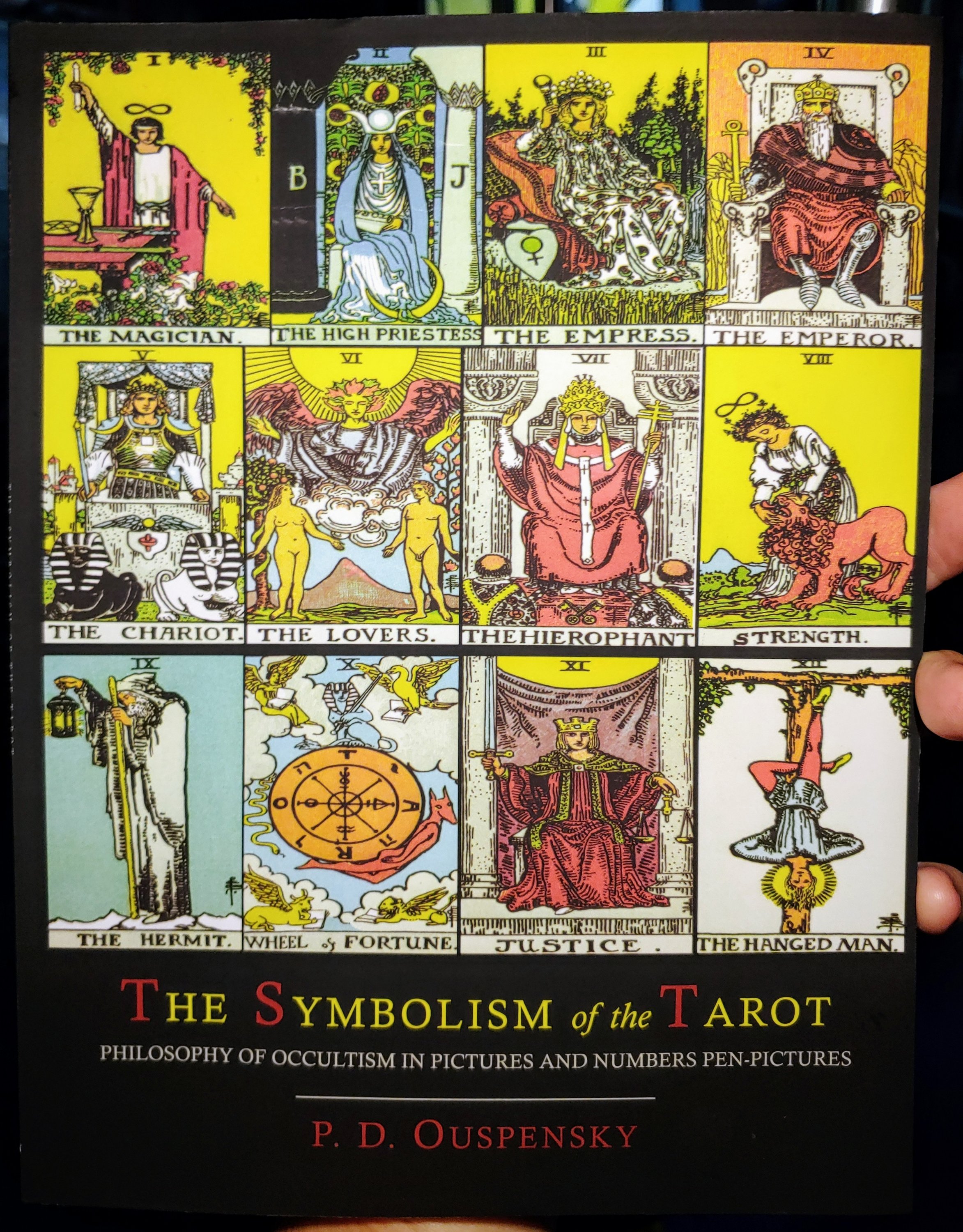
Philosophy of Occultism in Pictures & Numbers

No study of Occult Philosophy is possible without an acquaintance with symbolism…. Symbolism cannot be learned as one learns to build bridges or speak a foreign language, and for the interpretation of symbols a special cast of mind is necessary; in addition to knowledge, special faculties, the power of creative thought and developed imagination are required.

In order to become acquainted with the tarot, it is necessary to understand the basic ideas of Kabala and of Alchemy. For it represents, as, indeed, many commentators of the tarot think, a summary of the Hermetic Sciences – the Kabala, Alchemy, Astrology, Magic, with their different divisions. All these sciences really represent one system of a very broad and deep psychological investigation of the nature of man in his relation to the world of noumena (God, the world of spirit) and to the world of phenomena (the visible physical world).

The letters of the Hebrew alphabet and the various allegories of the Kabala, the names of metals, acids and salts in Alchemy; of planets and constellations in Astrology; of good and evil spirits in Magic – all these were only means to veil truth from the uninitiated

P.D. Oupensky

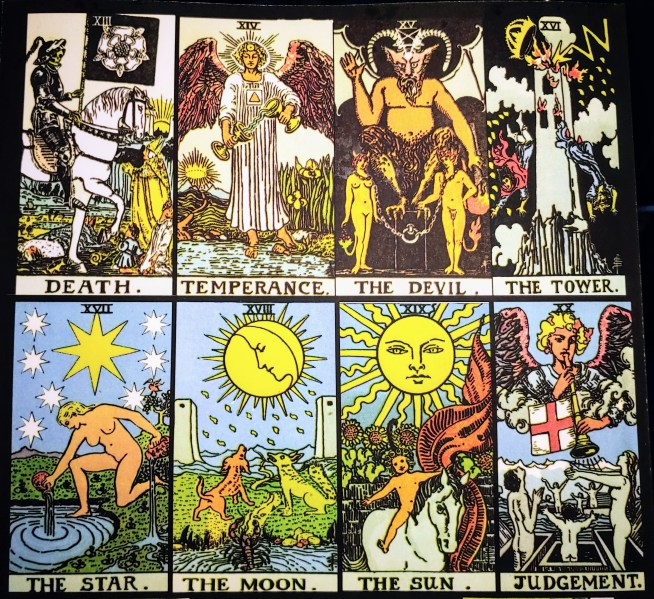
Essence of Tarot

The tarot embodies symbolical presentations of universal ideas, behind which lie all the implicits of the human mind, and it is in this sense that they contain secret Doctrine, which is the realization by the few of the truths embedded in the consciousness of all.

The true Tarot is symbolism; it speaks no other language and offers no other signs. Given the inword meaning of its emblems, they do become a kind of alphabet, which is capable of indefinite combinations and makes true sense in all.

A. E. Waite

Renaissance Homage

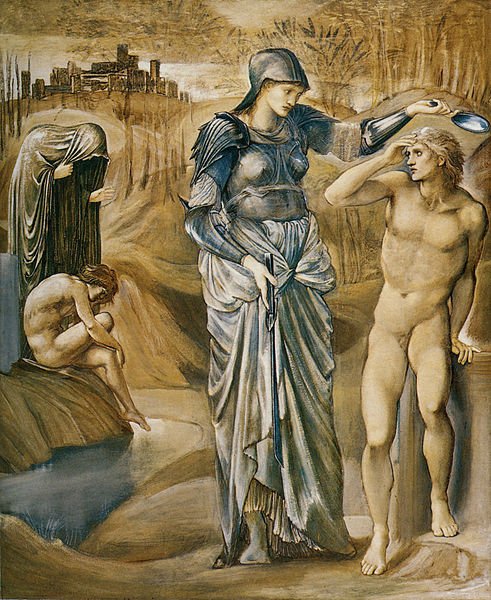
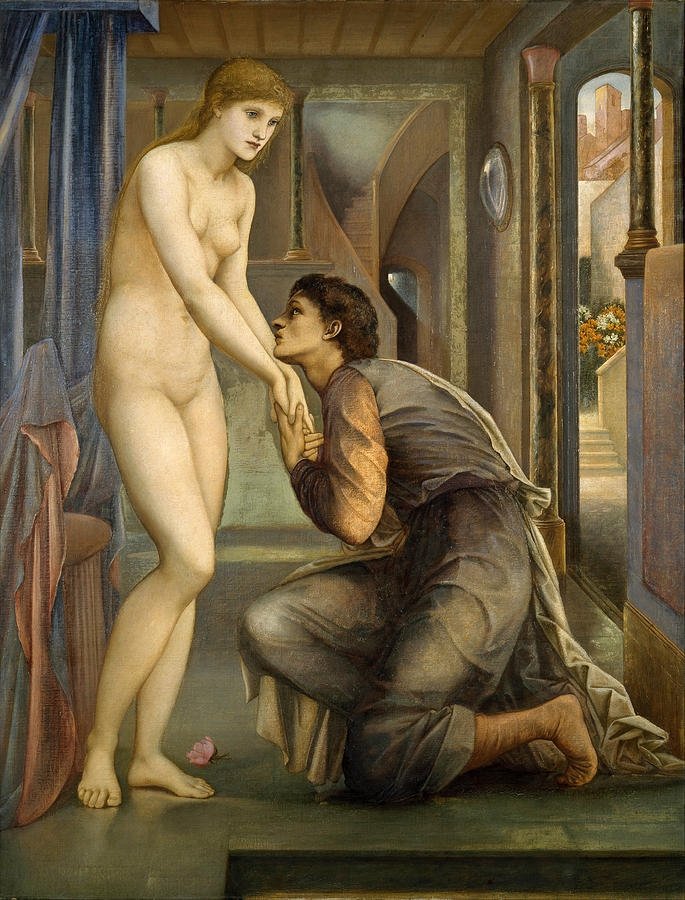
Burne-Jones and the Pre-Raphaelites believed that art was a spiritual or magical endeavor and toward this end they formed a mystical brotherhood of English artist dedicated to recapturing the sincerity of the art of the early Renaissance – the same period that gave us the Tarot.

Burne-Jones based his tall female “stunners” and melancholy heroes on the paintings of Botticelli and Michelangelo, two artists, whose works are considered primary examples of Renaissance neoplatonism. His work expresses the Renaissance idea that physical beauty and spiritual beauty are linked and in one continuum that can lead to the mystical experience of beauty itself, as a timeless, underlying reality – Plato’s “true food of the soul.”

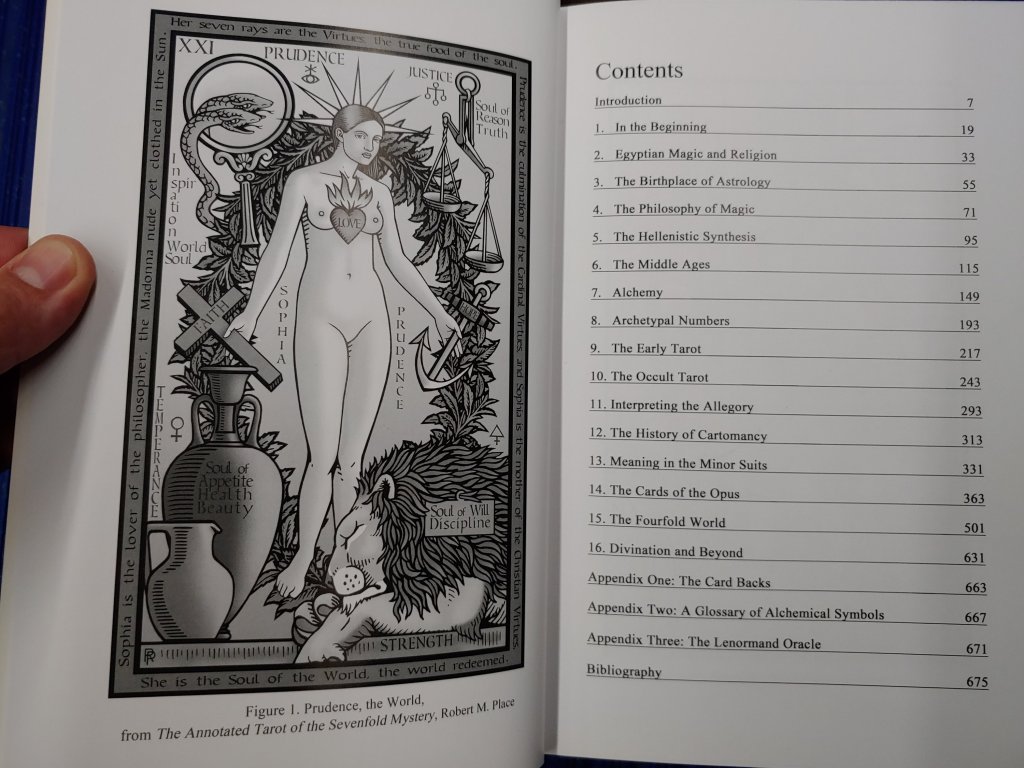
In the Renaissance, artists, like Botticelli, symbolized this spiritual essence as an ideal female nude and this ideal allowed early Tarot artist to place a nude on the World card as a symbol of the primary beauty and allowed alchemists to use the nude as a symbol for the Anima Mundi.

Robert M. Place

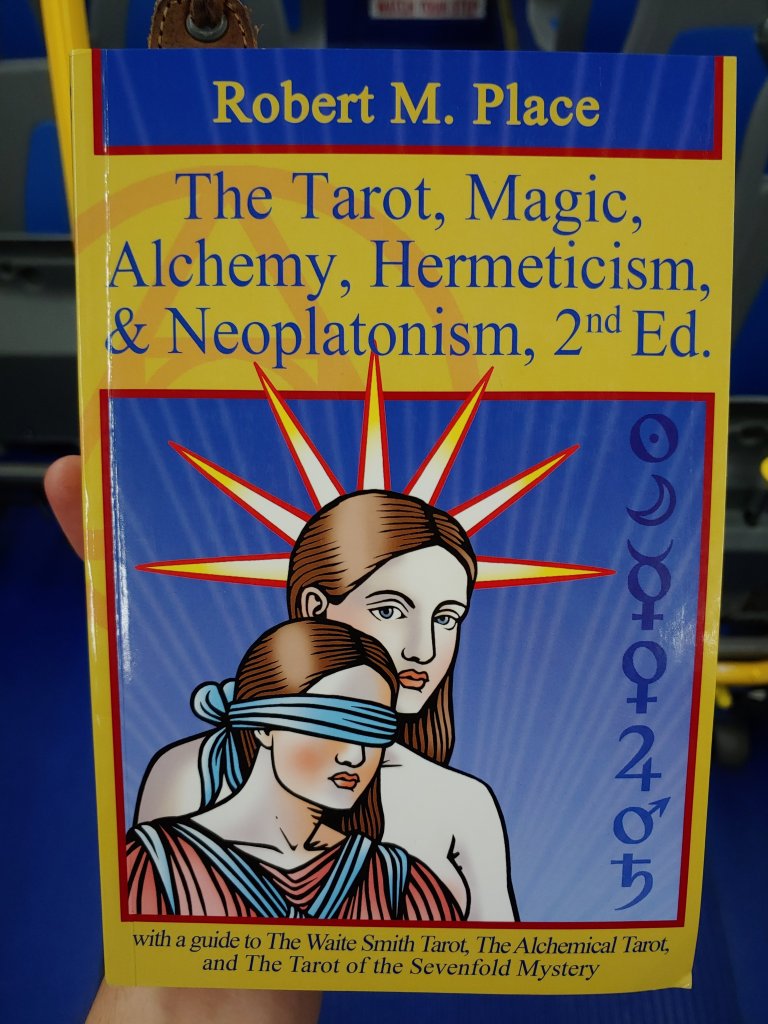
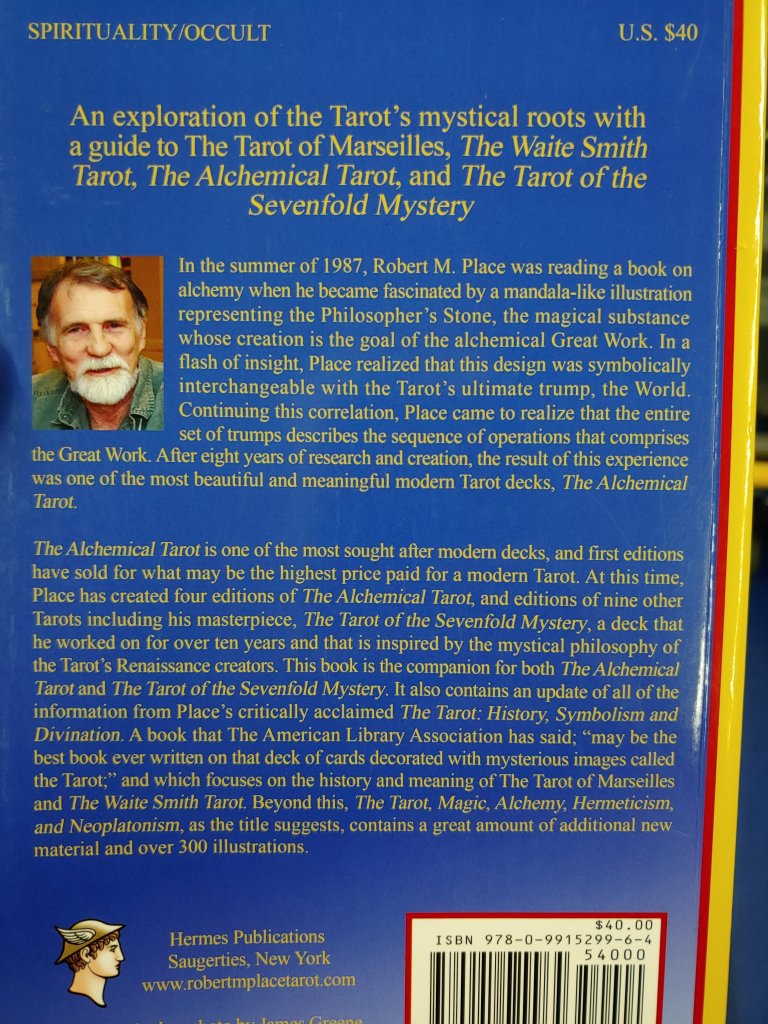
THE TAROT, MAGIC, ALCHEMY, HERMETICISM, & NEOPLATONISM

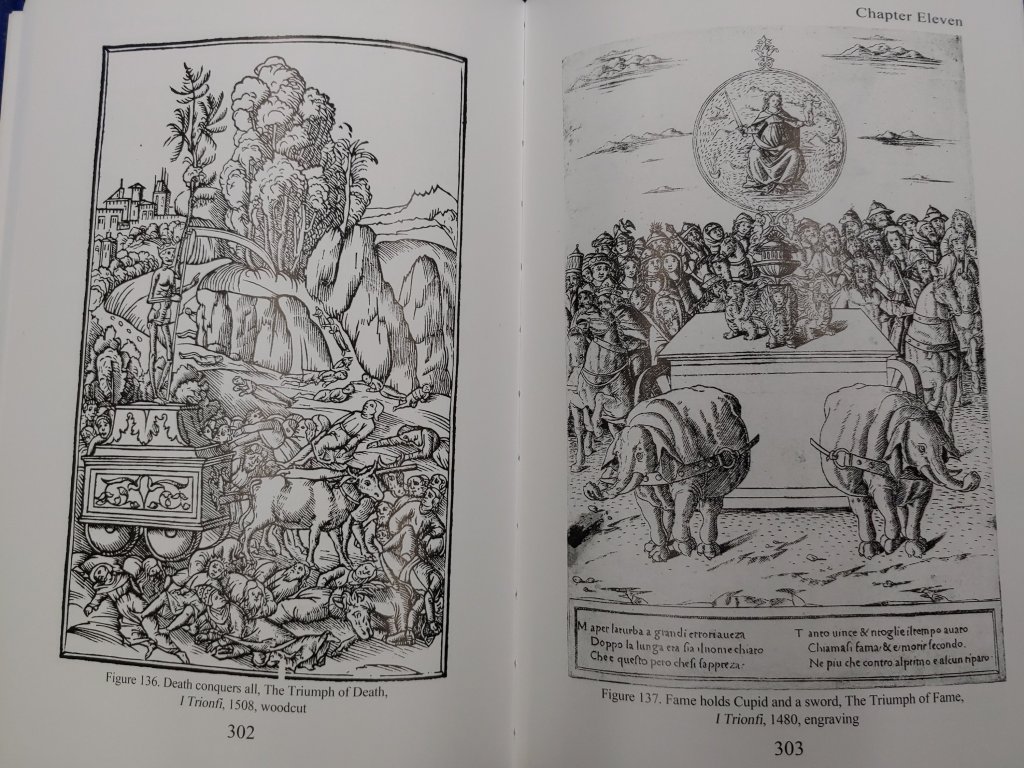
An almost 700 page book with roughly 300 illustrations, a scholarly work. I got this book and his 5th edition tarot deck to help reinforce alchemical concepts and symbolism. I’m currently going through and meditating on my Knapp-Hall deck so it’ll be a while before I get to a study of Robert’s alchemy deck. The information in this book I’m sure will enhance my intuition and deepen understanding in reading the Knapp-Hall deck.