The Ancient Art of Symbolism

We see the individual in a world of shadow forms. … There is the ancient art of symbolism. Now a symbol is a picture of a motive or an idea or a meaning, it is putting a mysterious truth in the form of a picture.

All action all attitude all feeling can be considered as pictorial. Everything that exist has a shape of some kind. Some of these shapes we can see around us in daily life, some of these shapes impose themselves upon us as dreams and nightmares, some of these shapes never appear to the physical world at all, others are particularly limited to the use of psychics. But in every instance every single thought or emotion has a picture, has a likeness of itself, a mathematical pattern, a geometrical balanced design which stands for it.

Manly P. Hall

Blind Specialization

An issue with most fields of modern science and philosophy are that they are specalized and only focus on a specific area of study. It is like someone viewing a painting with their eyes only a couple inches from the canvas. From this perspective we have an excellent opportunity to analyze fine brush strokes and textures of paint but only a small area of the whole, the consequence being the “painting” (or meaning) itself eludes us. This is true of our relationship to the whole. Our perception and understanding of the universe is we are smacked up right against it peering suspiciously at a fraction of reality and making our various assessments of such grand affairs as “life” and “the world” thus missing the meaning.
It is inevitable from the vantage points of our limited, mistrustful egos, these assessments are biased, prejudiced, and for the most part inaccurate.

The Value of Imagination

To the Hermeticists, imagination is real. It is an aspect of consciousness and the door for entering the reality of the soul. Without imagination the soul is not perceptible. Dreams and visions, as in shamanism, are valued and open us to communication with the gods. Skill at focusing imagination is gained through the practice of meditation, and this skill can help consciousness to effect changes in physical reality. Magic is actually the craft of working with the imagination.

Robert M. Place

Hellenistic Gifts

When the Greeks came to dominate Egypt and the Middle East it created a cosmopolitan environment that synthesized Egyptian and Middle East religion with Greek rationalism, leading to groups of mystical philosophies known as Neoplatonist. It also led to a series of mystical texts known as the Hermetic texts, containing works on alchemy, magic, astrology, and philosophy – collectively called the Hermetica. Hermetic philosophy became a major influence on all Western magical practices and mystical traditions. Neoplatonism, alchemy, Kabbalah, Sufism, mystical Christianity and occultism, including the Tarot are all affected by this influence.

Ancient Astrology

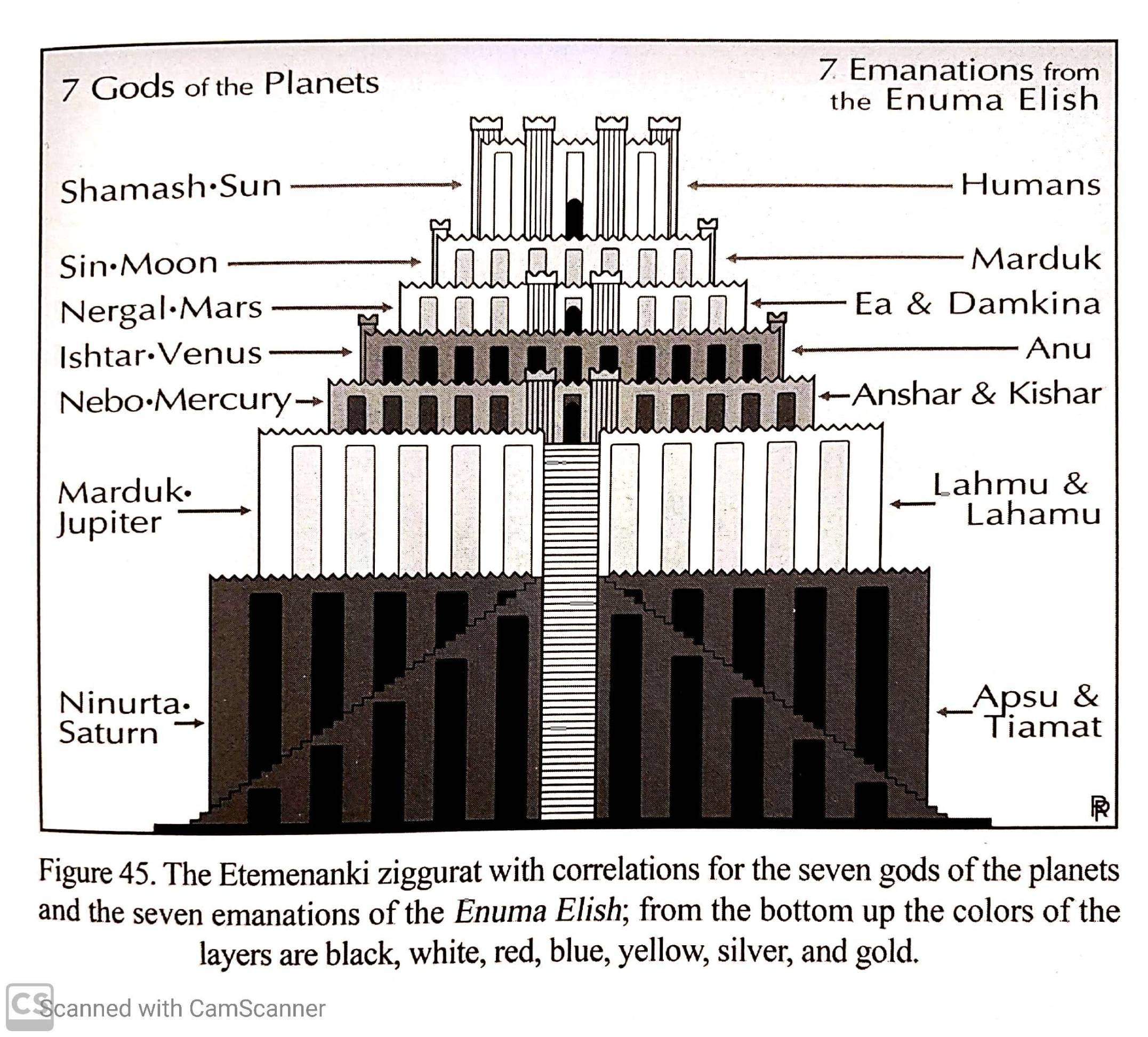
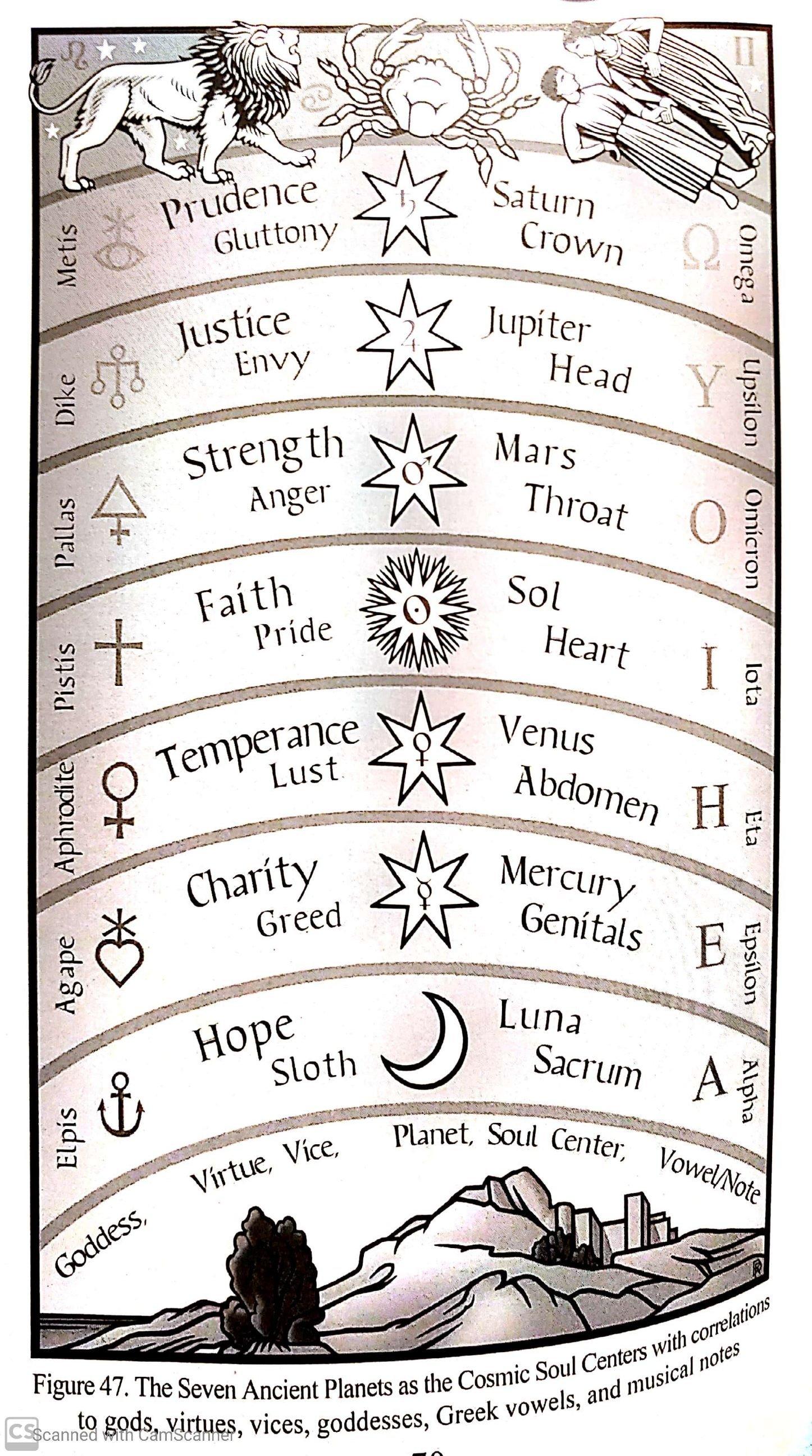
Astrology is based on the idea that the soul departs from Heaven, which is above the stars, through one of the constellations of the zodiac and then descends through the planets to live in a body on Earth. At each planet the god of that sphere clothes the soul in certain qualities that become its personality. This is the origin of the list of the seven virtues and seven vices. Effectively the planets function as a ladder or stairway to earth and as personal emanations or steps in every person’s individual creation. Through a complex system of correspondences between the planets and colors, metals, herbs and other objects on Earth, magicians can make use of the powers of the planetary gods in their magical practice.

Robert M. Place

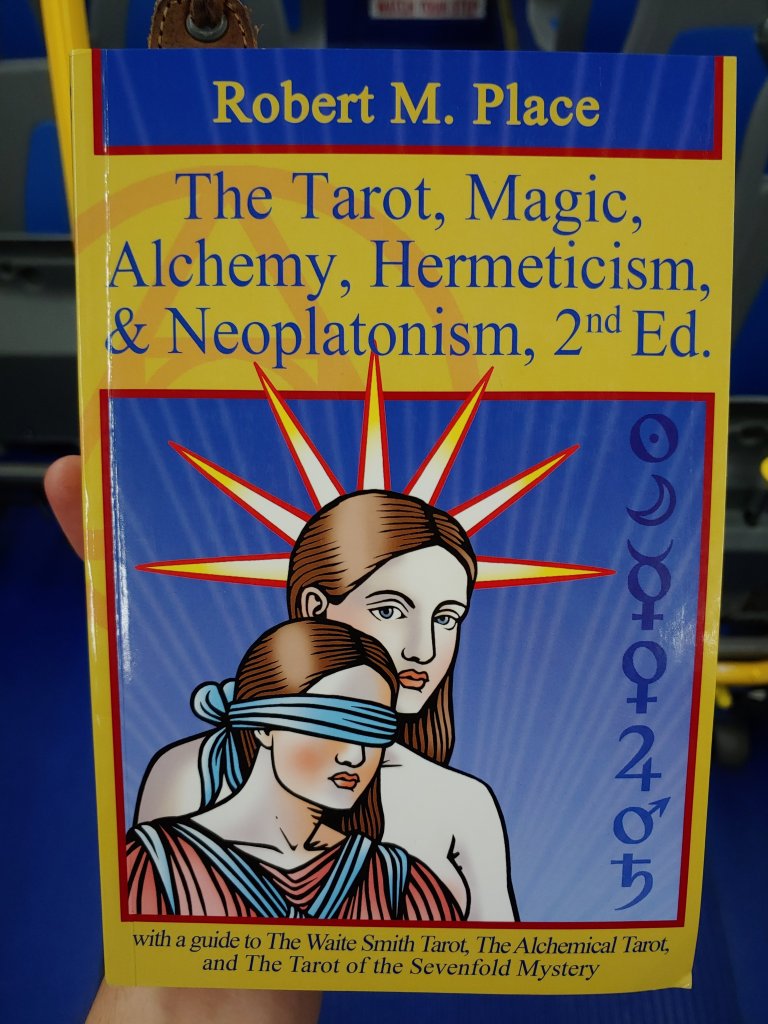
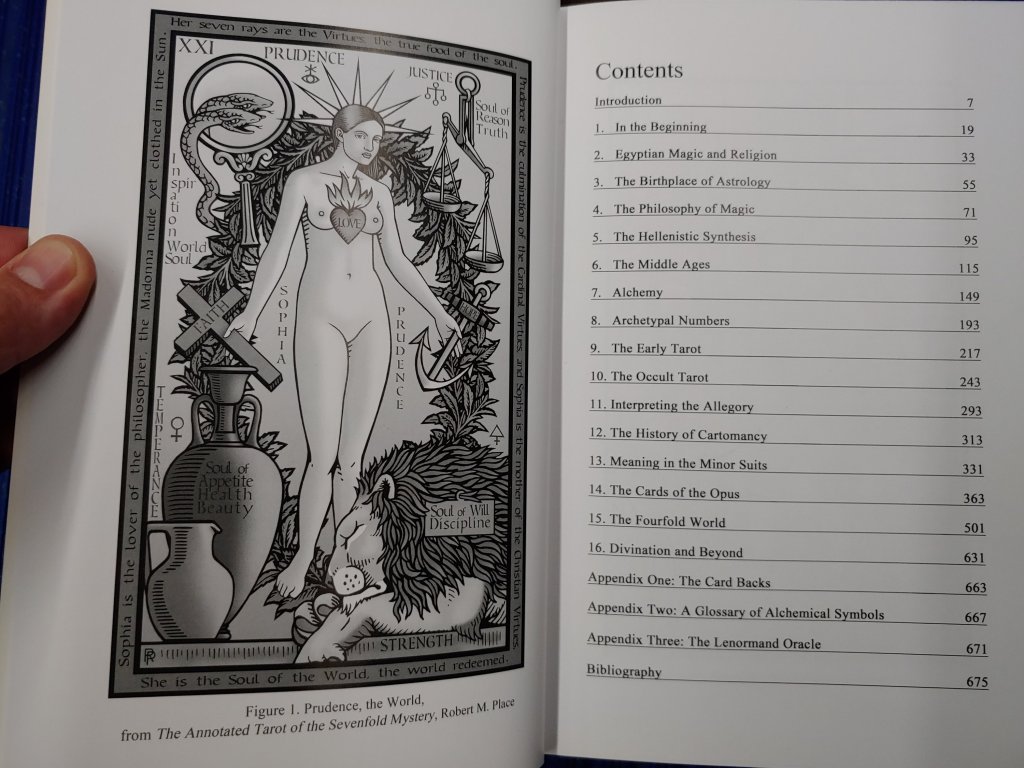
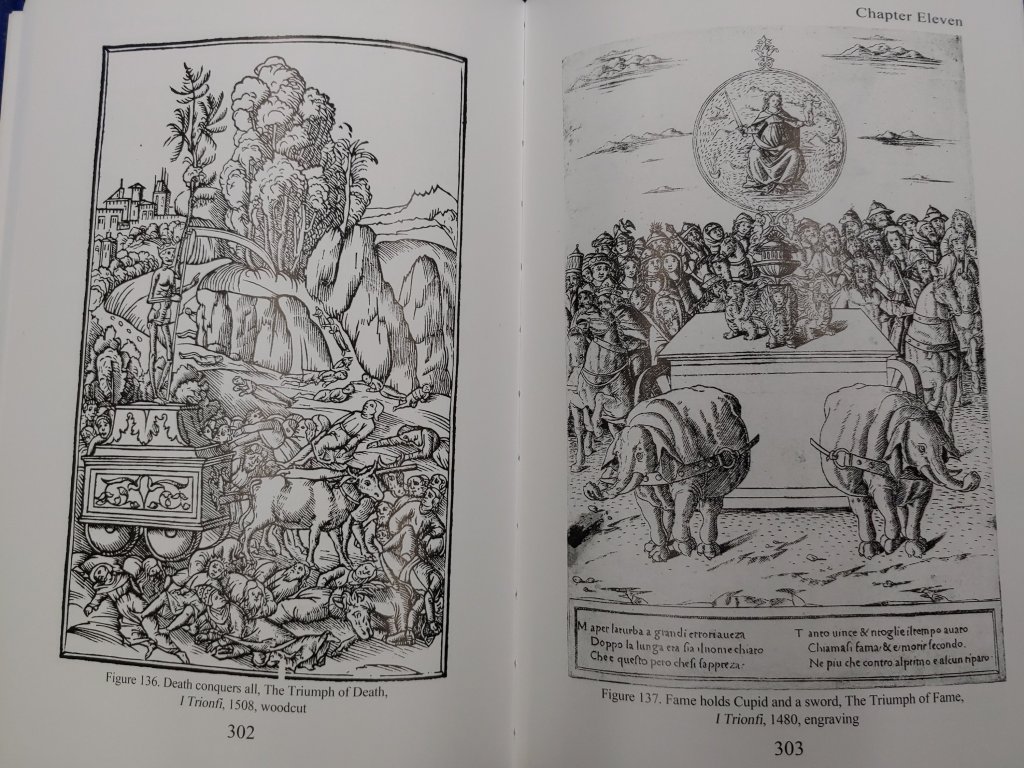
THE TAROT, MAGIC, ALCHEMY, HERMETICISM, & NEOPLATONISM

An almost 700 page book with roughly 300 illustrations, a scholarly work. I got this book and his 5th edition tarot deck to help reinforce alchemical concepts and symbolism. I’m currently going through and meditating on my Knapp-Hall deck so it’ll be a while before I get to a study of Robert’s alchemy deck. The information in this book I’m sure will enhance my intuition and deepen understanding in reading the Knapp-Hall deck.

Egypt

A principle reason for studying ancient Egyptian texts is that they reconnect us with something vital that our culture has forgotten. Egyptian “religion” paradoxically points us toward our own future which is surely to develop new capabilities of consciousness to awaken us once more to the spiritual realities of which the mystical literature of ancient Egypt speaks.

Spiritual Blight

As an organic structure of institutions, the pagan mysteries sank into historic oblivion about the 6th century A.D. A night of spiritual darkness descended upon the world, and theological dogmas eventually eclipsed the light of reason. Certainties were obscured by uncertainties. Practices surrendered to theories, and the dictates of a blind and fanatical faith supplanted the noble doctrine of the initiated philosophers.

Thus came the Dark Ages, long centuries of benightedness, in which man tortured and destroyed his fellow man for the glory of an all merciful God. Out of the religious and ethical chaos that followed the collapse of classical learning emerge the dark-cowled form of the Inquisition. Theology retrograded to the condition of a pious sham, until humanity with one desparing gesture repudiated the thralldom of an unendurable dogmatism, and rushed to embrace the materialism and skepticism of modern times.

Manly P. Hall

Erudition

Thanks for visiting my site, I’ve started this blog to share interesting/profound thoughts and observations I find on my journey towards Gnosis. The majority will be quotes I pull from the books I read and sometimes original thoughts that I have. The overall scope of my reading is about us, humans, the mind, consciousness, science, philosophy, art, myth, magic, history, etc., etc. – generally all relating to the attainment of Gnosis. For me Gnosis is defined as knowledge gained through direct experience and the tradition that embodies that core of knowledge, wisdom, and insight of humanity to it’s real nature as divine – leading to the deliverance of the divine spark within humanity from the constraints of earthly existence.

Part of this journey also includes the study of tarot, for it deserves serious scholarly research and consideration. The Tarot being regarded as leaves of some sacred book from the ancient pagan world, intended as symbols of philosophic principles – holding the keys to the sciences of universal procedures – intended to illumine the mind through the instrument of a mathematically ordered symbolism. Carl Jung has said everyone is living a myth – it would be wise to know which one, so you know if it’s a tragedy. I think Tarot is best used as a tool to identify, communicate, and thus manipulate that myth. So I’ll also be using this blog to hone my insight and organize my thoughts, through the complex, multilayered world of the Tarot and its symbolism.


Jump to latest posts