Art – The Foundation of the Process by Which We Unite Ourselves Psychologically
Making something beautiful is difficult, but it is amazingly worthwhile. If you learn to make something in your life truly beautiful – even one thing – then you have established a relationship with beauty. From there you can begin to expand that relationship out into other elements of your life and the world. That is an invitation to the divine. That is the reconnection with the immortality of childhood, and the true beauty and majesty of the Being you can no longer see. You must be daring to try that.

If you study art (and literature anf the humanities), you do it so that you can familiarize yourself with the collected wisdom of our civilization. This is a very good idea – a veritable necessity – because people have been working out how to live for a very long time. What they have produced is a strange but also rich beyond comparison, so why not use it as a guide? Your vision will be grander and your plans more comprehensive. You will consider other people more intelligently and completely. You will take care of yourself more effectively. You will understand the present more profoundly, rooted as it is in the past, and you will come to conclusions much more carefully. You will come to treat the future, as well, as a more concrete reality (because you will have developed some true sense of time) and be less likely to sacrifice it to impulsive pleasure.  You will develop some depth, gravitas, and true thoughtfulness. You will speak more precisely, and other people will become more likely to listen to and cooperate productively with you, as you will with them. You will become more your own person, and less a dull and hapless tool of peer pressure, vogue, fad, and ideology.

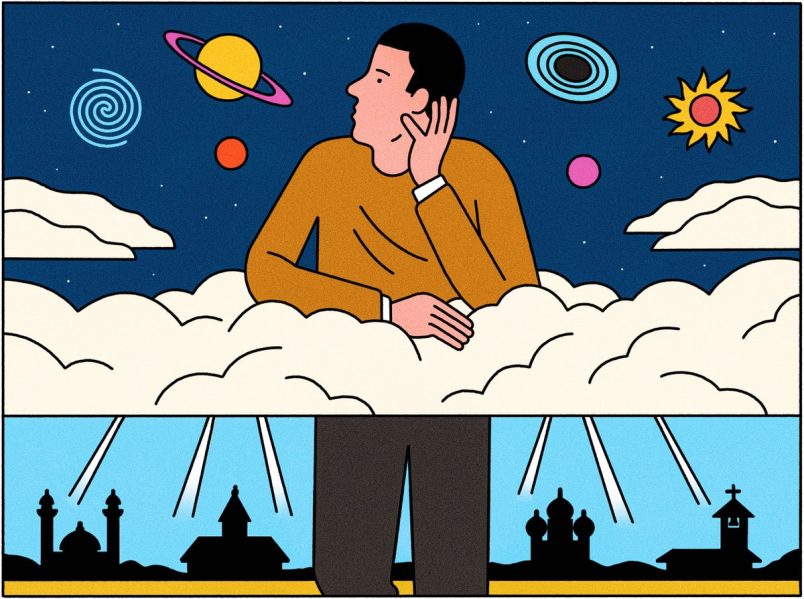
Buy a piece of art. Find one that speaks to you and make the purchase. If it is a genuine artistic production, it will invade your life and change it. A real piece of art is a window into the transcendent, and you need that in your life, because you are finite and limited and bounded by your ignorance. Unless you can make a connection to the transcendent, you will not have the strength to prevail when the challenges of life become daunting. You need to establish a link with what is beyond you, like a man overboard in high seas requires a life preserver, and the invitation of beauty into your life is one means by which that may be accomplished.

It is for such reasons that we need to understand the rule of art, and stop thinking about it as an option, or a luxury, or worse, an affectation. Art is the bedrock of culture itself. It is the foundation of the process by which we unite ourselves psychologically, and come to see established productive peace with others. As it is said, “Man shall not live by bread alone”. That is exactly right. We cannot live without some connection to the divine – and beauty is divine – because in its absence life is too short, too dismal, and too tragic. And we must be sharp and awake and prepared so that we can strive properly, and orient the world properly, and not destroy things, including ourselves – and beauty can help us appreciate the wonder of Being and motivate us to seek gratitude when we might otherwise be prone to destructive resentment.

Jordan Peterson

No Redemption in Equality

Many people have a time or period in their life where they feel their life lacks purpose, meaning, direction, and take on a nihilistic world view. Some people live like that and never escape. When I started my career after school is when this period came for me – which is a very common time for most people.

I felt lost so to speak and became very nihilistic without any purpose, meaning, and direction. In life there is this philisophic principle or idea about “quality”. This idea of “quality” basically says that there are qualitative distinctions between things and that as humans, we have an instinct to make qualitative distinctions. A qualitative distinction is just saying that “this” is better than “that” or vice-versa. So a qualitative distinction is a judgment.

There is this modern idea that we are to accept ourselves and that we are OK just as we are. Many people (especially the younger generations) are conflating what this means and take it literally. They accept themselves and don’t work towards bettering who they are. Jordan Peterson thinks this is an insane idea and couldn’t be more nihilistic. This is because you are NOT ok, and the reason you’re not ok is because you could be WAY more than what you are. So do you want to be ok as you are? Or do you want to strive towards what’s better?

I’ve come a very long way from my nihilism. I have filled my life with copious amounts of purpose and meaning, and have gained plenty of direction in doing so. The turning point for me was because I knew I wasn’t happy with my current mode of Being. I didn’t consider the manner in which I conducted myself to be sufficient. To do this you have to understand the notion that you CAN make “qualitative distinctions” and that there really is a difference between “good” things and “bad” things, or “great” things and “evil” things etc.. This gives you direction and the possibility of moving upward. You have to maintain the idea that we as humans are insufficient as we are and need the movement upward. So you have to conceptualize something like the “highest good” and then strive towards that.

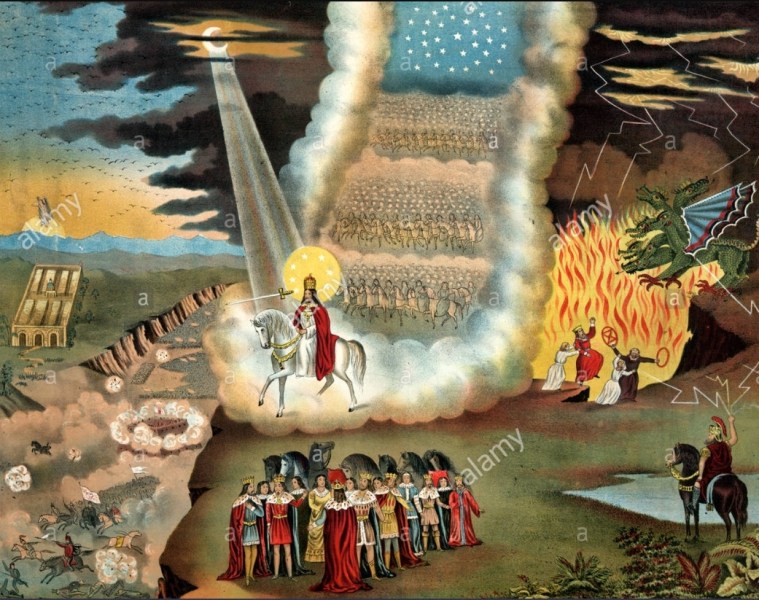
This is what Christ is in the Bible (the highest good) and why the biblical story gives people so much direction and meaning – something to strive towards. There is an idea in Revelations that the “redeemer” and “judge” are the same thing. Christ comes back with a flaming sword in his mouth to judge the people of earth. Most people were damned and some were saved.

There is no difference between conceptualizing the good and being judged. Because to conceptualize the good and move towards it, means that you have to separate from yourselves all the things that aren’t good and leave them behind. This is why “redeemer” and the “judge” are the same thing.

That’s the problem in the modern world with how we are rejecting qualitative distinctions, to not offend anyone/hurt anyone’s feelings, because we are just fine as we are and don’t want to say one thing is better than the other. Sure, it’s not any fun to be casted off with the damned, but if people are insufficient in their present condition (which seems to be the case, try finding someone who is not) and you deny the possibility of qualitative distinctions, because you want to promote a radical egalitarianism, then you remove the possibility of redemption – because there is no movement towards the good. Sacrificing the “good” for the “equal” is catastrophic, because if we were all equal, we’d all be equally un redeemed and miserable.

So to live a life full of meaning, direction, and purpose, you to understand that you are insufficient as you are. You have to conceptualize the highest good and strive for it – the continuation of our species depends on it.

Social Revolution!

Jordan Peterson on remidiating social systems:

He is of the opinion that the proper strategy for implementing social change is to stay within your domain of competence – which requires humility, a virtue that is never promoted in our modern culture, a virtue we can hardly even talk about. He defines humility as “you’re probably not as smart as you think you are and you should be careful”.

So the question may be: “ok I should be careful, but I still want to do good and make positive social change.”

So how do you be careful and do good? You try not to step outside the boundaries of your competence and start small. You start with things that you CAN adjust, that you actually DO understand, with things that you can actually fix.

So what Dr. Peterson promotes is that you should restrict your attempts to fix things to what’s at hand. So things about yourself that you can fix, things about yourself that you know aren’t right, not things about you by anyone else’s opinion. Then maybe there’s things you can adjust in your family and that gets really hard. You really have to have yourself together before you start to tackle your family.

It’s hard to put yourself together, it’s really hard to put your family together, so why would you think you can put the world together? The world is obviously far more complicated than you and your family. So if you’re stymied in your attempts to put your house in order, then that should make you very leary about announcing your broad scale plans for revolution.

And this is a very peculiar thing, because people are much more likely to announce their plans for large scale social revolution, than they are to set themselves or their family straight.

Dr. Peterson thinks this is the case because as soon as you try to adjust yourself or family, the system immediately kicks back at you. Where if you announce your plans for large scale social revolution, the lag between the announcement and the kick back is so long that you don’t realize there is any error there. So you can get away with being wrong if nothing falls on you for a while.

It’s not easy to fix things, especially if you’re not committed to it. And you know if you’re committed to it if you’re trying to change yourself first.

“It’s more difficult to rule yourself than to rule the city.” And that’s not a metaphor.

Ritual and the Freemasonic Tradition

Freemasonry is different things for different men. We all join the fraternity for different reasons, nonetheless, we are all bound by one core tenet, and that is: to make good men better. We’re all here to improve ourselves individually and to help lift each other up as a group. 


I became a Freemason, and maintain my position in the lodge, for a few reasons. One of the main reasons, the one that has had the most profound effect on me, is the ritual. 


There really are no secrets in Freemasonry. All of their teachings are self evident, universal truths, known to all of humankind. The only thing that is “secret” (i’d say a better term is hidden, or rather, occult knowledge) about Freemasonry is how that information is taught/delivered. They do this through ritual. Most people start thinking Satan worship when they hear of occult rituals, this couldn’t be further from the truth in Freemasonry. Their rituals are basically just plays we act out and that’s how the knowledge is delivered. 


As humans, we all have a part of ourselves that extends itself out to the world, in an attempt to understand the things that we don’t know. We do this in our behavior, in image, myth, story, drama, ritual, symbolism, etc..There is something very profound about ritual as a phenomenon. Evolutionarily, this is one of the most vital and essential ways we have passed down our knowledge, for 100s of 1000s (if not millions) of years. The most ancient stories we have as a species allude to this. Using the Bible for example, the biblical stories were created in part from observing each other and our behavior for millennia. They are patterns of human behavior that we observed, acted out (ritual/play/drama), then articulated in the biblical narrative. (Partly why Bible verse is used in our ritual)


Ritual is at the very core of how we evolved as a species, it cannot be stressed enough how crucial this has been for our evolution. Understanding and knowledge begin with ritual. We first act things out as human beings, behaviorally, it’s essentially just a drama/play. Understanding isn’t just knowledge, understanding means you embody the information and act it out. It’s like children playing (“rough housing”), they don’t KNOW what they’re doing conciously, they’re just acting it out, observing each others behavior (learning), then distilling that information. That’s why we are able to dance with each other, it’s just knowledge and understanding that we embody and act out.


So this process of acting things out in our environment behaviorally, observing it, then distilling that information, is a process that has taken place for millions of years (arguably since beings with nervous systems have existed). This eventually led us to a place where we could actually articulate that knowledge, like the biblical narratives. This is powerful beyond comprehension. This how we have been able to pass down information, largely un changed, for millennia. Just like you can only get certain information/knowledge from a book that you can’t get from a movie, or movie to a book, or video game to movie or book etc., ritual is unique in the information it contains and how it distills that information. Ritual being a core process for our evolutionary success, it can teach you in ways nothing else can. It is absolutely fundamental to understanding. Ritual is powerful in inarticulate ways, something you just have to experience yourself to understand. These rituals are far from being just archaic and silly superstition (as many believe).

Many people may claim to understand and know Masonic teachings, and while they are universal truths, you will never quite understand what Freemasonry is about without experiencing their rituals. One thing is for sure though, I can attest to the profundity in the Freemasonic tradition. There is also a very powerful feeling knowing that you are part of, and have gone through, the same experience as many other very influential men from the past (14 presidents included). With vague ties as far back as the ancient Egyptian temple initiations, all the way through the ancient Mystery School traditions, culminating in the Age of Enlightenment when the fraternity was founded. 


I am an initiate of the flame, a seeker of Truth, bringer of light, warden of wisdom, and a candidate that has been raised to the sublime degree of Master Mason. I have been forever changed for the better, this no doubt has been another rebirth for me, and a start to a very new and exciting chapter of my life. 

How To Approach The Bible


This is summary of a comment Jordan Peterson made in regards to “atheistic type people”, in so far as they have a type. He thinks that they don’t approach the Bible with enough respect. (And I’d argue most don’t even approach the Bible at all).

My approach to the Bible is the same as his, and he stated that he approaches it with the presupposition that “there’s probably more to this than I know”, and tries to understand the Bible from that perspective. Rather than to think that this is just a collection of superstitions we’ve outgrown – which isn’t a deep enough analysis.

That thinking has some truth but it doesn’t take into account the fact that the propositions in the Bible still stand at the foundation of our culture. It doesn’t take into account Nietzsche’s central concern, that if you blow out the notion of God, the entire structure crumbles. The “atheist types” haven’t wrestled with the real issues.

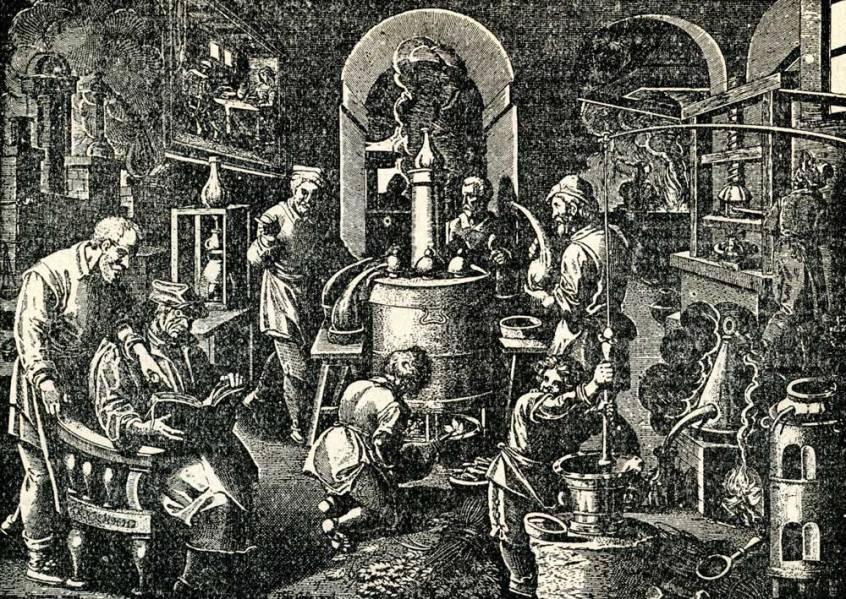
Sterilized Christianity – Alchemist Redemption

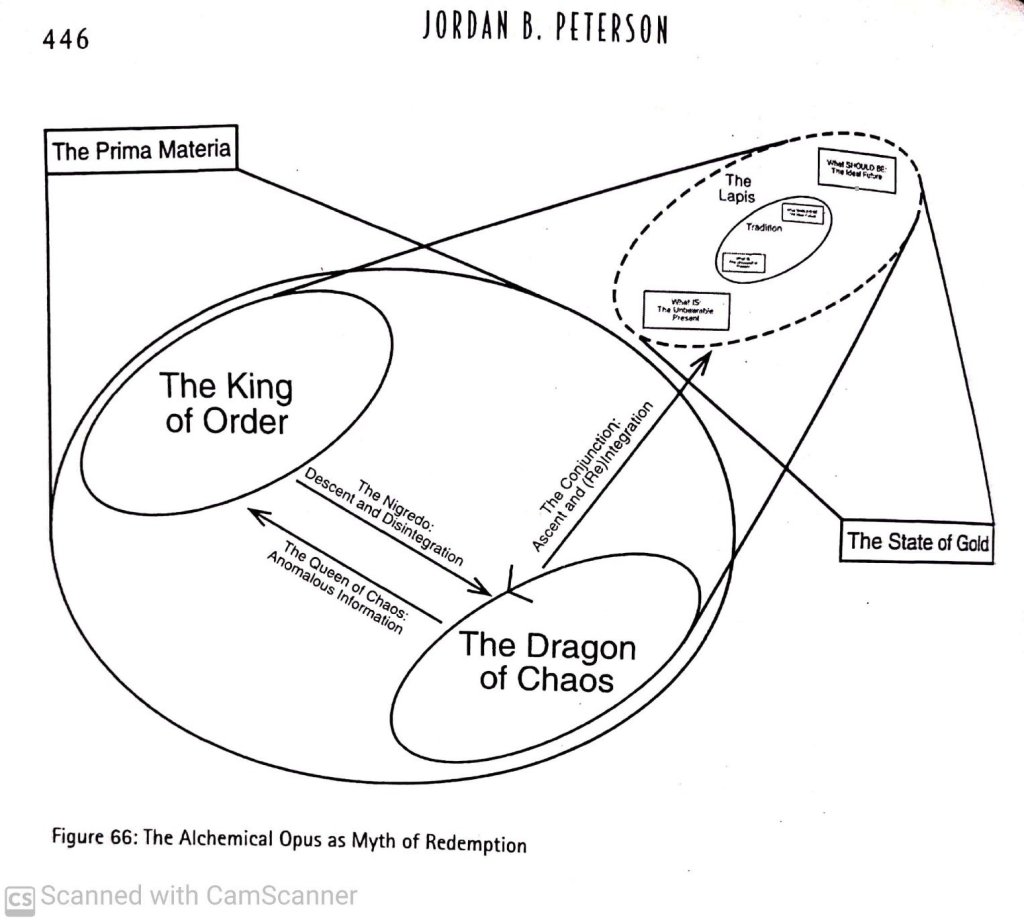
This final value, the goal of the pursuit of the alchemist, is discovery and embodiment of the meaning of life itself: integrated subjective being actively expressing its nature through manipulation of the possibilities inherent in the material / unknown world. This final goal is the production of an integrated intrapsychic condition – identical to that of the mythological hero – “acted out” in a world regarded as equivalent to self. Production of this condition – the lapis philosophorum – constitutes the antidote for the “corruption of the world,” attendant upon the Fall [attendant upon the emergence of “partial” self-consciousness.] The lapis is “agent of transformation,” equivalent to the mythological redemptive hero – able to turn “base metals into gold.” It is, as such, something more valuable than gold – just as the hero is more valuable than any of his concrete productions. The “complete” alchemical opus – with production of the lapis as goal – is presented schematically in figure 66.

Alchemy was a living myth: the myth of the individual man as redeemer. Organized Christianity had “sterilized itself,” so to speak, by insisting on the worship of some external truth as the means to salvation. The Alchemist (re)discovered the error of this presumption, and came to realize that identification with the redeemer was in fact necessary, not his worship; that myths of redemption had true power when they were incorporated, and acted out, rather than believed, in some abstract sense. This meant: to say that Christ was “the greatest man in history” – a combination of the divine and mortal – was not sufficient expression of faith. Sufficient expression meant the attempt to live out the myth of the hero, within the confines of individual personality – to voluntarily shoulder the cross of existence, to “unite the opposites” within a single breast, and to serve as active conscious mediator between the eternal generative forces of known and unknown.

Jordan Peterson

The Holy Pilgrimage

The unknown is contaminated with the psychoanalytic “unconscious,” so to speak, because everything we do not know about ourselves, and everything we have experienced and assimilated but not accommodated to, has the same affective status as everything that exists nearly as potential. All thoughts and impulses we avoid or supress, because they threaten our self conception or notion of the world – and all fantasies we experience, but do not admit to – exist in the same domain as chaos, the mother of all things, and serve to undermine our faith in our most vital presumptions. The encounter with the “unknown,” therefore, is simultaneously encounter with those aspects of ourselves heretofor defined as other (despite their indisputable “existence”). This integration means making behavioral potentialities previously disregarded available for conscious use; means (re)construction of the self model that accurately represents such potential.

The ritual of pilgrimage – the “journey to the holy city” – constitutes half ritual, half dramatic enactment of this idea. The pilgrim voluntarily places him or herself outside the protective walls of original culture and, through the difficult and demanding (actual) journey to the “unknown but holy lands,” catalyzes as psychological process of broadening, integration and maturation. It is in this manner that a true “quest” inevitably fullfills itself, even though its “final, impossible goal” (the Holy Grail, for example) may remain concretely unattained.

The necessity for experience as a precondition for wisdom may appear self-evident, once due consideration has been applied to the problem (since wisdom is obviously “derived” from experience) but the crux of the matter is that those elements of experience that foster denial or avoidance (and therefore remain unencountered or unprocessed) always border on the maddening. This is particularly true from the psychological, rather than ritual, perspective. The holy pilgrimage in its abstract or spiritual version is the journey through “elements” of experience and personal character that constitute the subjective world of experience (rather than the shared social and natural world). The inner world is divided into familiar and unknown territory, as much as the outer. Psychological purpose of the rite of passage adventure (and the reason for the popularity of such journeys, in actuality and in drama) is the development of character, in consequence of confrontation with the unknown. A “journey to the place that is most feared,” however, can be undertaken spiritually much as concretely. What “spiritually” means, however, in such a context, is a “peregrination” through the rejected, hated and violently suppressed aspects of personal experience. This is most literally a voyage to the land of the enemy – to the heart of darkness.

Jordan Peterson

Meaning of Myth

The myths of a culture are its central stories. These stories provide a dramatic record of the historically predicated transformation of human intent, and appear to exist as the episodic/semantic embodiment of history’s cumulative effect on action.

The mythical narratives that accompany retention of historically determined behavior constitute non-empirical episodic representation of that behavior and its method of establishment. Myth is purpose, coded in episodic memory. Mythic truth is information, derived from past experience – derived from past observation of behavior – relevant from the perspective of fundamental motivation and effect.

Myth simultaneously provides a record of historical essential, in terms of behavior, and programs those historical essentials. Narrative provides semantic description of action in image, back translatable into imaginary episodic events, capable of eliciting imitative behavior.

Mythic narrative offers dramatic presentation of morality, which is the study of what should be. Such narrative concerns itself with the meaning of the past, with the implications of past existence for current and future activity. This meeting constitutes the ground for the organization of behavior.

Myth has come to encapsulate and express the essential nature of the exploratory, creative, communicative psyche, as manifested in behavior, as a consequence of observation and representation of that behavior, in the temporally summed, historically determined manner beginning with imitation and ending with verbal abstraction.

Jordan Peterson

Cyclic Creation of Morals (How Morals are Created)

Moral presumptions of society emerge first in procedural form, as a consequence of individual exploratory activity, which is the process that generates novel behavioral patterns. These behavioral patterns are then hierarchically structured as a consequence of quasi-Darwinian competition, in accordance with the constraints noted previously (appeal to the imagination, self-sustenance, etc.)

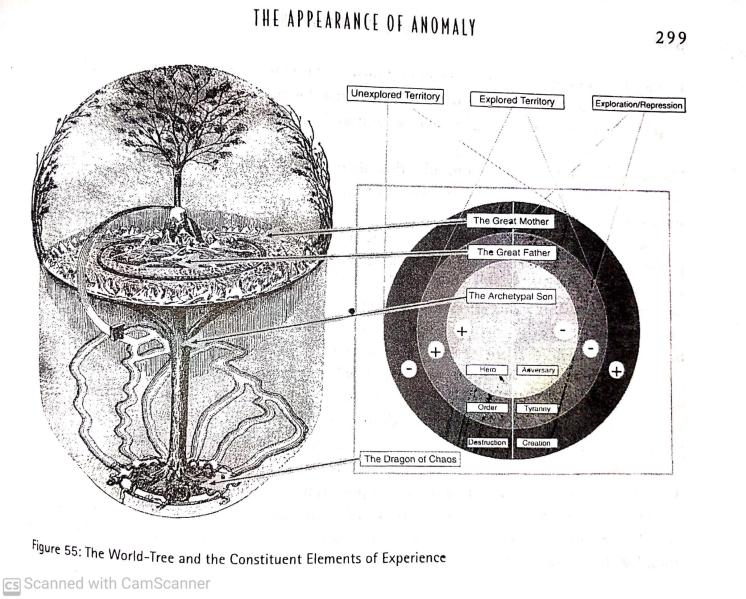
The episodic memory systems map procedure, and outcome there of, and thereby come to contain similar paradigmatic structure – imagistically, and then more purely semantically. Over time, the unknown, nature, thereby comes to be represented mythically as the effectively bivalent Great Mother, simultaneously creative and destructive. The known, culture, becomes the Great Father, tyrant and wise king, authoritarian and protective personality, adapted to the unknown. The knower, man, becomes the hostile mythic brothers, sons of convention, hero and anti-hero, Christ and Satan – eternal generator and destroyer of history and tradition.

Semantic cognition, feeding on narrative – the bridge between the episode and the pure verbal extraction – derives “rules” from behavior. Application of the rules alters the environment, including procedural and episodic representation thereof. Thus the cycle continues.

Jordan Peterson

Axis Mundi

Christ and Satan, for example – Christian exemplars of the ambivalent son – may also be viewed as products of the tree (as well as particular incarnations or forms of the tree, or as phenomena otherwise inexplicably associated with the tree). The world-tree as “forbidden tree of knowledge of good and evil” is, for example, the cross upon which Christ, the archetypal individual, crucified, suspended and tormented, manifests for all eternity his identity with God; the tree upon which Odin, Norse savior, is likewise suspended.

The tree is to Christ, therefore, as Christ is to the individual (“I am the vine, ye are the branches: He that abideth in me, and I in him, the same bringeth forth much fruit: for without me you can do nothing.” John 15:5).

Satan, by contrast, is something that lurks in the forbidden tree. The (devastating) wisdom he promises – the knowledge of the gods – is that trees “first fruit.” This makes the world-tree the source of the revelation that destroys – the source of the anomalous “idea,” for example, that disrupts the static past and plunges it into chaos – as well as the eventual source of the revelation that redeems.

Jordan Peterson