Better Thinking

Reasoning aside, we know that people often acquire their beliefs about the world for reasons that are more emotional and social than strictly cognitive. Wishful thinking, self-serving bias, in-group loyalty, and frank self-deception can lead to monsters departures from the norms of rationality. Most beliefs are evaluated against a background of other beliefs and often in the context of an ideology that a person shares with others. Consequently, people are rarely aa open to revising their views as reason would seem to dictate.

There are some things that we are just naturally bad at. And a mistake people tend to make across a wide range of reasoning tasks are not mere errors; they are systematic errors that are strongly associated both within and across tasks. As one might expect, many of these errors decrease as cognitive ability increases. We also know that training, using both examples and former rules, mitigate many of these problems and can improve a person’s thinking.

On this front, the internet has simultaneously enabled two opposing influences on belief: on the one hand, it has reduced intellectual isolation by making it more difficult for people to remain ignorant of the diversity of opinion on any given subject. But it has also allowed bad ideas to flourish – as anyone with a computer and too much time on his hands can broadcast his point of view and, often enough, find an audience. So while knowledge is increasingly open source, ignorance is, too.

Sam Harris

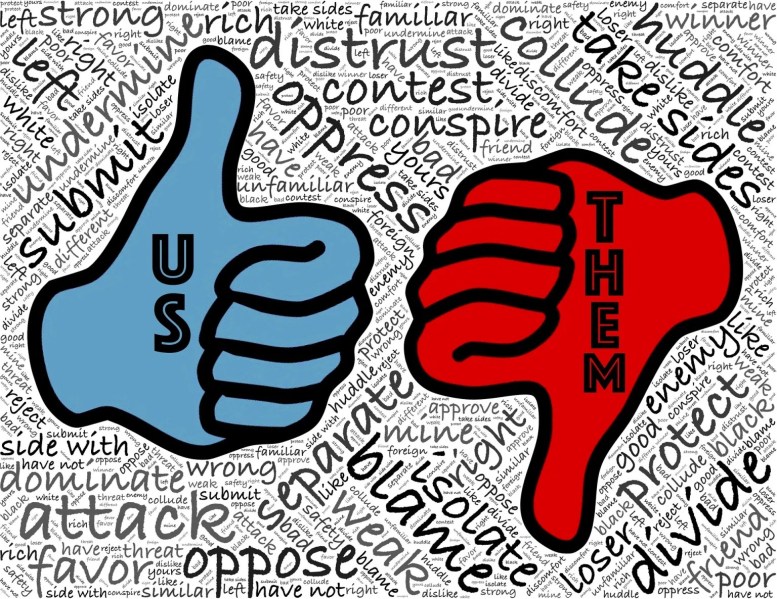
Out-Group Hostility – In-Group Altruism

A very interesting theory to contemplate. I feel this helps make sense of our current state of tribalism and morality.

Territorial violence might have been necessary for development of altruism. The economist Samuel Bowles has argued that lethal, “out-group” hostility and “in-group” altruism are two sides of the same coin. His computer models suggest that altruism cannot emerge without some level of conflict between groups. If true, this is one of the many places where we must transcend evolutionary pressures through reason – because, barring an attack from outer space, we now lack of proper “out-group” to inspire us to further altruism.

Sam Harris

Explains why it seems that we are constantly looking for a “they”, “them”, or “other” to transgress upon, contradictory to the altruism we show “our” own group.

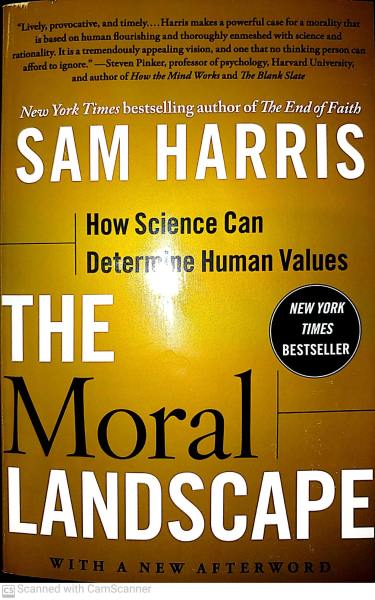
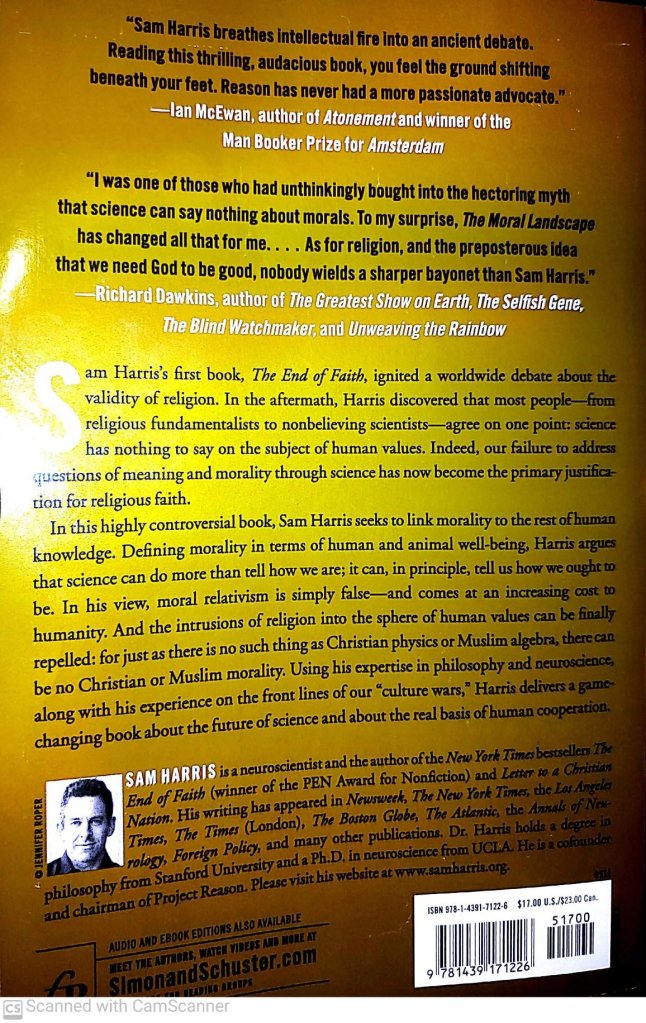
The Moral Landscape

My new book by Sam Harris

There are facts to be understood about how thoughts and intentions arise in the human brain; there are facts to be learned about how these mental states translate into behavior; there are further facts to be known about how these behaviors influence the world and the experience of other conscious beings. We will see that facts of this sort exhaust what we can reasonably mean by terms like “good” and “evil.” They will also increasingly fall within the purview of science and run far deeper than a person’s religious affiliation. Just as there is no such thing as Christian physics or Muslim algebra, we will see that there is no such thing as Christian or Muslim morality. Indeed, I will argue that morality should be considered an undeveloped branch of science.

Sam Harris