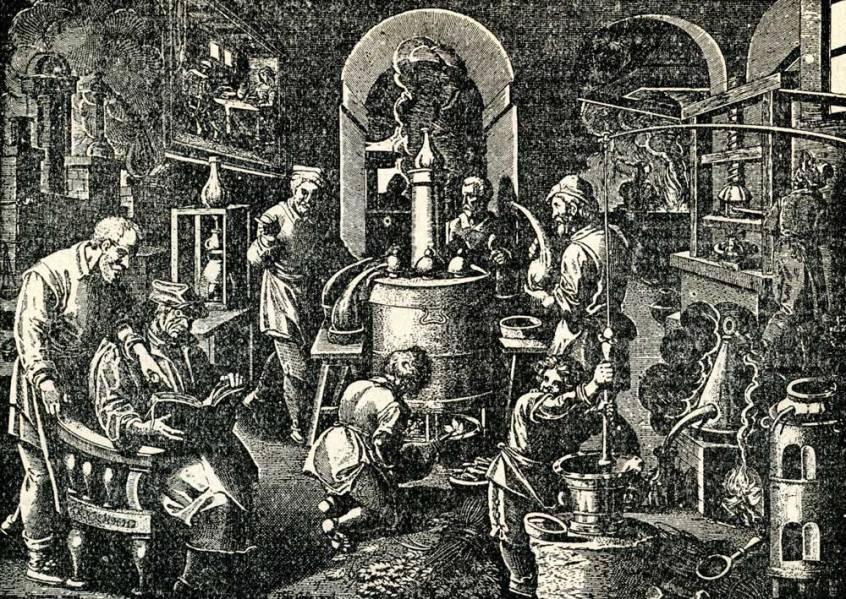
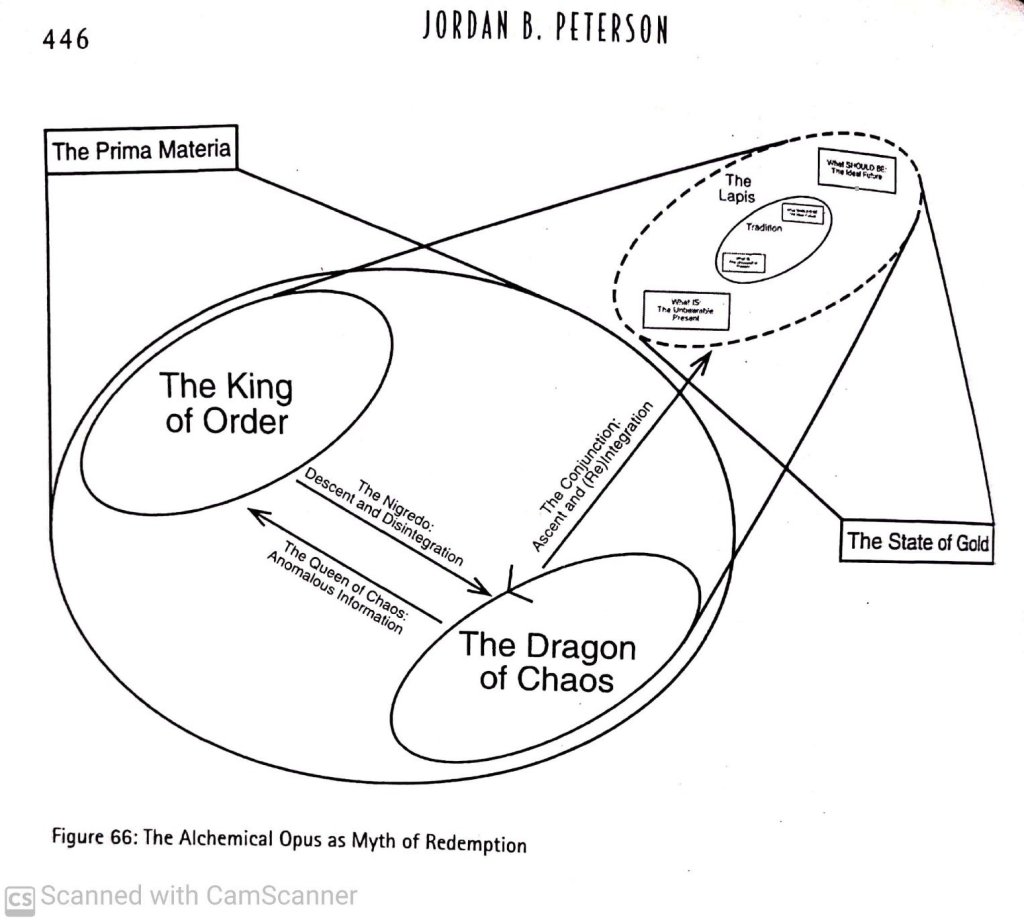
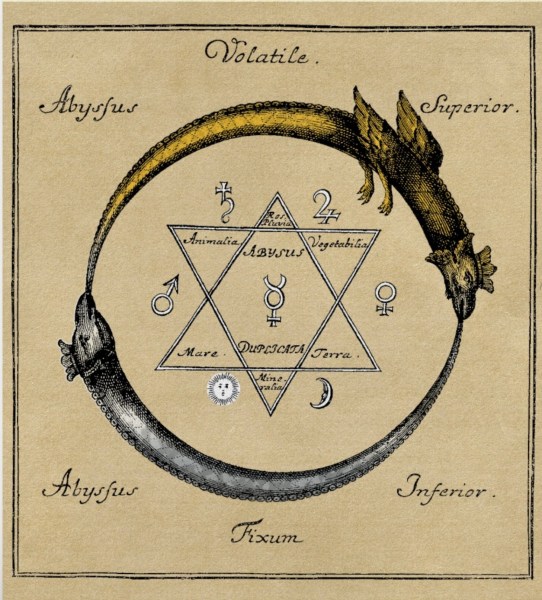
This final value, the goal of the pursuit of the alchemist, is discovery and embodiment of the meaning of life itself: integrated subjective being actively expressing its nature through manipulation of the possibilities inherent in the material / unknown world. This final goal is the production of an integrated intrapsychic condition – identical to that of the mythological hero – “acted out” in a world regarded as equivalent to self. Production of this condition – the lapis philosophorum – constitutes the antidote for the “corruption of the world,” attendant upon the Fall [attendant upon the emergence of “partial” self-consciousness.] The lapis is “agent of transformation,” equivalent to the mythological redemptive hero – able to turn “base metals into gold.” It is, as such, something more valuable than gold – just as the hero is more valuable than any of his concrete productions. The “complete” alchemical opus – with production of the lapis as goal – is presented schematically in figure 66.
Alchemy was a living myth: the myth of the individual man as redeemer. Organized Christianity had “sterilized itself,” so to speak, by insisting on the worship of some external truth as the means to salvation. The Alchemist (re)discovered the error of this presumption, and came to realize that identification with the redeemer was in fact necessary, not his worship; that myths of redemption had true power when they were incorporated, and acted out, rather than believed, in some abstract sense. This meant: to say that Christ was “the greatest man in history” – a combination of the divine and mortal – was not sufficient expression of faith. Sufficient expression meant the attempt to live out the myth of the hero, within the confines of individual personality – to voluntarily shoulder the cross of existence, to “unite the opposites” within a single breast, and to serve as active conscious mediator between the eternal generative forces of known and unknown.
Jordan Peterson






 ErudiTarot