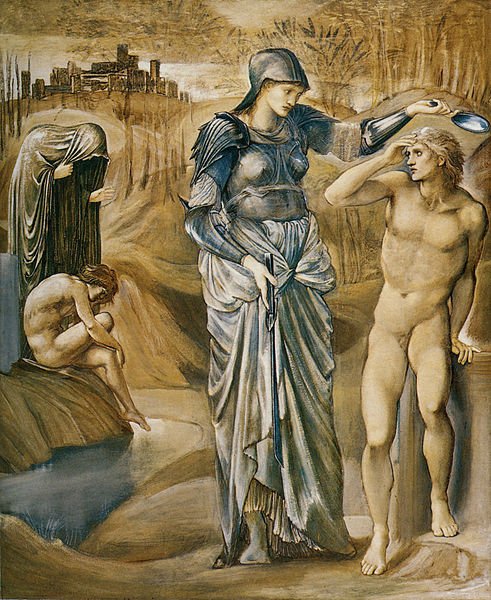
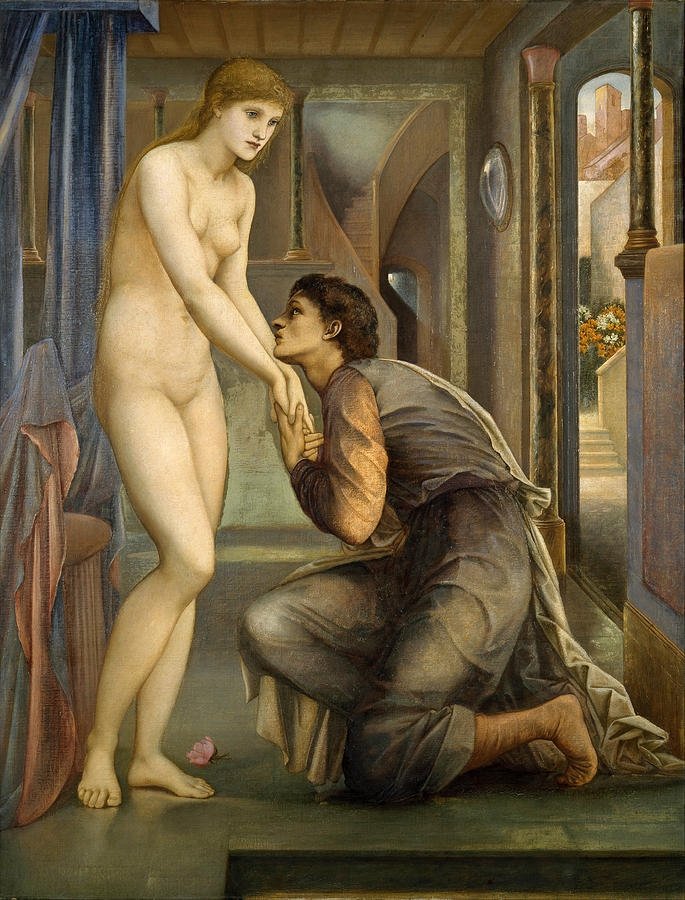
Burne-Jones and the Pre-Raphaelites believed that art was a spiritual or magical endeavor and toward this end they formed a mystical brotherhood of English artist dedicated to recapturing the sincerity of the art of the early Renaissance – the same period that gave us the Tarot.
Burne-Jones based his tall female “stunners” and melancholy heroes on the paintings of Botticelli and Michelangelo, two artists, whose works are considered primary examples of Renaissance neoplatonism. His work expresses the Renaissance idea that physical beauty and spiritual beauty are linked and in one continuum that can lead to the mystical experience of beauty itself, as a timeless, underlying reality – Plato’s “true food of the soul.”
In the Renaissance, artists, like Botticelli, symbolized this spiritual essence as an ideal female nude and this ideal allowed early Tarot artist to place a nude on the World card as a symbol of the primary beauty and allowed alchemists to use the nude as a symbol for the Anima Mundi.
Robert M. Place
- Comment
- Reblog
-
Subscribe
Subscribed
Already have a WordPress.com account? Log in now.
 ErudiTarot